
 Researchers at Rice University have designed a new smartphone-connected system called “mobileVision” that lets optometrists view the retina without using dilating drops. This device promises to avoid the inconvenience associated with dilating drops and make diagnostic eye exams easier in third-world countries. This could allow eye doctors to detect eye disease in its early stages, when treatment is most effective.
Described as a “reverse microscope,” mobileVision builds on technology used in astronomy to view stars from the
Read More »
 With cataracts affecting nearly 22 million Americans, it’s not surprising that most of us know people who have had cataract surgery. We may even be contemplating cataract surgery for ourselves. Since cataracts are almost never a medical emergency, you should feel entirely comfortable taking the time to learn more about cataracts and explore all your options.
What is a Cataract?
A cataract is simply a spot on the lens of the eye that you cannot readily see through. These spots are made up of clumps of normal eye protein and generally form slowly over time. Although most cataracts are related to aging, it is also possible for cataracts
Read More »
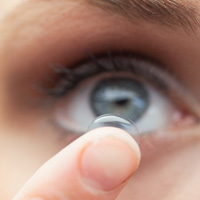 A biodegradable contact lens is being developed that would administer glaucoma medication and then disappear. The problem with eye drops is that they slip out of the eye and much of the medication is lost. This contact lens, designed by Mridula P. Menon in India, uses a nano-carrier loaded with the glaucoma drug acetazolamide that is dissolved in a transparent vinyl polymer.
The resulting lens can be easily inserted into the
Read More »
 According to market research by Persistence Market Research, the global market for ophthalmic devices is predicted to increase significantly by 2020. The prediction is based on information from a number of geographic locations, including the United States and countries in Europe and Asia. Increasing prevalence of eye disease contributes to the ophthalmic devices market, which includes vision care, diagnostic, and surgery devices.
Higher incidence of common eye disorders such as age-related macular degeneration, diabetic retinopathy, cataracts, and glaucoma are leading more and more patients all over the world to seek out treatment for vision loss. Aging populations, lifestyle-associated diseases (such as diabetes or high blood pressure), and government healthcare
Read More »
 Technology for restoring vision to the blind continues to improve with devices like the Argus II, a system of special glasses and electrodes implanted directly in the retina. While only six people in the U.S. are using the Argus II, more and more similar means of achieving “bionic eyes” are becoming available. These systems allow patients who have lost sight due to certain eye diseases to regain basic recognition of light and shapes.
The Argus II involves a simple set of glasses equipped with a camera not unlike those in smartphones. The camera sends
Read More »
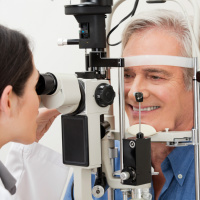 Ocular Coherence Tomography (OCT) is a powerful technology for diagnosing and monitoring common eye diseases. Though the technology has existed for many years, it has not previously been available to a large number of optometry practices. Now, however, patients are getting access to OCT scans in more offices as a result of technological improvements and lower costs.
OCT creates images and measures the tissue structures of the eye by a process similar to ultrasound, but with light instead of sound. The patient simply rests his or her chin onto a chin rest and looks into a blue light.
Read More »
 Researchers at Oxford University have developed smart glasses intended to aid people with severe loss of sight. The glasses, which enhance an individual’s residual vision, are currently in trial, both in a closed obstacle course setting and in a “real life” trial in the streets of Oxford.
The smart glasses use a set of video cameras that record nearby objects and movement, which are projected onto the glasses lenses with the help of
Read More »
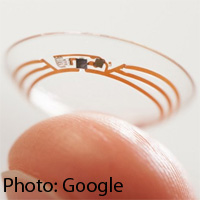 Google has announced plans to build a contact lens that can monitor blood sugar levels. The device that may come replete with miniature, flexible electronics, sensors and antennae. The lens would keep track of blood sugar levels via human tears. Google’s contact lens would be able to alert wearers when their blood sugar levels are too high or too low. For diabetics, this could theoretically free them from the need for frequent finger pricks to check blood sugar. It could also give them tools to better manage their blood sugar. Diabetes can lead to diabetic retinopathy, a serious eye disease (learn more).
While the device still
Read More »
 Currently, most eye disease detection equipment is only available in an optometrist’s office. A new handheld optical device could allow general practitioners to quickly screen all patients for eye disease such as glaucoma and macular degeneration. These visually devastating diseases are most easily treated or controlled in their early stages. The new high-speed prototypes were developed at Massachusetts Institute of Technology.
The idea of a handheld, easy-to-use scanner is not new. However, the new device combines ultrahigh-speed
Read More »
Natural Eye Care, Inc.
3 Paradies Lane
New Paltz, New York 12561
Phone: 845.475.4158

NaturalEyeCare™ started in 1999 to help the public and professionals learn about complementary care in eye disease treatment.
The information and recommendations we offer are based on over 30 years of peer review research and personal clinical experience which guides us in providing a valuable resource to our readers, customers and patients regarding maintaining healthy vision naturally.
We believe that vision health is intimately connected to overall mental, physical and spiritual health. Therefore we encourage people to look at their overall lifestyle and diet as part of keeping healthy vision and reducing the risk of eye disease onset. This includes diet, regular exercise, and management of daily stress. If one has health issues such as high blood pressure, a thyroid imbalance, any autoimmune disease and/or are on medication(s), these possible contributions to eye disease should considered when working with your health care professional.
Please do not hesitate to call us at 845.475.4158 with any questions and concerns.