
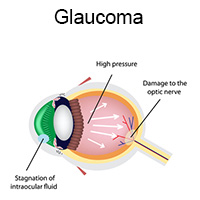
 Glaucoma is a severe eye disease linked to high intraocular pressure. How can you regulate eye pressure? If you have a glaucoma diagnosis, the eye doctor often prescribes eye drops to lower intraocular pressure (IOP). Is there anything additional that you can do to help keep your IOP lower?
Addressing glaucoma and the risk of glaucoma primarily involves maintaining normal intraocular pressure and nourishing the optic nerves. (If you have low-tension glaucoma, circulation to the eye is crucial.) In our previous article, we explored essential nutrients that support optic nerve health.
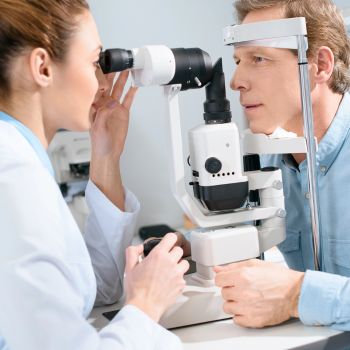 The cornea plays a crucial role in our vision. It is the transparent tissue at the front of the eyeball where light enters the eye. Approximately 65% to 75% of the refraction of light occurs in the cornea. The cornea also protects against external threats and harmful UV radiation. However, this vital part of our eye is constantly under siege. The cornea faces oxidative stress daily due to its high exposure to light and intense metabolic activity. The main culprit is ultraviolet radiation from the sun, which triggers the formation of Reactive Oxygen Species (ROS). These harmful free radicals can wreak havoc on the cells if not kept in check by antioxidants. While the cornea absorbs all UVC and most UVB rays, UVA rays are primarily absorbed by the lens.
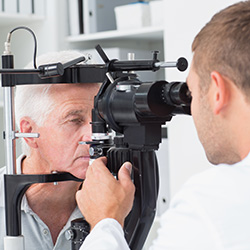 Getting a thorough eye exam has always been about more than reading letters off an eye chart. That is even truer today. One reason: We are harder on our eyes than ever before. Many of us spend hours each day staring and squinting at screens, developing digital eyestrain, and exposing our eyes to potentially damaging blue light.
But the typical tests offered during a standard eye exam may not go far enough to find problems as early as possible. Even a basic dilated eye exam may not be enough.
Read More »
Several new vision inventions are coming out of Israel. An innovative retinal diagnostic test can be completed entirely online. Also, an implantable miniature telescope restores vision to those with partial retinal damage. This technology is available in the United States today or within the next year.
Read More »
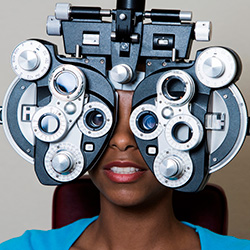 Regular eye exams improve quality of life, but how often do you need an eye exam? No one wants to waste time and money on unnecessary vision screenings and exams. On the other hand, eye exams can catch minor problems before they become major problems.
Many eye problems have subtle symptoms or no symptoms at all.
Read More »
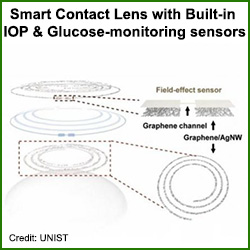 Diabetics and glaucoma patients could start wearing comfortable smart contact lenses to monitor blood sugar and intraocular pressure. Professor Jang-Ung Park and colleagues in South Korea1 have solved some of the problems associated with smart contact lenses by using graphene. They recently released a study documenting their breakthrough research. These biosensors may have broad applications for detecting and treating disease.
 A new “smart” contact lens has been shown to detect accurately intraocular pressure in glaucoma patients. This technology may be useful for predicting which patients are deteriorating rapidly. Their treatment plan can be modified accordingly to help preserve more vision.
This study used the Sensimed Triggerfish® contact lens system. Columbia University Medical Center researchers found that specific electrical signals from the “smart” contact lenses correlated with the rate of the disease’s
Read More »
 Never underestimate the power of mathematics to improve vision care! Engineers at the University of Illinois have married adaptive optics with retinal scanners to see individual rods and cones. This new technology could increase the accuracy and speed of eye disease diagnosis.
Astronomers use adaptive optics to improve the clarity of telescopes. This is typically done using complex hardware. The engineers decided to make corrections using computer calculations instead of hardware. And they applied the technology to instruments used to scan the retina, the tissue at the back of the eye. The retina contains rod and cone cells, which send signals to the brain when light falls on them.
Read More »
 Researchers at Rice University have designed a new smartphone-connected system called “mobileVision” that lets optometrists view the retina without using dilating drops. This device promises to avoid the inconvenience associated with dilating drops and make diagnostic eye exams easier in third-world countries. This could allow eye doctors to detect eye disease in its early stages, when treatment is most effective.
Described as a “reverse microscope,” mobileVision builds on technology used in astronomy to view stars from the
Read More »
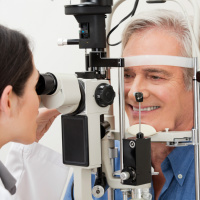 Ocular Coherence Tomography (OCT) is a powerful technology for diagnosing and monitoring common eye diseases. Though the technology has existed for many years, it has not previously been available to a large number of optometry practices. Now, however, patients are getting access to OCT scans in more offices as a result of technological improvements and lower costs.
OCT creates images and measures the tissue structures of the eye by a process similar to ultrasound, but with light instead of sound. The patient simply rests his or her chin onto a chin rest and looks into a blue light.
Read More »
Natural Eye Care, Inc.
3 Paradies Lane
New Paltz, New York 12561
Phone: 845.475.4158

NaturalEyeCare™ started in 1999 to help the public and professionals learn about complementary care in eye disease treatment.
The information and recommendations we offer are based on over 30 years of peer review research and personal clinical experience which guides us in providing a valuable resource to our readers, customers and patients regarding maintaining healthy vision naturally.
We believe that vision health is intimately connected to overall mental, physical and spiritual health. Therefore we encourage people to look at their overall lifestyle and diet as part of keeping healthy vision and reducing the risk of eye disease onset. This includes diet, regular exercise, and management of daily stress. If one has health issues such as high blood pressure, a thyroid imbalance, any autoimmune disease and/or are on medication(s), these possible contributions to eye disease should considered when working with your health care professional.
Please do not hesitate to call us at 845.475.4158 with any questions and concerns.