
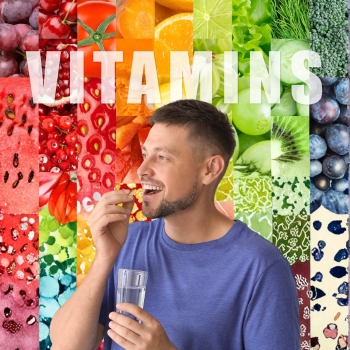
 Can one daily multivitamin help you remain active and independent as you grow older? New research offers a cautiously encouraging answer. In a large randomized study, adults age 60 and older who took a daily multivitamin for three years reported slightly better functional health than those who took a placebo. Functional health includes how well you manage everyday activities and how much symptoms interfere with daily life.
The study included more than 16,000 participants from the COSMOS trial. The differences were modest and were measured with questionnaires rather than objective physical tests. The findings were presented at the NUTRITION 2026 conference but have not yet been published in a peer-reviewed journal. They are interesting, but they do not prove that a multivitamin prevents disability or treats fatigue, shortness of breath, or swelling in the feet. New or worsening symptoms like these require medical evaluation. 1
A multivitamin can help fill nutritional gaps, especially when appetite, food choices, medications, or changes in digestion make it difficult to obtain enough nutrients. It cannot replace a varied diet, exercise, sleep, prescribed treatment, or regular eye care. Evidence also does not show that routine multivitamin use prevents every chronic disease. The most sensible goal is nutritional support, not a promise of disease prevention. 2
Read More »
 Brain fog can make it hard to recall words, concentrate, or complete everyday tasks. Even after spending enough time in bed, you might feel exhausted. Your eyes might feel dry, burn, or have trouble shifting focus.
What causes brain fog? Poor or broken sleep is one common cause. Sleep problems can affect your energy, memory, attention, and eye comfort. They can leave you feeling mentally cloudy and physically drained during the day.
Sleep problems are not the only possible explanation for tired eyes and brain fog. Diabetes, anemia, thyroid disorders, medications, nutritional deficiencies, and other health conditions can cause similar symptoms. In this article, we talk about symptoms of brain fog, poor sleep, and why tired eyes and brain fog often occur together. We also point out how excessive screen time can lead to brain fog. And we offer practical tips: eye exercises, easy lifestyle changes, nutritional support, and when to call a doctor.
Read More »
 GLP-1 drugs have produced remarkable weight-loss results for many people, but can these medications have serious side effects? Weight-loss medications containing semaglutide, including Wegovy and Ozempic, reduce appetite through several interconnected systems involving the brain, digestive tract, pancreas, hormones, and nerves. 1
Semaglutide does not appear to cross the blood-brain barrier freely. Instead, it can reach or influence selected appetite-regulating areas, including regions of the hypothalamus and brainstem. 2 By affecting appetite and food-reward signaling, the medication can help you feel satisfied with less food and may reduce cravings and eating motivated primarily by pleasure rather than hunger. 3
Read More »
 Glucosamine sulfate is one of the most popular supplements taken for joint support. More than 40 million Americans take this compound daily for stiff joints and pain associated with osteoarthritis. Eight percent of seniors report taking glucosamine, making people ages 60 and up the biggest market for this supplement. What does the research show about its effectiveness and potential side effects? In this article, we discuss these questions, and reveal a 2026 study that links accelerated dementia in glucosamine supplement users who already showed signs of dementia.
Glucosamine sulfate is primarily studied for its potential to relieve osteoarthritis (OA) symptoms, especially in the knees. Research also looks at its role as a potential cartilage-preserving agent, particularly in relation to osteoarthritis management.
Read More »

Vitamin C is best known for immune support, but its role in healthy aging is broader than that. Ascorbic acid, the chemical name for Vitamin C, helps the body make collagen, supports blood vessel integrity, assists wound healing, improves the absorption of iron from plant foods, and acts as an antioxidant. These functions matter throughout the body, including in the brain and eyes.
A recent large study of older adults adds another reason to pay attention to vitamin C status. Researchers found that lower plasma vitamin C levels were associated with lower gray matter volume and weaker connectivity in a major brain network involved in memory, attention, and self-reflection. The study does not prove that vitamin C prevents brain shrinkage or cognitive decline. However, it does suggest that healthy vitamin C levels may be one marker of better brain aging. 1
Read More »
Y our nervous system runs on communication. Nerves send signals from the brain and spinal cord out to the rest of the body, and back again. Myelin is the protective, fatty coating wrapped around many nerve fibers. Think of it as insulation around wiring: it helps signals travel faster, more clearly, and with less electrical leakage. 1
Myelin is also part of a bigger support system. In the central nervous system (the brain and spinal cord), specialized cells called oligodendrocytes help build and maintain myelin. These cells do not just wrap nerves; they also support neurons structurally and metabolically, helping the nervous system meet energy demands over time.
Read More »
 Vitamin B12 is a water-soluble vitamin your body needs for DNA synthesis, red blood cell formation, and healthy nervous system function. When vitamin B12 levels are low, people can develop anemia and experience fatigue and weakness. Therefore, maintaining adequate B12 levels is important for day-to-day energy and overall health. However, B12 can be low even in people who eat Vitamin B12-rich meat and dairy products. Vitamin B12 cannot be produced in the body, so it must be obtained from food or supplements.1
Newer research suggests vitamin B12 (cobalamin) status may influence more than nerve function alone. Findings highlighted in 2026 point to a relationship between vitamin B12 and skeletal muscle mitochondrial function (the cell’s energy-producing machinery), which may contribute to metabolic resilience and aspects of healthy aging.2 In practical terms, maintaining adequate B12 may help support muscle function and strength over time, which can matter for mobility and injury risk as we age.
Read More »
 As we get older, it’s common to notice changes in memory, focus, and mental sharpness. Researchers often discuss these changes in relation to neurogenesis—the ongoing creation of new brain cells—which tends to slow down with age. Because neurogenesis supports the brain’s ability to adapt and maintain itself (often called plasticity), a decline may be associated with reduced cognitive performance over time.
Age-related factors such as oxidative stress and inflammation are frequently discussed as reasons neurogenesis may slow down. At the same time, healthy dietary patterns and lifestyle habits are often studied for their potential to support brain health and the processes involved in maintaining brain tissue.
Read More »
 A large body of scientific research backs up the claim that astaxanthin is great for your body. As a potent antioxidant, astaxanthin scavenges free radicals that cause cellular damage. This benefits many parts of the body, including your skin, eyes, and brain. What is astaxanthin? Where does it come from? And what does the latest research say about its benefits?
Astaxanthin is a marine xanthophyll carotenoid primarily produced by microalgae like Haematococcus pluvialis. Dietary astaxanthin can be obtained through seafood, including salmon, trout, shrimp, and krill.
Read More »
Vitamin D is often called the “bone vitamin,” but that’s only part of the story. Vitamin D3 (cholecalciferol) also influences systems your eyes rely on every day—especially as we get older: inflammation control, immune regulation, oxidative stress protection, and even how the body manages blood vessel growth.
And here’s the real-world issue: most people don’t get enough vitamin D consistently. Food sources are limited, sunlight is seasonal and complex (plus many of us avoid it for skin health), and modern indoor life takes care of the rest.
Read More »
Natural Eye Care, Inc.
3 Paradies Lane
New Paltz, New York 12561
Phone: 845.475.4158

NaturalEyeCare™ started in 1999 to help the public and professionals learn about complementary care in eye disease treatment.
The information and recommendations we offer are based on over 30 years of peer review research and personal clinical experience which guides us in providing a valuable resource to our readers, customers and patients regarding maintaining healthy vision naturally.
We believe that vision health is intimately connected to overall mental, physical and spiritual health. Therefore we encourage people to look at their overall lifestyle and diet as part of keeping healthy vision and reducing the risk of eye disease onset. This includes diet, regular exercise, and management of daily stress. If one has health issues such as high blood pressure, a thyroid imbalance, any autoimmune disease and/or are on medication(s), these possible contributions to eye disease should considered when working with your health care professional.
Please do not hesitate to call us at 845.475.4158 with any questions and concerns.