
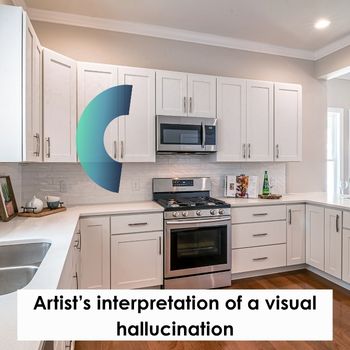
 Eye conditions such as macular degeneration can sometimes lead to visual hallucinations. A visual hallucination means seeing something that is not really there.
The eyes send visual signals to the brain, and the brain interprets them. When vision loss reduces the amount of information reaching the brain, the brain may fill in the missing visual details. This can cause a person to see grid patterns, people, lines, shapes, or other images that are not actually in front of them.
This is known as Charles Bonnet syndrome (CBS). It is linked to vision loss and does not mean that a person is losing touch with reality.
Which eye conditions can cause visual hallucinations? How can you identify and manage them? Is it possible to prevent these eye conditions in the first place? Can nutrition and supplements help?
Charles Bonnet Syndrome (CBS)
To compensate for the lack of visual signals that the brain receives from the eyes, it appears that spontaneous nerve activity that normally would be suppressed gets through. This results in the hallucinatory images that are seen in Charles Bonnet Syndrome (CBS).
CBS is more common in those with some vision loss in both eyes, though it can still happen if the vision loss is in one eye only. Up to 30% of those with vision impairment in both eyes may experience this condition. CBS can occur in those who have only a few blind spots with minimal vision loss.
The hallucinations usually occur in darkened environments, such as a dark room or at night. Older people with vision loss who tend to be isolated are more susceptible. With time, hallucinations tend to diminish as the brain adapts to receiving less visual input.
Examples of visual hallucinations in CBS are:
- Lines or shapes
- Flashes of light
- Seeing people who are not there
- Grid patterns
- Elaborate vistas
- Disembodied faces
- Detailed images
- Flowers
- Animals
- Moving images
Macular Degeneration and Cataracts Can Cause Visual Hallucinations
Macular degeneration is the number one eye disease that causes vision loss. This eye disease damages the macula, the part of the retina needed for sharp central vision. One study estimates that more than 12% of people with macular degeneration experience visual hallucinations. 1
The positive news is that numerous peer reviewed research studies have shown that macular degeneration can be managed through diet, exercise, lifestyle considerations, targeted supplementation and following your eye doctor’s instructions closely.
People who have cataracts can also have visual hallucinations. 2 These hallucinations can be fleeting, lasting just seconds, or may linger for a day or so.
Strategies for Managing CBS
If you experience visual hallucinations from Charles Bonnet Syndrome, consider these tips:
- Adjust your environment to counteract the hallucination. For example, if you’re in a darkened room when a hallucination occurs, switch on a light and give your brain some new visual input.
- Try looking at something else, blinking, or moving your eyes from side to side.
- Divert your attention by talking to someone in the room or turning on the TV.
- Move around and focus your attention elsewhere.
- Make sure you’re getting all the rest you need, so you have the energy to cope with challenges.
- Do what you can to enhance your remaining vision, such as using magnifying glasses or brighter light.
Other Causes of Visual Hallucinations
- Delirium: A sudden episode of confusion can sometimes cause hallucinations. In older adults, delirium may be triggered by an infection, such as a urinary tract infection or pneumonia, as well as dehydration or electrolyte imbalance. This is a medical emergency and needs prompt care. 3
- Medication Side Effects: Some medications can cause hallucinations as an unwanted side effect. These may include certain Parkinson’s disease medications, sleep aids, and corticosteroids.
- Vascular Events: A stroke or transient ischemic attack (TIA) can interfere with the brain areas that help process vision and perception. 4
- Dementia and Neurological Disorders: Alzheimer’s disease, Parkinson’s disease, and Dementia with Lewy Bodies (DLB) are among the conditions most often linked with complex visual hallucinations.
Natural Supplements for CBS
Yi-Gan San (YGS): Clinical trials published via PubMed indicate that this traditional Japanese herbal medicine may safely and significantly decrease visual hallucination scores in CBS patients. 5 The researchers concluded that Yi-gan san may be a safe and effective way to help manage visual hallucinations in people with Charles Bonnet syndrome. However, they also noted that more rigorous research is needed, especially double-blind, placebo-controlled clinical trials. Given the design characteristics of this trial, the present findings should be taken cautiously. Yi-Gan San can be ordered through Dragon Herbs, Please consult with your doctor before taking this supplement.
Nutrients That May Help
Charles Bonnet syndrome (CBS) is primarily managed by treating the underlying vision loss and altering your environment. While no specific nutrient cures CBS, nutrients that support overall retinal health-like Omega-3 fatty acids, Lutein, Zeaxanthin, and Vitamin E-can stabilize vision loss, potentially reducing the visual triggers that cause hallucinations.
Essential vision nutrients and their natural food sources include:
Omega-3 Fatty Acids: These healthy fats help support retinal health. Good food sources include oily fish such as salmon, trout, and sardines.
Lutein and Zeaxanthin: These antioxidants help protect the macula, the central part of the retina. They are found in dark leafy greens such as spinach and kale, as well as in eggs.
Vitamins A, C, and E: Protect eye cells from oxidative stress. Found in almonds, citrus fruits, and sweet potatoes.
Natural Support for Macular Degeneration and Prevention
The same nutrients mentioned above are critical for maintaining and supporting retinal health, along with other essential nutrients including: taurine, bilberry, gingko biloba, alpha lipoic acid, mesozeaxanthin, B Vitamins. Other helpful nutrients include NMN, H2 molecular hydrogen, nitric oxide (supplement).
Suggested Supplements
Dr. Grossman’s Complete Eye Formula 2oz (oral spray)
Advanced Eye and Vision Support Formula – our whole food, organic, GMO-free formula with lutein and zeaxanthin.
Dr. Grossman’s Whole Food Organic Superfood Multi-Vitamin 120 Vcaps
Dr. Grossman’s Whole Food Combo 2-Month Special – includes 2 bottles of the Advanced Eye and Vision Support formula and 2 bottles of Dr. Grossman’s Whole Food Organic Superfood Multivitamin.
ReVision Formula (wild-crafted herbal formula) 2 oz – based on classic Chinese medicine Liver tonic formula to help support healthy circulation and blood flow throughout the eyes and body.
Dr. Grossman’s Blood Vessel Control Formula 2oz – helps reduce the risk of unwanted blood vessel growth, supports healthy circulation, reduces inflammation, and more.
Dr. Grossman’s Bilberry/Ginkgo Combination 2oz (60ml) – helps support healthy circulation and strengthens blood vessels and capillaries.
H2 Elite Molecular Hydrogen 60 tabs
NMN Wonderfeel Capsul 60 vegcaps – helps protect ganglion cells in the retina and optic nerves from damage, reduces inflammation, supports the immune system.
Taurine Extra Strength 1000 mg 100 vcaps (TAU30)
Devices
Microcurrent Stimulation Home Unit – Numerous studies have shown daily use of microcurrent stimulation at home help support retinal health by strengthening circulation to the back of the eyes, increasing energy production within the cells to support better functioning, and helping the retina eliminate waste.
Microcurrent Stimulation 100ile Purchase Option
OR
MicroCurrent Stimulation 100ile Rent-to-Purchase Option (Total Price $1,095)
Packages:
AMD Package 1 (3-month supply) – there are additional AMD package as well that add other targeted supplements that are in the AMD Package 1.
Anti-Inflammatory Eye and Whole Body Package 1 (1 month supply)
Brain and Memory Support Package 1
NOTE: If you are not sure which supplement or package may be best for you, please feel free to email us at [email protected] or call us at 845-475-4158.
Books
Natural Eye Care: Your Guide to Healthy Vision and Healing
Natural Parkinson’s Support: Your Guide to Preventing and Managing Parkinson’s
- Le JT, Peprah D, Agrón E, et al. Associations between age-related eye diseases and Charles Bonnet syndrome in participants of the Age-Related Eye Disease Study 2: report number 26. Ophthalmology. 2022;129(2):233-235. doi:10.1016/j.ophtha.2021.08.012 ↩
- Ibid: Le JT, Peprah D, Agrón E, et al ↩
- Alzheimer’s Society. Hallucinations and dementia (Internet). London: Alzheimer’s Society; (cited 2026 Jul 10). Available from: https://www.alzheimers.org.uk/about-dementia/stages-and-symptoms/hallucinations ↩
- https://pmc.ncbi.nlm.nih.gov/articles/PMC6336209/ ↩
- Miyaoka T, Furuya M, Kristian L, Wake R, Kawakami K, Nagahama M, Kawano K, Ieda M, Tsuchie K, Horiguchi J. Yi-gan san for treatment of charles bonnet syndrome (visual hallucination due to vision loss): an open-label study. Clin Neuropharmacol. 2011 Jan-Feb;34(1):24-7. ↩
