
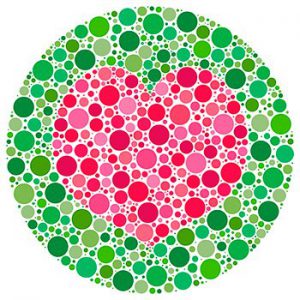
 Approximately eight per cent of men and one-half of one per cent of women in the U.S. have a problem with their color perception.
Most colorblind people have lost only part of their color vision. Usually, only one or two types of cones are either absent or not functioning normally. If the dysfunction is in green cones, a person will be deficient picking up green. However, red and blue colors and combinations of red and blue will still be seen.
Read More »
 Rod-Cone Dystrophy is a genetically-based deterioration of vision caused by damage to the photoreceptors in the eye. Rods and cones are the photoreceptor cells in the retina that give us daytime and night time vision. Genes that provide the blueprint for manufacturing proteins crucial to the eye’s rods and cones are damaged. Without enough of these proteins, vision deteriorates and blindness may result.
Much of the current research into rod-cone dystrophy is focused on genetic research. Scientists are busy identifying the faulty genes and how they function. Stem cells or other genetic therapy offers hope for a treatment and possibly cure in the future. In the meantime, nutritional and lifestyle choices may
Read More »
Natural Eye Care, Inc.
3 Paradies Lane
New Paltz, New York 12561
Phone: 845.475.4158

NaturalEyeCare™ started in 1999 to help the public and professionals learn about complementary care in eye disease treatment.
The information and recommendations we offer are based on over 30 years of peer review research and personal clinical experience which guides us in providing a valuable resource to our readers, customers and patients regarding maintaining healthy vision naturally.
We believe that vision health is intimately connected to overall mental, physical and spiritual health. Therefore we encourage people to look at their overall lifestyle and diet as part of keeping healthy vision and reducing the risk of eye disease onset. This includes diet, regular exercise, and management of daily stress. If one has health issues such as high blood pressure, a thyroid imbalance, any autoimmune disease and/or are on medication(s), these possible contributions to eye disease should considered when working with your health care professional.
Please do not hesitate to call us at 845.475.4158 with any questions and concerns.