
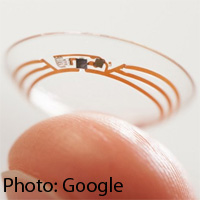
 Google has announced plans to build a contact lens that can monitor blood sugar levels. The device that may come replete with miniature, flexible electronics, sensors and antennae. The lens would keep track of blood sugar levels via human tears. Google’s contact lens would be able to alert wearers when their blood sugar levels are too high or too low. For diabetics, this could theoretically free them from the need for frequent finger pricks to check blood sugar. It could also give them tools to better manage their blood sugar. Diabetes can lead to diabetic retinopathy, a serious eye disease (learn more).
While the device still
needs to get approval from the US Food and Drug Administration (June 2014), GMA News reported that Google acquired a patent in April for the sensors. If the lens reaches the consumer market, it could pave the way for a dazzling array of potential applications via contact lens. The devices begs the question of the safety and hygiene issues tied to reusable contact lenses. While daily use (disposable) contact lenses are usually free from these hazards, presumably, Google’s monitoring contact lenses may be too expensive to come in a daily disposable model.