
 Guest Blogger, Richard Keane
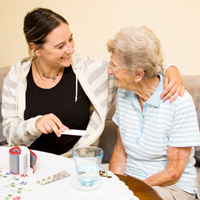
A new review has revealed that thousands of patients in UK care homes (nursing homes) are missing out on sight tests and acceptable standards of eye care. The review, compiled by the Thomas Pocklington Trust and the International Longevity Centre UK, claims that up to half of the 400,000 elderly people living in UK care homes suffer from sight loss that could be treated. Diseases prevalent in the elderly include glaucoma, cataracts, and macular degeneration. However, eye health is being neglected in the majority of homes, with some carers assuming that there is no need for sight testing in elderly patients, especially in the case of those with Alzheimers Disease (dementia), and a lack of national policy is causing eye care to fall low down on the list of care priorities.
Read More »
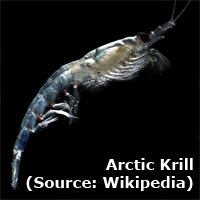 Age-related macular degeneration is a serious and common eye ailment in the aging population, but an Italian study showed that taking just 4mg of astaxanthin per day mitigated the symptoms.
ARMD — Age-Related Macular Degeneration – is the gradual breakdown of the cells of the macula. The macula a small, yellow-colored part of the eye that is near the center of the retina. When this breaks down, central vision is compromised. People with ARMD often have difficulty recognizing faces, reading, writing, and driving. Peripheral vision is unaffected.
 As people age, eye diseases and conditions that commonly occur include macular degeneration, cataracts, vitreous tears/retinal tears and detachments, glaucoma, diabetic retinopathy, dry eyes, and eye floaters.
The question arises as to whether eye disease is inevitable with age. Will all older adults eventually have a “glint” in their eyes after cataracts surgery? More than 50% of people aged 75+ have glaucoma, cataracts, or macular degeneration. Can aging adults do anything to prevent, manage or slow down eye diseases associated with aging?
A large body of research is accumulating that shows the effects of regular eye exercises, good nutrition, and targeted supplementation on preventing and/or managing eye conditions. For instance, peer-reviewed research has shown that the risk of getting macular degeneration can be significantly reduced by taking fish oil and lutein on a daily basis. Vigorous exercise may reduce the incidence of glaucoma. And the effects of antioxidants on preventing cataract and macular degeneration have been the subject of significant research.
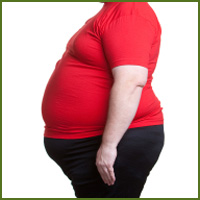 The obesity epidemic may have an impact on the health of the eyes. While scientific studies do not seem to have found a direct link between obesity and eye disease, maintaining a healthy weight supports your overall health and helps prevent diseases that can harm the eyes. Here’s why.
Obesity is a step up from “overweight.” The National Institute of Health (NIH) in the United States, commonly uses Body Mass Index (BMI). This is a ratio of height to weight. Overweight is a BMI of 25-29, and obesity is a BMI of 30 or more. For example, 5′ 7″ person who weighs 160 pounds would have a BMI of 25 (just barely overweight). This same person at 195 pounds would have a BMI of 30 (obese) and at serious risk of disease such as heart disease, cardio-vascular disease, stroke, cancer, diabetes and lower-body joint problems.
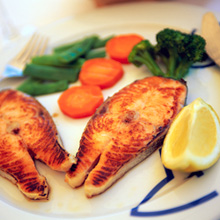 A breakthrough laboratory study has found that DHA, an Omega 3 fatty acid, prevented Age-Related Macular Degeneration (ARMD).
A Canadian research team at the University of Alberta Faculty of Medicine and Dentistry fed DHA to mice and measured the levels of a toxin called lipofuscin. Lipofuscin builds up in the eye with age, causing ARMD. Mice who ate the DHA for at least 6 months had significantly lower levels of the toxin.
Age-related macular degeneration affects around nine million adults aged 40+ in the USA. ARMD can cause serious loss of vision. It affects the central part of vision, not peripheral vision. Deterioration of the cells in the macula at the eye’s center makes reading, writing, and driving difficult.
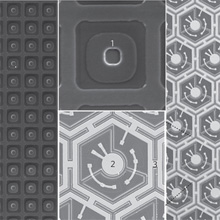 Experimental research at Stanford University school of medicine may result in the restoration of vision for people whose sight has been lost due to Age-Related Macular Degeneration (ARMD), Retinitis Pigmentosa and other diseases of the retina. Surgeons plan to implant small solar panel-like cells under the retina. When the patient wears a special type of goggles, a camera and small computer will allow them to see the world around them again.
The goggles will have a tiny camera and a small computer. The computer will process data from the camera and display images on an LCD (liquid crystal micro-display) on the goggles. The images on the LCD are beamed using laser pulses of IR-A (near-infrared) light to tiny photovoltaic silicon chips implanted under the retina. The electrical currents from the chips’ photodiodes would trigger signals in the retina. From the retina, the message would flow to the brain, giving the patient the ability to see.
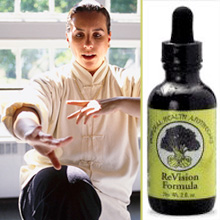 What is ReVision formula, and how can its classic Chinese medicinal ingredients help improve eye health and conditions such as eye floaters? ReVision formula is a liquid taken orally several times per day with water. This tincture is based on Rambling Powder, also known as Xiao Yao San.
ReVision Formula is designed to support healthy vision. Some of the conditions it may address include macular degeneration, eye floaters, and glaucoma. The idea is that ReVision Formula helps improve blood circulation to the eye. From the point of view of Chinese medicine, it helps eliminate stagnation of the body’s energy (chi) to the eyes.
 A research study published in Archives of Ophthalmology showed that ingesting omega-3 fatty acids and fish affects the incidence of AMD (age-related macular degeneration, or ARMD) in women. This large study (nearly 40,000 participants) over 10 years found that women who had the highest of intake of Docosahexaenoic acid (DHA, an omega-3 fatty acid) had the lowest risk of AMD versus subjects with the lowest intake. Women who ate at least one serving of fish per week had a relative risk of AMD of 0.58 compared with women who ate less than one serving per month.
This was a retrospective study that involved 39,876 female health care workers completing food frequency questionnaires. At the beginning of the study, none of them had ARMD. 265 developed age-related macular degeneration by the end of the ten-year study. Few regular fish eaters developed the disease, but the ladies who skimped on fish were significantly more likely to get AMD.
 A new study published in the November 2011 Journal of Optometry confirms improved vision in elderly patients with early Macular Degeneration through nutritional supplementation with Zeaxanthin (a carotenoid in the family of lutein).
The Zeaxanthin and Visual Function Study (ZVF), conducted by eye nutrition pioneer Stuart Richer, PhD, OD at the Veterans Administration Hospital in Chicago, shows scientific evidence that dietary Zeaxanthin improved vision in night driving and fine detail, among others.
 A study indicates that melatonin supplements may slow and even reverse the effects of age-related macular degeneration (ARMD). ARMD is the leading cause of serious vision loss in elderly persons.
The symptoms of ARMD include seeing wavy lines that should be straight, blurred text, and/or dark or empty spaces in the center of the field of vision. The cells that sense light in the eye’s macula stop functioning correctly and after some time, they do not work at all. A simple visual test called the Asmler grid is an effective screening for age-related macular degeneration.
Natural Eye Care, Inc.
3 Paradies Lane
New Paltz, New York 12561
Phone: 845.475.4158

NaturalEyeCare™ started in 1999 to help the public and professionals learn about complementary care in eye disease treatment.
The information and recommendations we offer are based on over 30 years of peer review research and personal clinical experience which guides us in providing a valuable resource to our readers, customers and patients regarding maintaining healthy vision naturally.
We believe that vision health is intimately connected to overall mental, physical and spiritual health. Therefore we encourage people to look at their overall lifestyle and diet as part of keeping healthy vision and reducing the risk of eye disease onset. This includes diet, regular exercise, and management of daily stress. If one has health issues such as high blood pressure, a thyroid imbalance, any autoimmune disease and/or are on medication(s), these possible contributions to eye disease should considered when working with your health care professional.
Please do not hesitate to call us at 845.475.4158 with any questions and concerns.