
 A study involving more than 2000 participants in Australia has shown an association between regular aspirin use and wet age-related macular degeneration (ARMD). The prospective analysis study involved four examinations over 15 years (1992-1994 to 2007-2009). Subjects filled in a questionnaire at the beginning of the study that recorded aspirin usage, heart disease and risk factors for ARMD. A retinal photograph was taken at each examination to determine whether subjects had wet (neovascular) ARMD and dry (geographic atrophy) ARMD.
Of all the subjects, 10.8% of them used aspirin regularly. The study results showed that they were more likely to develop wet ARMD (9.3% in aspirin users versus 3.7% in non-aspirin users). Even after adjusting for age, gender, smoking, history of
Read More »
 A fruit cup of mixed berries is a powerful snack: deeply colored fruits are filled with flavonoids and other antioxidants that help protect the body from disease. Antioxidants help prevent free-radical damage, which is believed to be responsible for the onset of eye diseases such as cataracts and macular degeneration.
The colored flavonoids found in berries are called “anthocyanins”. These water-soluble pigments make plants shades of red, purple and blue. Berries also contain flavonoids called “quercetin” and “apigenin”. In the field or in the wild, these flavonoids help protect the plant from pests and insects.
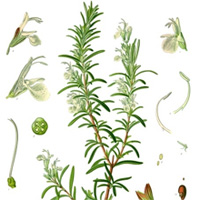 A chemical that occurs naturally in the common herb rosemary has been found to protect the eye from macular degeneration and other eye diseases. This study, published in Investigative Ophthalmology and Visual Science, is one of many recent investigations into the anti-inflammatory and antioxidant effects of the active ingredients in medicinal herbs. The compound in Rosemary is called “carnosic acid.”
Rosemary is a savory herb that adds flavor to a variety of recipes, including chicken, barbeques, salad dressing and tomato dishes. A member of the mint family, it is native to the Mediterranean region. Rosemarinus officinalis has evergreen, needle-like, fragrant leaves and tiny colorful flowers. It is a common decorative plant in gardens.
 The developing pre-natal eye requires light that passes through the body and into the womb, according to recent animal research. Mice that had no access to light during pregnancy gave birth to offspring whose eyes were not developed correctly. This indicated that small amounts of light are necessary, during gestation, to control eye blood vessel growth.
This research is considered to be a breakthrough, and scientists were surprised because until now, maternal exposure to light during pregnancy was not considered relevant to fetal development.
Read More »
 Vitamin D
A recent study in the Proceedings of the National Academy of Sciences found that Vitamin D may have cancer-fighting properties. At the same time, ironically, Vitamin D deficiency is becoming increasing prevalent in the United States due to fear of the harmful effects of sun and poor nutrition.
Excessive sun exposure is a leading cause of skin cancer and cataracts in the eyes. As people slap on sunscreen and cover up to protect themselves from ultra-violet rays, they may be inadvertently missing out on an important nutrient.
 An observational study on the effects of acupuncture on age related macular degeneration (ARMD) published in a Chinese journal showed significant improvement with acupuncture versus using vitamins A, E and a type of moss.
This was a small study with 84 patients and a total of 90 eyes that had age-related macular degeneration. They were randomly assigned to the acupuncture group or the medication group.
The acupuncture patients all had tiny, solid needles inserted into specific acupuncture points. Acupuncture is an ancient Chinese form of health management that treats patients by puncturing specific points in the body. The theory is that disease is caused by disruptions in “chi” or life force energy. Acupuncture is believed to stimulate the body to unblock the chi and allow life force to flow. In the United States, acupuncturists are licensed by the state.
 Should you take extra Vitamin A if you have Stargardt’s Disease? Vitamin A supplementation is frequently recommended for certain eye diseases (AMD and Retinitis Pigmentosa, for example). This nutrient is crucial for rebuilding photoreceptors cells and proper retinal functioning. However, a study on mice published in “Investigative Ophthalmology and Visual Science” indicated that Stargardt’s Disease patients may be damaged by taking Vitamin A.
An FDA-guided and -supervised study revealed that microcurrent stimulation, also called electrotherapy, resulted in significant vision improvements in 61% of patients suffering from dry macular degeneration. The research showed promise that microcurrent stimulation could also help patients with diabetic retinopathy or retinitis pigmentosa.
Microcurrent stimulation is a therapy designed to alleviate pain, promote the healing of wounds and improve results with transplanted tissues. The FDA has approved its use for these purposes under specific protocols. This therapy is commonly used by rehab specialists, anesthesiologists, orthopedic surgeons, and plastic surgeons.
 An enzyme acts as a catalyst to increase the rate of a chemical reaction. Enzymes are proteins. Scientists have named 3,000+ different enzymes, but perhaps 50,000 additional enzymes may exist. Enzymes all have specific functions that result in biochemical reactions. For example, certain enzymes are involved in the absorption of oxygen and production of energy; other enzymes help nutrients get into the cells.
Digestive enzymes produced by the pancreas are the most well-known, because they help break down food. Tay-Sachs disease and juvenile diabetes (Type I) are caused by genetic problems that inhibit the pancreas’s ability to generate the necessary enzymes in enough quantity.
 Breakthrough research into vision restoration may result in a new type of prosthetic for people suffering from vision loss due to retinal degenerative diseases such as macular degeneration and retinitis pigmentosa.
Researchers cracked the retinal code that the retina uses to communicate with the brain. Their initial research was on mice. They determined which electrical signals the retina uses when communicating with the brain. Then, they mimicked the signals using electric-signal sending glasses in blind mice. The animals’ vision was restored to near normal.
Natural Eye Care, Inc.
3 Paradies Lane
New Paltz, New York 12561
Phone: 845.475.4158

NaturalEyeCare™ started in 1999 to help the public and professionals learn about complementary care in eye disease treatment.
The information and recommendations we offer are based on over 30 years of peer review research and personal clinical experience which guides us in providing a valuable resource to our readers, customers and patients regarding maintaining healthy vision naturally.
We believe that vision health is intimately connected to overall mental, physical and spiritual health. Therefore we encourage people to look at their overall lifestyle and diet as part of keeping healthy vision and reducing the risk of eye disease onset. This includes diet, regular exercise, and management of daily stress. If one has health issues such as high blood pressure, a thyroid imbalance, any autoimmune disease and/or are on medication(s), these possible contributions to eye disease should considered when working with your health care professional.
Please do not hesitate to call us at 845.475.4158 with any questions and concerns.