
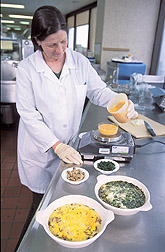
US government scientists realize the important role that nutrition plays in the health of the eyes.
Cataracts are caused by an accumulation of free radicals that cloud the lens of the eye through a process called oxidation. Antioxidants, these researchers agree, “are compounds in foods that help maintain healthy cells and tissues in the eye and other organs.” Prime sources of antioxidants include: leafy greens, eggs, blueberries, and bilberries.
In a study of almost 500 middle aged and older women, it was discovered that those who consumed more riboflavin, folate, beta carotene, lutein, zeaxanthin, and vitamins C and E were less likely to suffer from cataract symptoms than did those who consumes the least amounts of these nutrients.
Read More »
Are cataracts just an inevitable part of getting older? There is a lot of scientific research that indicates your diet and lifestyle choices actually have a lot to do with your risk of developing cataracts.
Smoking
Another study points to cigarettes as being a major cause of cataracts. In fact, smoking is implicated as the cause 20% of all cataracts cases. Men who smoke more than a pack a day increase their risk for cataracts by 205%! For female smokers, that risk increases a still substantial 63%.
Read More »

A genetic glitch may be responsible for incidents of cataracts in children.
According to a press release from Maine’s Jackson Laboratory, researchers have found that RNA granules, which are key components in the reproduction of genes, might be linked to eye development. Problems with RNA granules can result in juvenile cataracts and glaucoma. If there is a problem with a key gene, Tdrd7, the development of the lens of the eye will be compromised, leading to these potentially blinding conditions.
Read More »
Many years after the release of radiation disaster at Chernobyl, Russia, cataract have appeared as one of the health issues changing the lives of those people who were exposed to radiation when the reactor exploded. This has been reported by the United Nations Scientific Committee on the Effects of Atomic Radiation, UNSCEAR.
Researchers publishing in the journal Radiation looked at the eyes of 8,607 Chernobyl clean-up workers 12 and 14 years after they were exposed. Only 3.9% had nuclear cataracts, but 25% had posterior subcapsular or cortical cataracts from radiation exposure. Finding the prevalence of this other type of cataract leads scientists to believe that the exposure limits set for clean up workers by the International Commission on Radiological Protection (ICRP) were in fact too high. An article at EyeWorld.com states, “Thus, conventional wisdom regarding acceptable doses of radiation to the eye for space activities are actually not acceptable, according to this study.”
Read More »
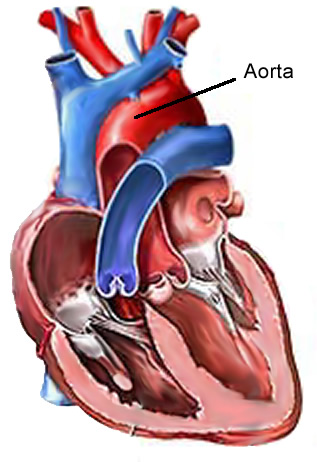
Free radicals might be a good thing?
At Natural Eye Care, we extol the benefits of antioxidants because they fight the free radicals that lead to oxidation, which in turn cause aging: skin changes such as the appearance wrinkles, and ocular changes, including the development of cataracts and macular degeneration.
Your eyes love antioxidants like those found in bilberry (a close relative to the blueberry) and in high quality supplements.
And yet, a new study published in The Journal of Physiology (online 28 February 2011) describes how free radicals are actually essential to the healthy functioning of the heart.
Read More »
A new study further supports the benefits of eating eggs.
Michigan State University researchers sought to determine how eggs might be part of a healthy diet and also determine the impact egg consumption may have on cholesterol. Egg eaters showed higher levels of such vital nutrients as vitamins B12, A, E, and C. The study does remind us to enjoy eggs in moderation – four eggs per week is optimal. Eating more than four eggs per week can lead to increased cholesterol.
Source: maculardegenerationassociation.org
Eating eggs can also help prevent a number of eye conditions including macular degeneration, cataracts, and glaucoma.
Read More »
Natural Eye Care, Inc.
3 Paradies Lane
New Paltz, New York 12561
Phone: 845.475.4158

NaturalEyeCare™ started in 1999 to help the public and professionals learn about complementary care in eye disease treatment.
The information and recommendations we offer are based on over 30 years of peer review research and personal clinical experience which guides us in providing a valuable resource to our readers, customers and patients regarding maintaining healthy vision naturally.
We believe that vision health is intimately connected to overall mental, physical and spiritual health. Therefore we encourage people to look at their overall lifestyle and diet as part of keeping healthy vision and reducing the risk of eye disease onset. This includes diet, regular exercise, and management of daily stress. If one has health issues such as high blood pressure, a thyroid imbalance, any autoimmune disease and/or are on medication(s), these possible contributions to eye disease should considered when working with your health care professional.
Please do not hesitate to call us at 845.475.4158 with any questions and concerns.