
 The FDA has approved a patented device called the iStent® Trabecular Micro-Bypass Stent that helps reduce eye pressure from glaucoma in patients who also have cataracts. The new device addresses the fact that 90 of patients with glaucoma are not compliant with their glaucoma eye drop instructions, and half stop using their drops after 6 months. iStent allow patients to use eye drops less often, and may even make the drops unnecessary.
Glaucoma is a serious and progressive eye disease in which a build-up of pressure in the eye causes damage. It may have no symptoms in its early stage and therefore, regular screening by an optometrist or ophthalmologist is necessary. Glaucoma is especially prevalent in the elderly.
 An enzyme acts as a catalyst to increase the rate of a chemical reaction. Enzymes are proteins. Scientists have named 3,000+ different enzymes, but perhaps 50,000 additional enzymes may exist. Enzymes all have specific functions that result in biochemical reactions. For example, certain enzymes are involved in the absorption of oxygen and production of energy; other enzymes help nutrients get into the cells.
Digestive enzymes produced by the pancreas are the most well-known, because they help break down food. Tay-Sachs disease and juvenile diabetes (Type I) are caused by genetic problems that inhibit the pancreas’s ability to generate the necessary enzymes in enough quantity.
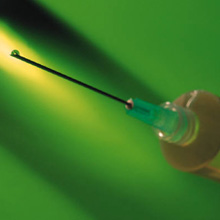 The eye drug Lucentis has been approved by the Food and Drug Administration for treating the disease diabetic macular edema (DME). This drug was originally developed by Roche to treat cancer. Lucentis has also been approved to treat two eye disorders, macular degeneration and now, diabetic macular edema.
The leading cause of new cases of blindness in adults in the US is diabetes. Diabetic macular edema causes swelling and blurred vision. Without treatment, it can result in permanent vision loss. Of the 26,000 Americans with diabetes, more than 560,000 are estimated to have diabetic macular edema. All diabetics should have a comprehensive dilated annual eye examination to screen for this disease, as it may have no symptoms in the early stages.
 Breakthrough research into vision restoration may result in a new type of prosthetic for people suffering from vision loss due to retinal degenerative diseases such as macular degeneration and retinitis pigmentosa.
Researchers cracked the retinal code that the retina uses to communicate with the brain. Their initial research was on mice. They determined which electrical signals the retina uses when communicating with the brain. Then, they mimicked the signals using electric-signal sending glasses in blind mice. The animals’ vision was restored to near normal.
 Did you know that the leading cause of blindness in children is eye inquires, and that most eye injuries in schoolchildren are sports-related? According to The National Eye Institute, the damage from eye injuries can be temporary or, or they can lead to permanent loss of vision.
School children eye injury statistics:
 Everyone who suffers from migraine headaches wants to know how to prevent their next migraine. Recent strong research has resulted in guidelines for doctors to help prevent their patients’ future migraines, including the use of herbs, vitamins and minerals. The guidelines make recommendations for specific types of patients, such as patients with certain other conditions, obese patients, new migraine patients, and pregnant/lactating women.
This research, conducted by the Canadian Headache Society, reviewed a large body of double-blind studies according to standardized criteria. They also did a general literature review and got expert consensus for aspects of prophylactic (preventative) migraine therapies that did not have randomized clinical trials.
 Guest Blogger, Richard Keane
A new review has revealed that thousands of patients in UK care homes (nursing homes) are missing out on sight tests and acceptable standards of eye care. The review, compiled by the Thomas Pocklington Trust and the International Longevity Centre UK, claims that up to half of the 400,000 elderly people living in UK care homes suffer from sight loss that could be treated. Diseases prevalent in the elderly include glaucoma, cataracts, and macular degeneration. However, eye health is being neglected in the majority of homes, with some carers assuming that there is no need for sight testing in elderly patients, especially in the case of those with Alzheimers Disease (dementia), and a lack of national policy is causing eye care to fall low down on the list of care priorities.
Read More »
 Age-related macular degeneration is a serious and common eye ailment in the aging population, but an Italian study showed that taking just 4mg of astaxanthin per day mitigated the symptoms.
ARMD — Age-Related Macular Degeneration – is the gradual breakdown of the cells of the macula. The macula a small, yellow-colored part of the eye that is near the center of the retina. When this breaks down, central vision is compromised. People with ARMD often have difficulty recognizing faces, reading, writing, and driving. Peripheral vision is unaffected.
 The sun represents a potential threat to the eyes. Overexposure to sunlight can cause an increased risk of cataracts, cancer of the lids of the eyes, and even cornea burns. It is important to prevent eye disease and injury caused by UV radiation and sunlight.
Dr. George Cioffi is the chief of ophthalmology at New York-Presbyterian Hospital/Columbia University Medical Center. He points out that people at elevated risk of eye damage from the sun include cataract surgery patients, people with light colored eyes, patients who have disorders of the retina, and patients whose medications cause sensitivity to light.
 As people age, eye diseases and conditions that commonly occur include macular degeneration, cataracts, vitreous tears/retinal tears and detachments, glaucoma, diabetic retinopathy, dry eyes, and eye floaters.
The question arises as to whether eye disease is inevitable with age. Will all older adults eventually have a “glint” in their eyes after cataracts surgery? More than 50% of people aged 75+ have glaucoma, cataracts, or macular degeneration. Can aging adults do anything to prevent, manage or slow down eye diseases associated with aging?
A large body of research is accumulating that shows the effects of regular eye exercises, good nutrition, and targeted supplementation on preventing and/or managing eye conditions. For instance, peer-reviewed research has shown that the risk of getting macular degeneration can be significantly reduced by taking fish oil and lutein on a daily basis. Vigorous exercise may reduce the incidence of glaucoma. And the effects of antioxidants on preventing cataract and macular degeneration have been the subject of significant research.
Natural Eye Care, Inc.
3 Paradies Lane
New Paltz, New York 12561
Phone: 845.475.4158

NaturalEyeCare™ started in 1999 to help the public and professionals learn about complementary care in eye disease treatment.
The information and recommendations we offer are based on over 30 years of peer review research and personal clinical experience which guides us in providing a valuable resource to our readers, customers and patients regarding maintaining healthy vision naturally.
We believe that vision health is intimately connected to overall mental, physical and spiritual health. Therefore we encourage people to look at their overall lifestyle and diet as part of keeping healthy vision and reducing the risk of eye disease onset. This includes diet, regular exercise, and management of daily stress. If one has health issues such as high blood pressure, a thyroid imbalance, any autoimmune disease and/or are on medication(s), these possible contributions to eye disease should considered when working with your health care professional.
Please do not hesitate to call us at 845.475.4158 with any questions and concerns.