
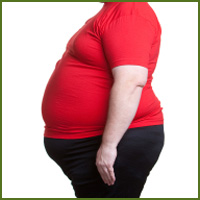
 The obesity epidemic may have an impact on the health of the eyes. While scientific studies do not seem to have found a direct link between obesity and eye disease, maintaining a healthy weight supports your overall health and helps prevent diseases that can harm the eyes. Here’s why.
Obesity is a step up from “overweight.” The National Institute of Health (NIH) in the United States, commonly uses Body Mass Index (BMI). This is a ratio of height to weight. Overweight is a BMI of 25-29, and obesity is a BMI of 30 or more. For example, 5′ 7″ person who weighs 160 pounds would have a BMI of 25 (just barely overweight). This same person at 195 pounds would have a BMI of 30 (obese) and at serious risk of disease such as heart disease, cardio-vascular disease, stroke, cancer, diabetes and lower-body joint problems.
 Drug maker GlaxoSmithKline has been found guilty of fraud in the way it reported research on, or marketed, on 3 of its medications in the largest settlement against a drug company in US history–$3 billion. The issues involved 10 drugs, and included marketing “off-label” use of the antidepressants Paxil and Wellbitrin and the asthma drug Advair, and not reporting all the safety data for the diabetes drug Avandia.
GlaxoSmithKline pleaded guilty and agreed to pay $3b total in both criminal fines and civil settlements with the federal and state governments. The fines will be paid next year.
In a press conference, Deputy US Attorney General James Cole said the settlement was “unprecedented in both size and scope.”
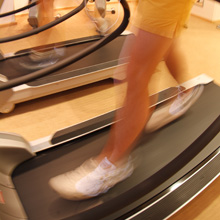 Want to reduce your risk of glaucoma? Stay physically active. A study in the Investigative Ophthalmology & Visual Science Journal showed that higher levels of activity seems to have a beneficial impact on ocular perfusion pressure (OPP). OPP is a crucial risk factor for developing glaucoma.
The study was done on 5,650 adults aged 48-90 in the U.K. It measured the relationship between current OPP and physical activity over time. The subjects filled out lifestyle and health questionnaires. The surveys recorded how much physical activity the subjects got during both work hours and leisure time. They were given tests to measure eye pressure (intraocular pressure — IOP) and blood pressure.
This study showed a 25% reduced risk of low OPP in study participants who had moderate physical exercise approximately 15 years before.
 A new study demonstrated that adding oil or fats to your salads and vegetables increases the body’s ability to absorb vision-boosting lutein, lycopene, beta-carotene, zeaxanthin and other carotenoids. Carotenoids are a family of nutrients that absorb blue light. They are naturally colored in the yellows and reds on the light spectrum.
The study in the Journal Molecular Nutrition & Food Research showed that monounsaturated fats allowed for the best absorption of carotenoids. Carotenoids are antioxidants that are associated with reduced risk of major diseases afflicting Westerners including CV – heart disease and cardiovascular disease, cancer and macular degeneration. Another study showed that supplementing with a carotenoid in the family of lutein called zeaxanthin improved vision in elderly adults with macular degeneration.
Many natural foods are rich in carotenoids. Here are some recipe ideas:
 Standard glaucoma treatment depends on adherence to a program of medication and medical appointments. A recent study indicated that an interactive, automated series of phone calls to glaucoma patients increased compliance with their treatment. However, the control group who received no calls had equally good compliance, indicating further research is needed.
The lowest glaucoma treatment compliance rates are typically found among African Americans and patients who do not understand the importance of treating glaucoma over the long term. This study was conducted on 312 patients at an eye clinic at a large public hospital and at a Veterans Affairs facility eye clinic. They were mostly male and African American, with an average age of 63, and had a history of not taking their medication regularly, not refilling their prescriptions, and not keeping all the recommended medical appointments.
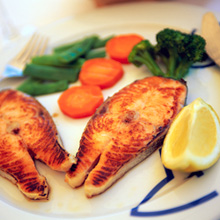 A breakthrough laboratory study has found that DHA, an Omega 3 fatty acid, prevented Age-Related Macular Degeneration (ARMD).
A Canadian research team at the University of Alberta Faculty of Medicine and Dentistry fed DHA to mice and measured the levels of a toxin called lipofuscin. Lipofuscin builds up in the eye with age, causing ARMD. Mice who ate the DHA for at least 6 months had significantly lower levels of the toxin.
Age-related macular degeneration affects around nine million adults aged 40+ in the USA. ARMD can cause serious loss of vision. It affects the central part of vision, not peripheral vision. Deterioration of the cells in the macula at the eye’s center makes reading, writing, and driving difficult.
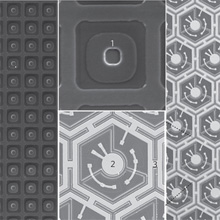 Experimental research at Stanford University school of medicine may result in the restoration of vision for people whose sight has been lost due to Age-Related Macular Degeneration (ARMD), Retinitis Pigmentosa and other diseases of the retina. Surgeons plan to implant small solar panel-like cells under the retina. When the patient wears a special type of goggles, a camera and small computer will allow them to see the world around them again.
The goggles will have a tiny camera and a small computer. The computer will process data from the camera and display images on an LCD (liquid crystal micro-display) on the goggles. The images on the LCD are beamed using laser pulses of IR-A (near-infrared) light to tiny photovoltaic silicon chips implanted under the retina. The electrical currents from the chips’ photodiodes would trigger signals in the retina. From the retina, the message would flow to the brain, giving the patient the ability to see.
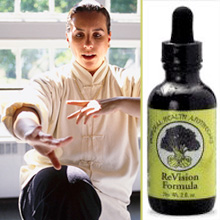 What is ReVision formula, and how can its classic Chinese medicinal ingredients help improve eye health and conditions such as eye floaters? ReVision formula is a liquid taken orally several times per day with water. This tincture is based on Rambling Powder, also known as Xiao Yao San.
ReVision Formula is designed to support healthy vision. Some of the conditions it may address include macular degeneration, eye floaters, and glaucoma. The idea is that ReVision Formula helps improve blood circulation to the eye. From the point of view of Chinese medicine, it helps eliminate stagnation of the body’s energy (chi) to the eyes.
 A pilot study published in Phytotherapy Research compared curcumin – derived from natural turmeric – with the drug diclofenac for treating rheumatoid arthritis (RA). Natural curcumin actually reduced RA symptoms even better than the RA drug diclofenac: a 44% reduction in symptoms on the Disease Activity Score and the American College of Rheumatology criteria for reduction of swelling and tenderness of joins. Patients receiving diclofenac had a 42% reduction.
This is good news because curcumin has no known side-effects. Using anti-inflammatory medications over the long term sometimes has side effects that can result in stomach ulcers and damage to the kidneys. The extremely popular non-steroidal anti-inflammatory medication Vioxx (Rofecoxib – $2.5 billion in sales in 2003) was removed from the market in 2004 due to increased risk of heart attacks and stroke.
 Children are under a great deal of pressure to excel in their studies in Southeast Asia, and a new study in The Lancet shows they may by paying the price by damaging their eyes. Myopia, or nearsightedness, used to have a rate of 20% to 30% on average in Southeast Asia. A recent study put that number at more than 80% in young adults.
School is very competitive, and many students spend most of their time indoors studying and taking classes. They do not receive sufficient amounts of outdoor light to counter-act their indoor eye use.
Natural Eye Care, Inc.
3 Paradies Lane
New Paltz, New York 12561
Phone: 845.475.4158

NaturalEyeCare™ started in 1999 to help the public and professionals learn about complementary care in eye disease treatment.
The information and recommendations we offer are based on over 30 years of peer review research and personal clinical experience which guides us in providing a valuable resource to our readers, customers and patients regarding maintaining healthy vision naturally.
We believe that vision health is intimately connected to overall mental, physical and spiritual health. Therefore we encourage people to look at their overall lifestyle and diet as part of keeping healthy vision and reducing the risk of eye disease onset. This includes diet, regular exercise, and management of daily stress. If one has health issues such as high blood pressure, a thyroid imbalance, any autoimmune disease and/or are on medication(s), these possible contributions to eye disease should considered when working with your health care professional.
Please do not hesitate to call us at 845.475.4158 with any questions and concerns.