
 The Food and Drug Administration (FDA) has recommended that the block-buster sleeping pill Ambien (zolpidem) dose be lowered, especially for women, due to negative side-effects. The drug stays in women’s system much longer than in men’s. Too many car accidents the day after taking Ambien have lead to the government agency to halve the recommended dose for women, and re-consider the dose for men.
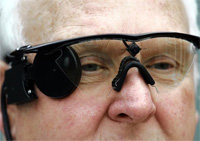 The first implanted device for adults with retinitis pigmentosa has been approved by the U.S. Food and Drug Administration. Called the Argus II Retinal Prosthesis System, the device includes a tiny video camera, a transmitter (on a pair of glasses), and a video processing unit. The patient’s retina is replaced with a prosthesis. The camera wirelessly transmits visual information to the retinal prosthesis to improve vision.
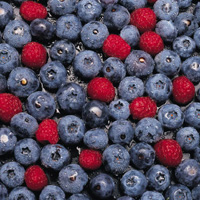 A fruit cup of mixed berries is a powerful snack: deeply colored fruits are filled with flavonoids and other antioxidants that help protect the body from disease. Antioxidants help prevent free-radical damage, which is believed to be responsible for the onset of eye diseases such as cataracts and macular degeneration.
The colored flavonoids found in berries are called “anthocyanins”. These water-soluble pigments make plants shades of red, purple and blue. Berries also contain flavonoids called “quercetin” and “apigenin”. In the field or in the wild, these flavonoids help protect the plant from pests and insects.
 Diminished vitamin D levels may be linked to the spread of the flu. Research found that nonpandemic influenzas occur primarily in temperate regions and in winter when the skin’s vitamin D formation due to sun exposure is low. Influenza seasonality is seldom observed in tropical regions.
Although an initial pandemic can start in any season, secondary waves often occur in autumn or winter, and can be more serious. The increased lethality of secondary winter waves can also be explained by decreased vitamin D levels.
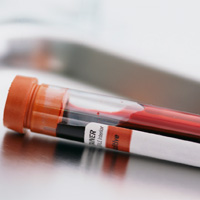 Elevated levels of high-sensitivity C-reactive protein (hsCRP) has been correlated with an increased future risk of Age-Related Macular Degeneration (ARMD). This breakthrough study may help identify underlying reasons for the development of ARMD. It may also assist with the development of a test to predict who is most at risk of macular degeneration, and give the patient and doctor time to head off the development of this sight-stealing disease.
 A significant study has found that the deleterious effects of traumatic brain injury in American football players can be mitigated using a natural regimen of weight loss (if needed), fish oil, vitamins, and brain-enhancing supplements including ginkgo biloba. The positive results could help reverse brain damage in contact sport athletes, alcohol and drug addicts, chronic traumatic encephalopathy (CTE) and people who have had brain damage from concussions.
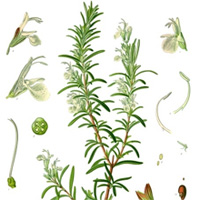 A chemical that occurs naturally in the common herb rosemary has been found to protect the eye from macular degeneration and other eye diseases. This study, published in Investigative Ophthalmology and Visual Science, is one of many recent investigations into the anti-inflammatory and antioxidant effects of the active ingredients in medicinal herbs. The compound in Rosemary is called “carnosic acid.”
Rosemary is a savory herb that adds flavor to a variety of recipes, including chicken, barbeques, salad dressing and tomato dishes. A member of the mint family, it is native to the Mediterranean region. Rosemarinus officinalis has evergreen, needle-like, fragrant leaves and tiny colorful flowers. It is a common decorative plant in gardens.
 The developing pre-natal eye requires light that passes through the body and into the womb, according to recent animal research. Mice that had no access to light during pregnancy gave birth to offspring whose eyes were not developed correctly. This indicated that small amounts of light are necessary, during gestation, to control eye blood vessel growth.
This research is considered to be a breakthrough, and scientists were surprised because until now, maternal exposure to light during pregnancy was not considered relevant to fetal development.
Read More »
 Transplanting light-sensitive photoreceptor cells into mice with night blindness resulted in improved night vision. Night blindness means seeing poorly in the darkness, but seeing normally when there is enough light. In this groundbreaking research, scientists injected light-sensitive photoreceptor cells into night-blind mice’s eyes. After this treatment, the animals were able to see well enough to navigate a water maze and swim toward a visual cue in dimly lit conditions. Controls who did not receive the treatment were unable to efficiently navigate the maze.
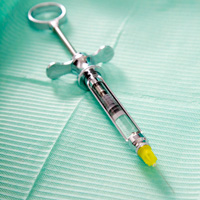 Injecting “precursor” photoreceptor cells into the eyes of totally blind mice resulted in the reconstruction the entire light-sensitive layer inside the eye, restoring the experimental animals’ vision. While the quality of vision was not easy to evaluate, the mice ran away from bright light, had pupils that responded to light, and had brain activity showing they were processing visual information.
Researchers at the University of Oxford studied mice that had retinas without any light-sensing photoreceptor cells. Unable to distinguish between dark and light, these mice were completely blind. The precursor cells they used were designed to develop into retinal building blocks after getting injected into the eye. Just two weeks after receiving the injection of cells, each eye developed a retina.
Natural Eye Care, Inc.
3 Paradies Lane
New Paltz, New York 12561
Phone: 845.475.4158

NaturalEyeCare™ started in 1999 to help the public and professionals learn about complementary care in eye disease treatment.
The information and recommendations we offer are based on over 30 years of peer review research and personal clinical experience which guides us in providing a valuable resource to our readers, customers and patients regarding maintaining healthy vision naturally.
We believe that vision health is intimately connected to overall mental, physical and spiritual health. Therefore we encourage people to look at their overall lifestyle and diet as part of keeping healthy vision and reducing the risk of eye disease onset. This includes diet, regular exercise, and management of daily stress. If one has health issues such as high blood pressure, a thyroid imbalance, any autoimmune disease and/or are on medication(s), these possible contributions to eye disease should considered when working with your health care professional.
Please do not hesitate to call us at 845.475.4158 with any questions and concerns.