
 New evidence continues to support dietary lutein, carotenoids, zeaxanthin, and meso-zeaxanthin as a means of inhibiting development of age-related macular degeneration (AMD). AMD is the leading cause of loss of vision in Western people over age 55.
A study published in 2010, in Archives of Biochemistry and Biophysics by the Department of Ophthalmology and Visual Sciences at University of Utah, found that production of singlet oxygen in the human retinal pigment epithelium (RPE) and choroid is prevented or reduced by lutein, zeaxanthin, and meso-zeaxanthin, which act as
Read More »
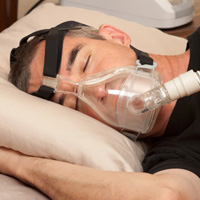 OSA requires proper diagnosis and management. This ailment often goes untreated, despite being recognized nearly 50 years ago.
With a 9% incidence rate among the female Caucasian population of the United States and 24% in the male Caucasian population, more than 80% of those affected by OSA are believed to be undiagnosed, or untreated even if they are.
So what does obstructive sleep apnea have to do with proper eye care?
Read More »
 Ask any of the countless people with substandard vision if there was one thing they could change about themselves and the typical response will be 20/20 vision. Betty Ming Liu, like most glasses-wearing individuals, had simply accepted the fuzzy side of life and continual degeneration of her eyes. Betty and her 20/650 vision had begun to additionally require the help of reading glasses to get by. She was less-than-enthused by the prospect of laser eye surgery.
By chance, Betty was introduced to holistic eye doctor Marc Grossman who opened her to the idea of eye exercises that promised to improve her vision. Within the
Read More »
 A recent study linking cholesterol and macular degeneration may shed light on a highly significant problem caused by aging and potentially illuminates hope for a treatment or perhaps even a cure.
Macular degeneration is the leading cause in partial or complete blindness of adults over 60 in the United States. The disease targets the macula in the eyes which in large part is what enables us to perceive the fine detail that allows us do things like reading and driving.
A new study, published in the journal Cell Metabolism on April 2 2013, involved the study of macrophages from old mice and humans with macular degeneration. Macrophages, white blood cells that deconstruct cholesterol, have been found in higher than normal concentration in subjects with macular degeneration. In previous studies, this cellular build up has been shown
Read More »
 Researchers have found a layer of tissue in the eye that can self-renew and may provide cures in the future for retinal diseases such as Age-Related Macular Degeneration (ARMD), Stargardt’s disease, Best’s disease, and some types of retinitis pigmentosa. These eye diseases begin in the retinal pigment epithelium (RPE), which is a layer of eye tissue that supports the cells that make vision possible (photoreceptors). When the RPE degenerates, vision is compromised and can result in blindness.
Around ten percent of the cells in the RPE can renew themselves. In essence, they are dormant RPE stem cells. Cures for retinal diseases could lie in coaxing the dormant stem cells into becoming mature RPE cells. This could undo the damage from retinal diseases
Read More »
 Researchers are looking into squalamine eye drops as a treatment for wet (neovascular) Age-Related Macular Degeneration (ARMD). Their goal is evaluate the safety and effectiveness of squalamine lactate eye drops in improving wet AMD, the less-common forms of AMD.
ARMD is a degenerative eye disease that causes central vision loss. It progresses over time and can results in significant vision loss. The disease is prevalent in the aging. This will be a double-blind study with randomized assignment, which is considered to be a very strong research design. It also means
Read More »
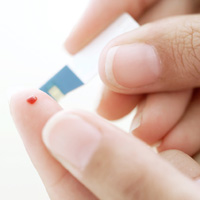 Researchers have found that the anti-diabetic drug metformin reduces the production of inflammatory cytokines. When inflammatory cytokines are produced in excess, they cause inflammation that increases cancer risk and the incidence of other diseases.
The University of Montreal researchers reported that metformin inhibits the expression of genes that code for several inflammatory cytokines observed during cellular senescence. These inflammatory cytokines are normally secreted by the
Read More »
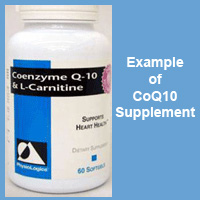 CoQ10 deficiency and supplementation were explained in an article by Michael S. Pepper and his colleagues at the University of Pretoria in South Africa. The article in the March, 2013 issue of Nutrition Reviews covered both primary and secondary coenzyme Q10 (CoQ10) deficiency.
In primary CoQ10 deficiency, the body cannot properly synthesize CoQ10 because of genetic mutations. The gene sequences needed to produce the enzymes are incorrect.
 A study involving more than 2000 participants in Australia has shown an association between regular aspirin use and wet age-related macular degeneration (ARMD). The prospective analysis study involved four examinations over 15 years (1992-1994 to 2007-2009). Subjects filled in a questionnaire at the beginning of the study that recorded aspirin usage, heart disease and risk factors for ARMD. A retinal photograph was taken at each examination to determine whether subjects had wet (neovascular) ARMD and dry (geographic atrophy) ARMD.
Of all the subjects, 10.8% of them used aspirin regularly. The study results showed that they were more likely to develop wet ARMD (9.3% in aspirin users versus 3.7% in non-aspirin users). Even after adjusting for age, gender, smoking, history of
Read More »
Natural Eye Care, Inc.
3 Paradies Lane
New Paltz, New York 12561
Phone: 845.475.4158

NaturalEyeCare™ started in 1999 to help the public and professionals learn about complementary care in eye disease treatment.
The information and recommendations we offer are based on over 30 years of peer review research and personal clinical experience which guides us in providing a valuable resource to our readers, customers and patients regarding maintaining healthy vision naturally.
We believe that vision health is intimately connected to overall mental, physical and spiritual health. Therefore we encourage people to look at their overall lifestyle and diet as part of keeping healthy vision and reducing the risk of eye disease onset. This includes diet, regular exercise, and management of daily stress. If one has health issues such as high blood pressure, a thyroid imbalance, any autoimmune disease and/or are on medication(s), these possible contributions to eye disease should considered when working with your health care professional.
Please do not hesitate to call us at 845.475.4158 with any questions and concerns.