
 OSA requires proper diagnosis and management. This ailment often goes untreated, despite being recognized nearly 50 years ago.
With a 9% incidence rate among the female Caucasian population of the United States and 24% in the male Caucasian population, more than 80% of those affected by OSA are believed to be undiagnosed, or untreated even if they are.
So what does obstructive sleep apnea have to do with proper eye care?
Untreated OSA can lead to a number of other ocular problems, so it is crucial to notice and treat sleep apnea in order to maintain ocular and overall health.Sleep apnea involves the tissue of the soft palate, which collapses during sleep and partially blocks the airway, leading to a decrease in oxygen saturation in the blood. The body senses the need to take a breath, and the patient attempts to bring in more oxygen by gasping. Cessation of breathing during long periods of apnea is a common symptom.
Both anterior and posterior eye conditions are commonly associated with OSA but can become incredibly difficult to manage when sleep apnea goes undiagnosed or untreated. Conditions such as floppy eyelid syndrome (FES), optic neuropathy, glaucoma, non-arteritic anterior ischemic optic neuropathy (NAION), and papilledema (disc edema secondary to raised intracranial pressure) are common secondary issues found in the sleep apnea patient.
Other retinal conditions, such as retinal vein occlusions, are found more often in patients with OSA. In diabetic patients with sleep apnea and retinopathy, proliferative disease and macular edema are more commonly exhibited, which can lead to a increased chance of iris neovascularization.
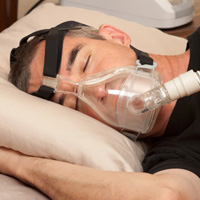
Each suspected case of sleep apnea must be evaluated on an individual basis. A sleep study is sometimes needed. If obstructive sleep apnea is diagnosed, the doctor may recommend a Continuous Positive Airway Pressure (CPAP) machine (shown in photo above). Always consult your doctor.
It is important that eye care practitioners, doctors and individuals be aware of the symptoms of obstructive sleep apnea and its deleterious affects on eye health when not properly treated.
Source: “Keep An Eye Out for OSA” by Brad Sutton, OD. Review of Optometry. https://www.revoptom.com/content/c/39562/
