
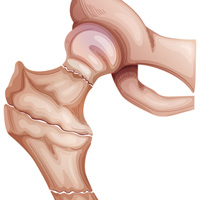
 Researchers at Ohio State University examined the effect of high levels of omega-3 fatty acids in the blood of postmenopausal women. The study found that this showed a lower risk of hip fractures in the patients.
Hip fracture and bone loss issues are often increased by inflammation. Omega-3 fatty acids are already known to lower inflammation. The study thus posed the question of whether omega-3 fatty acid intake might lower fracture risk.
Read More »
 The potential is great for these stem cells to aid in healing damaged and diseased tissues. Not to mention most adults wouldn’t mind giving up a little extra fat for something that could save lives.
Stem cells are valued tremendously for their ability to transform into any type of tissue. The capability of the cells to grow into anything from bone to nerve to heart translates to the conceivable treatment of countless diseases. Previous research has largely been
Read More »
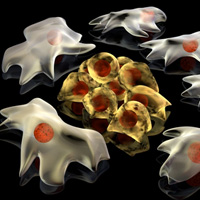
Immunocore, a UK-based biotechnology company, has been exploring this area using T-cells. T-cells are responsible for identifying and destroying pathogens. A protein protruding from the cell called the “T-cell receptor” binds itself to cells recognized as a threat. While T-cells are not naturally expert at identifying cancer cells, it is possible to engineer them to do so.
This is what chief scientific officer Bent Jakobsen and his team at Immunocore have been working on over 20 years of study. They engineered a form of treatment that works at the level of cellular immunity. Using the T-cell receptor as a model, researchers at Immunocore have created a small protein molecule called ImmTAC. These molecules have two binding ends. One attaches to T-cells. The other sticks to cancer cells, without affecting any healthy cells.
Read More »
The device is a result of a collaboration between Cardiff University and engineers from the UK Astronomy Technology Center (UK ATC).
AMD is one of the most common diseases
Read More »
 AGEs come from foods that are processed, heated to high temperatures, sugary, or browned. When these foods are eaten too often, AGE levels increase and build up in the body. This can cause damage to the internal organs and accelerate the aging process.
The A.G.E. Foundation recently conducted a survey of Americans and discovered that 76% knew that processed food could accelerate aging. Thirty-two percent indicated that the way food was cooked had an effect on aging. However, only 11% knew that food cooked at high temperatures impacted the aging process.
Read More »
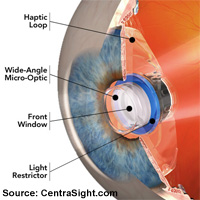 Approval to distribute the Alpha IMS wireless implant for retinitis pigmentosa (RP) has been granted in Europe to Retina Implant AG, based in Reutlingen, Germany. Thirty-six patients have received the subretinal implant, designed to restore useful vision to people legally blinded by RP.
Retinitis pigmentosa is a generative eye disease that begins in young people and may be inherited. RP patients may be able to
Read More »
 The success of the study indicates the potential for using the drug to improve heart function in humans.
The Buck Institute study used laboratory mice at an age comparable to humans in their 70s. After three months of treatment with rapamycin, the mice showed improved heart function. Ultrasound images indicated their hearts were more efficient in pumping blood. The mice also spent more of their time on running wheels.
Cardiovascular disease (heart disease) is the leading cause of death in Americans, claiming approximately 600,000 lives and costing $109 billion each year.
Read More »
 This newly discovered anatomical structure is named for its discoverer, researcher Dr. Harminder Dua of the Department of Ophthalmology and Visual Sciences at the University of Nottingham in the UK. Dua stated that this major discovery will not only cause ophthalmology textbooks to be rewritten, but that this new knowledge will also make eye operations safer and simpler.
The cornea is known as the “clear window” of the eye. Dua’s Layer is a thin but tough structure, near the cornea’s bottom layer. Dua and his colleagues used a specialized technique while dissecting eyes to make this discovery. Previously, science had identified only five layers of the cornea. Dua found the new layer between the corneal stroma (the middle of the cornea) and Descemet’s membrane (the second-to-bottom layer of the cornea).
Read More »

In patients with multiple sclerosis, the immune system incorrectly reacts to myelin, the insulating sheath that covers nerves in the brain, optic nerve, and spinal cord, and then destroys it, disrupting normal transmission of electrical signals. This results in symptoms from partial limb numbness to paralysis and blindness.
The new human trial is part of a collaboration between Northwestern’s Feinberg School, University Hospital Zurich in Switzerland and University Medical Center Hamburg-Eppendorf in Germany.
Read More »
 The study appeared in Stroke, the journal of the American Heart Association. Researchers from the Brigham and Women’s Hospital and Harvard Schools of Public Health reported that the risk is especially high for older women. They connect lower levels of the hormone DHEAS, or dehydroepiandrosterone sulfate, with this higher stroke risk.
The study’s subjects included women from the Nurses’ Health Study of 1976. They had no reported history of strokes when they joined that study. The levels of DHEAS of these women were tested between 1989 & 1990. The 461 stroke patients were matched up for age, race,
Read More »
Natural Eye Care, Inc.
3 Paradies Lane
New Paltz, New York 12561
Phone: 845.475.4158

NaturalEyeCare™ started in 1999 to help the public and professionals learn about complementary care in eye disease treatment.
The information and recommendations we offer are based on over 30 years of peer review research and personal clinical experience which guides us in providing a valuable resource to our readers, customers and patients regarding maintaining healthy vision naturally.
We believe that vision health is intimately connected to overall mental, physical and spiritual health. Therefore we encourage people to look at their overall lifestyle and diet as part of keeping healthy vision and reducing the risk of eye disease onset. This includes diet, regular exercise, and management of daily stress. If one has health issues such as high blood pressure, a thyroid imbalance, any autoimmune disease and/or are on medication(s), these possible contributions to eye disease should considered when working with your health care professional.
Please do not hesitate to call us at 845.475.4158 with any questions and concerns.