
 Tired eyes are one of the most common complaints eye doctors get from their patients. In this era of computers and mobile devices, the average person in the United States spends about 10 hours, 39 minutes daily in screen time.1
Asthenopia is the technical name for tired eyes. It describes a number of symptoms resulting in eye strain and/or fatigue, red eyes, blurred vision, pain in or around the eyes, mild or severe headaches, and rare double vision which generally begins after many hours of close work on the computer or other close work. Some of these problems arise because computer/smartphone users’ blink rate slows2 causing the eyes to be dry and resulting in eye tiredness. 3
Read More »
 Liver, Chinese Medicine and Eye Health
You may have heard that the eyes are related to the liver. But how can that be and what does that mean? What are the practical implications?
Traditional Chinese Medicine (TCM) practitioners understand that the health of the body is intimately connected to the flow – or blockage – of energy. TCM has identified specific ‘channels’ or pathways this flow of energy takes. Each pathway is called a meridian, and each meridian links to pairs of yin-yang organs, for example the Liver being the Yin organ and its corresponding yang organ being the Gallbladder. The meridians function as a non-physical network mapped out throughout the entire body, with some of the meridians running through and connected to specific organs such as the Liver, Lung, Spleen, Heart, and Kidney.
Read More »

The antioxidants lutein and zeaxanthin help keep the eyes healthy. A new study has found that these nutrients also improve the circulation of blood to the brain. Seniors experience gradual cognitive decline. A recent study showed that taking enough of these antioxidants halted cognitive decline. Research supports the idea that nutrition has a direct impact on the brains and eyes throughout one’s lifespan from infancy (breast milk contains lutein) to old age.1
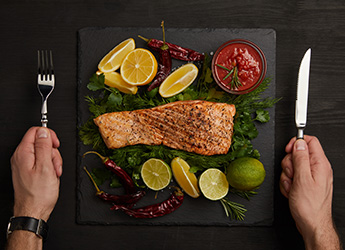 The lowly microalgae in the ocean produce astaxanthin for their protection against environmental stressors and light. Fish and crustaceans consume microalgae and retain the bright red color that we see in salmon, sea trout, shrimp, and krill.
When we enjoy savory salmon, the benefit of the astaxanthin that it contains extends to our vision, brain, circulatory system, immune system, etc., but with a difference. It provides significantly greater antioxidant protection (10x to 100x more) than other antioxidants.1 2 3
Read More »
 With drier weather of windy fall and cold winter, added to our hours on the computer, come increased dry, burning, and itchy eyes, known as dry eye syndrome. This is the number one complaint that eye doctors hear from patients. Most of us experience it at least from time to time.
Some nutrients and formulations are especially helpful.
Dry eye syndrome (DES) develops either because fewer tears are produced (aqueous-deficient DES) or tears evaporate too quickly (hyper-evaporative DES).
Read More »
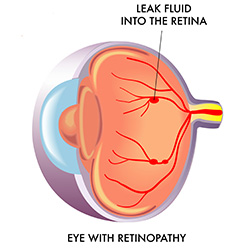
Macular degeneration and diabetic retinopathy have something in common. Although the indirect causes may be different, a consequence of untreated AMD or untreated diabetes is similar. Untreated, both conditions may result in macular microbleeding, in which abnormal capillaries develop (angiogenesis) that leak fluid or blood into the retina. A holistic approach may reduce the risk of the development of abnormal blood vessels bleeding into the retina and destroying vision
Read More »

What is so special about glutathione? This amino acid is considered a super antioxidant. It is one of the few nutrients that can neutralize the full spectrum of free radicals in the body. Free radicals are molecules missing an electron in the outer orbit; they ‘steal’ an electron from a healthy cell causing that cell to atrophy and die. Glutathione has an extra electron, binds with free radicals, and neutralizes them.
Glutathione is concentrated in the brain, supports the eye’s lens, retina/macula, cornea, detoxifies, and can be produced by the body — but production declines as we age and/or in the face of poor diet, environmental toxins, stress, trauma, some medications, infections, etc.
 Looking for detailed information on a specific eye condition? Natural Eye Care is releasing a series of Mini-Books. Each short book focuses on a specific eye condition, such as Macular Degeneration, Glaucoma, Cataracts, Dry Eyes, and Eye Floaters. These self-help books explore natural ways to help protect and support healthy vision. Discover specific nutrients, diet, exercise, essential oils, Chinese medicine, and more. The cost of each book is $14.95 in paperback, or $9.95, coming soon, as an pdf file e-book.
Read More »
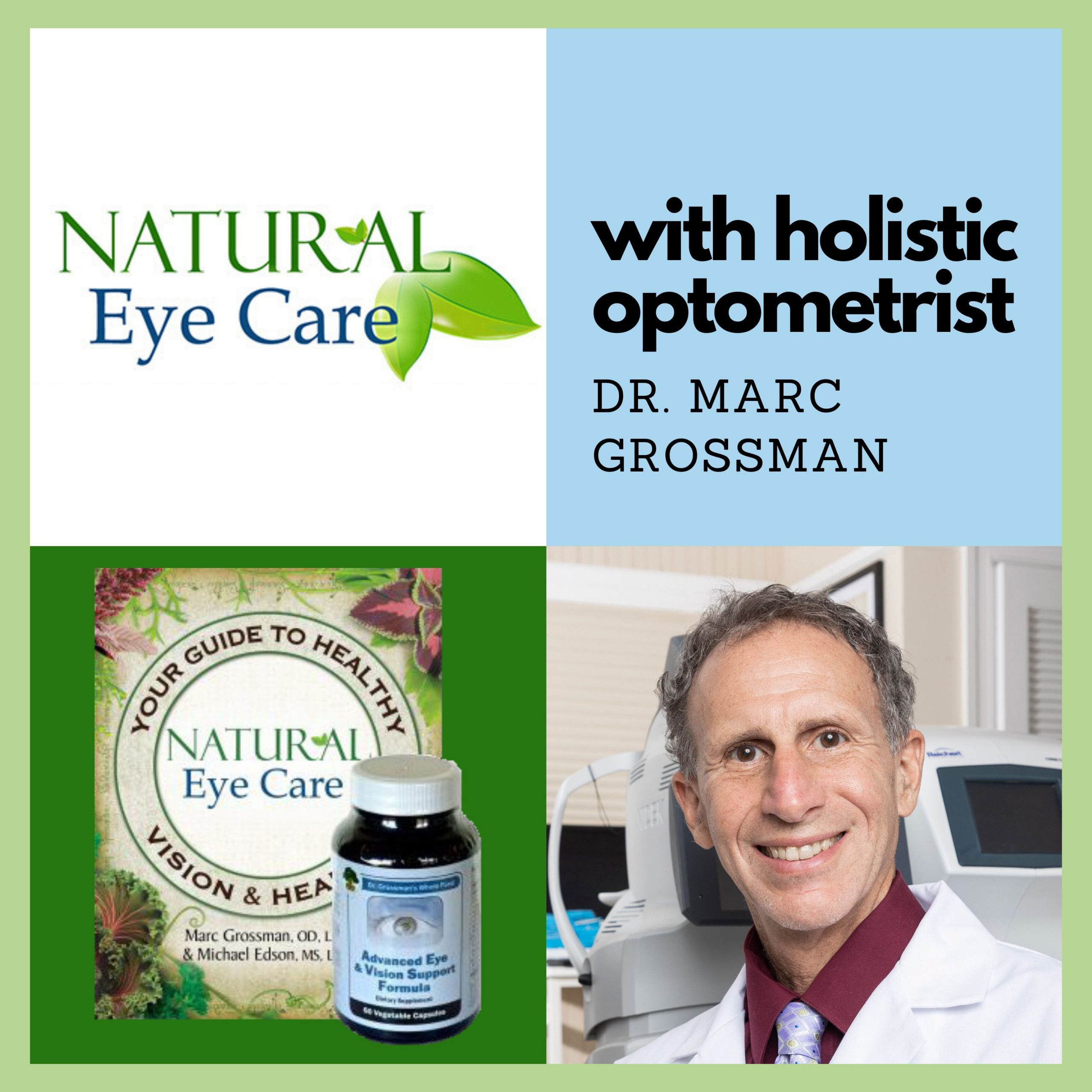 The Natural Eye Care Podcast is available on Apple Podcasts. This biweekly audio show is hosted by Holistic Optometrist Dr. Marc Grossman, O.D., LAc. Listen as Dr. Grossman discusses vision problems, eye health, and other general health issues. Dr. Grossman has 40+ years of experience helping patients with eye problems ranging from mild to severe. He helps patients with eye conditions, including dry eyes, myopia, macular degeneration, glaucoma.
Read More »
 Many of us wear a mask to reduce the spread of COVID-19, but could eye protection such as a face shield also help? Science is close to proving connections between coronavirus SARS-CoV-2 and the eye. When may it be helpful to shield the eyes?
Other viruses are known to infect the tissues covering the whites of the eye and inside the eyelid – the conjunctiva. Most of the conjunctiva is exposed to the air, and thus vulnerable to viral attack. Some COVID-19 patients have SARS-CoV-2 infections in the eyes. The virus may have entered the body through this conjunctivitis. To attack the eye, the virus needs to attach to certain types of cells. A small study, currently under peer review, found that a healthy eye’s surface cells contain key factors that SARS-CoV-2 needs to carry out an attack.1
Read More »
Natural Eye Care, Inc.
3 Paradies Lane
New Paltz, New York 12561
Phone: 845.475.4158
NaturalEyeCare™ started in 1999 to help the public and professionals learn about complementary care in eye disease treatment.
The information and recommendations we offer are based on over 30 years of peer review research and personal clinical experience which guides us in providing a valuable resource to our readers, customers and patients regarding maintaining healthy vision naturally.
We believe that vision health is intimately connected to overall mental, physical and spiritual health. Therefore we encourage people to look at their overall lifestyle and diet as part of keeping healthy vision and reducing the risk of eye disease onset. This includes diet, regular exercise, and management of daily stress. If one has health issues such as high blood pressure, a thyroid imbalance, any autoimmune disease and/or are on medication(s), these possible contributions to eye disease should considered when working with your health care professional.
Please do not hesitate to call us at 845.475.4158 with any questions and concerns.