
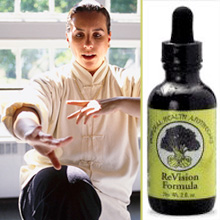
 What is ReVision formula, and how can its classic Chinese medicinal ingredients help improve eye health and conditions such as eye floaters? ReVision formula is a liquid taken orally several times per day with water. This tincture is based on Rambling Powder, also known as Xiao Yao San.
ReVision Formula is designed to support healthy vision. Some of the conditions it may address include macular degeneration, eye floaters, and glaucoma. The idea is that ReVision Formula helps improve blood circulation to the eye. From the point of view of Chinese medicine, it helps eliminate stagnation of the body’s energy (chi) to the eyes.
 The supplement alpha lipoic acid (ALA) showed some promise for helping glaucoma patients. Patients who had open angle glaucoma were given the 150 mg of ALA per day to see if the supplement made an difference to the effects of this common eye disease. The study showed that 45-47% of the eyes in the study enhanced color visual fields and visual sensitivity versus the controls. The controls only received topical medical therapy.
Alpha lipoic acid is present in every cell in the human body. It converts glucose into energy.
Lipoic acid is a fatty acid that is in most foods, but only in very tiny amounts. Certain organ meats, broccoli, yeast extract and spinach have
Read More »
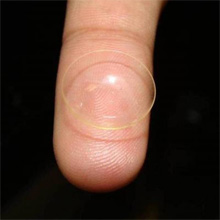 Treatment for the second leading cause of vision loss and blindness, glaucoma, may be improved with a new type of contact lenses that are loaded with Vitamin E. These new Vitamin E contact lenses may serve as delivery devices to treat glaucoma and other eye diseases such as dry eye and cataracts.
Medicated eye drops are typically prescribed as the primary treatment for glaucoma; however, the medicine is washed away in 2 to 5 minutes and most of it doesn’t reach the target tissues. Instead, most of eye drops enter the blood stream, where they may cause unwanted side effects.
As the “Baby Boomer” generation in the United States approaches their 60’s and beyond, the incidence of eye disease in this aging population will rise. Eye problems become more prevalent as an individual ages. What are the most common eye diseases in older people? How can eye geriatric eye disease be prevented and addressed naturally? And what does Baby Boomer natural eye care look like?
Read More »
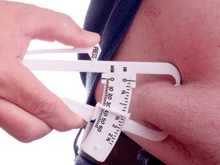
Don’t just take it from us that glaucoma risk increases in those who have diabetes, high blood pressure, and who are overweight. Researchers publishing in the journal Ophthalmology have found that these conditions, which together are labeled “metabolic syndrome” are all linked to the development of open-angle glaucoma.
A staggering 20% of people in America are said to have metabolic syndrome. Both metabolic syndrome and glaucoma are associated with aging, so, as the US population gets older, scientists believe that both conditions with become more prevalent.
Read More »

The role of intraocular pressure (a.k.a. IOP or eye pressure) and glaucoma is still a point of discussion.
At a meeting of the World Glaucoma Association, speaker Felipe Medeiros, MD described a common myth: “21 mm Hg threshold, above which IOP is supposed to be abnormal and below which is thought to be normal.”
In fact, according to this story’s source, the OSN Supersite, only 9.5% of patients with what is considered a high IOP are ever diagnosed with glaucoma.
Read More »
Changes in lifestyle are usually the most important way that individuals with diabetes can control their conditions. Most people seem to know this, but a new survey shows that many diabetics do not follow that advice.
A study called SHIELD (The Study to Help Improve Early Evaluation and Management of Risk Factors Leading to Diabetes), which was presented at the annual meeting of the American Diabetes Association, surveyed nearly 4,000 people with type 2 diabetes. In response to questions about the link between diabetes and obesity, 87% said they knew excessive weight contributed the disease, but only 70% of respondents reported trying to lose weight in the preceding year. Only a third of those surveyed had managed to maintain their target weight for longer than six months. Almost one-fifth of those studied (17%) said they preferred to take medication to control their conditions rather than try diet and exercise.
Read More »
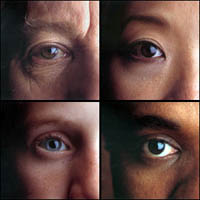
Ideally, doctors look at patients in a holistic manner, rather than just a collection of symptoms. At Natural Eye Care, when we talk to glaucoma patients, we are concerned about more than their intraocular pressure measurements. We want to talk about diet, lifestyle habits, and stress levels. We want to get an idea of the whole person, and understand their overall health. Learn more about these complementary approaches to glaucoma management.
An article appearing at the site EyeWorld by Tony Realini, M.D. describes how many eye doctors take an “event-based approach” to managing glaucoma patients’ care. Though he posits that there is still validity in this approach, he points out that it does not help determine the rate of progression of an individual’s condition.
Read More »
Natural Eye Care, Inc.
3 Paradies Lane
New Paltz, New York 12561
Phone: 845.475.4158
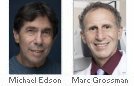
NaturalEyeCare™ started in 1999 to help the public and professionals learn about complementary care in eye disease treatment.
The information and recommendations we offer are based on over 30 years of peer review research and personal clinical experience which guides us in providing a valuable resource to our readers, customers and patients regarding maintaining healthy vision naturally.
We believe that vision health is intimately connected to overall mental, physical and spiritual health. Therefore we encourage people to look at their overall lifestyle and diet as part of keeping healthy vision and reducing the risk of eye disease onset. This includes diet, regular exercise, and management of daily stress. If one has health issues such as high blood pressure, a thyroid imbalance, any autoimmune disease and/or are on medication(s), these possible contributions to eye disease should considered when working with your health care professional.
Please do not hesitate to call us at 845.475.4158 with any questions and concerns.