
The American Optometric Association has played an active role in the Centers for Disease Control and Prevention (CDC) Division of Diabetes Translation (DDT) for over ten years. Eye docs hanging out with diabetes specialists? Of course. Diabetic retinopathy, according to the National Institute of Health, affects “4.2 million—28.5%— of people with diabetes ages 40 years or older … and of these, 655,000—4.4% of those with diabetes—had advanced diabetic retinopathy that could lead to severe vision loss.”
W. Lee Ball, O.D., AOA Associate Director for Quality Improvement gave a presentation entitled “Working Together to Manage Diabetes: Development and Testing of a Comprehensive Checklist.” Of the medical professionals across several fields who responded to a questionnaire regarding the efficacy of the checklist, 74% said they found it useful in a real-world clinical setting. Source: News from the AOA
Read More »
Lupins lining the roadsides are common sights for anyone who has visited Atlantic Canada or Maine during the summertime, but have you ever heard of eating lupine seeds? Even better, have you ever heard about how good lupin flour can be for the heart?
A study out of the University of Western Australia describes how it is possible to lower your risk of heart disease “significantly” by replacing conventional wholemeal flour with a blend that contains 40% lupin beans. A yearlong study of over 100 overweight men and women showed that increasing one’s intake of “lupin flour lowered blood pressure and reduced the risk of heart disease.”
Read More »
Optic gliomas are rare tumors of the brain targeting one or both optic nerves or location where the two optic nerves cross each other, the optic chiasm. This condition is not known to get better naturally, although nerve growth factor eye drops could help in milder causes. So far, the results are limited and more research is needed.
Nerve growth factor is is a neuropeptide (a small protein-like molecule essential for nerve cell communication) which has the capacity to maintain and regulate the growth and integrity of nerve cells, or neurons. Administered in the form of eyedrops it has been used in the treatment of macular degeneration, glaucoma, and various optic nerve conditions.
Read More »

In light of the recent flooding in the Midwest that has disrupted lives and endangered public health, the American Optometric Association (AOA) has published a list of reminders and precautions related to eye care, particularly for those contact lens wearers out there. Their particular concerns involve the proliferation of water born pathogens such as amoeba, parasites, bacteria and viruses which can be responsible for eye infections. Eye doctors have seen an increase in eye infections in areas of flood stricken Iowa.
Read More »
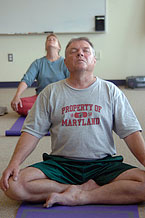
Preliminary research shows that a regular yoga practice can help stroke patients recover more effectively.
A study of 20 stroke survivors of an average age of 66 engaged in twice weekly yoga classes for two months. It was found that the participants balance improved. Researchers also found that a practice of yoga could help prevent potentially dangerous falls.
On the whole, balance scores increased by 17% on the Berg Balance Scale and by 34% on the Fullerton Balance Scale. It is important to not that the average score was upped from 40 to 47 on the Berg Balance Scale, which means that the individuals were no longer on the “high risk” list when it comes to falls.
Read More »
Omega-3 fatty acids are known to help the heart and they have also been found to help defend against eye diseases like macular degeneration.
A study by researchers at the Indiana University School of Medicine shows that omega-3 fatty acids could also help people struggling with alcohol addiction or psychiatric disorders. According to scientists, the DHA in the fatty acid was responsible for “normalizing behavior” in mice. When taking DHA, mice were less likely to become depressed or manic when placed under stress. Unexpectedly, the mice also lost their taste for alcohol when consuming DHA supplements.
Read More »
Natural Eye Care, Inc.
3 Paradies Lane
New Paltz, New York 12561
Phone: 845.475.4158

NaturalEyeCare™ started in 1999 to help the public and professionals learn about complementary care in eye disease treatment.
The information and recommendations we offer are based on over 30 years of peer review research and personal clinical experience which guides us in providing a valuable resource to our readers, customers and patients regarding maintaining healthy vision naturally.
We believe that vision health is intimately connected to overall mental, physical and spiritual health. Therefore we encourage people to look at their overall lifestyle and diet as part of keeping healthy vision and reducing the risk of eye disease onset. This includes diet, regular exercise, and management of daily stress. If one has health issues such as high blood pressure, a thyroid imbalance, any autoimmune disease and/or are on medication(s), these possible contributions to eye disease should considered when working with your health care professional.
Please do not hesitate to call us at 845.475.4158 with any questions and concerns.