
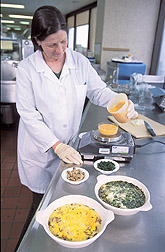
US government scientists realize the important role that nutrition plays in the health of the eyes.
Cataracts are caused by an accumulation of free radicals that cloud the lens of the eye through a process called oxidation. Antioxidants, these researchers agree, “are compounds in foods that help maintain healthy cells and tissues in the eye and other organs.” Prime sources of antioxidants include: leafy greens, eggs, blueberries, and bilberries.
In a study of almost 500 middle aged and older women, it was discovered that those who consumed more riboflavin, folate, beta carotene, lutein, zeaxanthin, and vitamins C and E were less likely to suffer from cataract symptoms than did those who consumes the least amounts of these nutrients.
Read More »
Researchers, specifically a group at Harvard’s Joslin Diabetes Center, are understanding the connection between diabetic retinopathy and proteins present in the eyes. In a 2007 study, scientists describe how they found a group of proteins that they believe are responsible for causing the leakage from blood vessels that marks diabetic retinopathy. They found that these proteins were also the cause of swelling in the eyes, a discovery that could have an impact on research related to cerebral swelling caused by head injuries and strokes. Figuring out the role of proteins in this condition opens up new treatment avenues for both eye diseases and brain injuries and conditions.
Read More »
Inflammation and Diabetic Retinopathy
At Natural Eye Care, we know that eye conditions are often related to diseases that affect the entire body. At a conference last year, Clement Trempe, MD reminded colleagues to consider the role of overall inflammation when diagnosing patients with diabetic retinopathy.
According to Dr. Trempe, “Diabetic retinopathy is not an eye disease, but part of a chronic systemic inflammatory disease process that shares the same risk factors and elevated biomarkers associated with coronary vascular and neurodegenerative diseases such as age-related macular degeneration, glaucoma and Alzheimer’s.”
Read More »
As we know well at Natural Eye Care, taking care of dry eye syndrome is about more than just using eye drops. In fact, it may never be about using eye drops.
An article over at PCON Supersite discusses some oral treatments for dry eyes. We recommend that our patients evaluate their diet and lifestyle choices and make some necessary changes as well as take the right dietary supplements.
Not only our eyes, but the entire body need essential fatty acids in the form of omega-6s and omega-3s. Omega-6s help fight inflammation that can be an underlying cause of dry eyes and omega-3s make it possible for the body to use the fats in omega-6s.
Read More »
A new study confirms earlier findings that indicate that consuming red and processed meats increases one’s risk of developing colorectal cancer. The study also strengthens previous assertions that fiber rich foods help protect people from colorectal cancer.
This evidence underlines the preventable nature of colorectal cancer, since it is so attributable to diet. According to Elisa Bandera, MD, PhD, who served on the World Cancer Research Fund/American Institute for Cancer Research’s Continuous Update Project (CUP) Expert Panel that authored the report “About 45 percent of colorectal cancer cases could be prevented if we all ate more fiber-rich plant foods and less meat, drank less alcohol, moved more and stayed lean.”
Read More »

A new study finds that driving skills decline with age, even if they have previously clean driving records and showed no signs of dementia. Drivers over age 70 were much more likely to forget to check blind spots and use their turn signals and make other errors associated with increased crash risks. Motor vehicle operators between the ages of 85 and 89 were four times more likely to make critical errors than those between 70 and 74 years of age.
Read More »
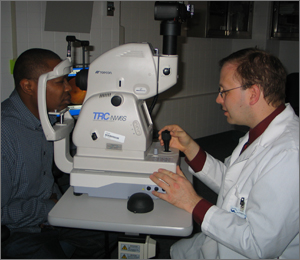
A new study confirms what might sound like common sense: the more severe one’s case of diabetic retinopathy, the more likely one’s quality of life is to deteriorate.
Published in the journal Ophthalmology (Issue 118, 2011), research suggests that individuals’ quality of life declines more rapidly when their sight loss due to diabetic retinopathy becomes more severe. The study involved over 1,000 type 2 diabetes patients taking part in the Los Angeles Latino Eye Study.
Read More »

Antioxidants have been found to successfully treat yet another medical condition: pre-eclampsia, a condition experienced by 5% of pregnant women that is marked by abnormally high blood pressure.
According to a study published in the British Medical Journal, taking a dietary supplement containing an amino acid and antioxidant vitamins significantly reduced pregnant women’s chances of developing pre-eclampsia.
Natural Eye Care, Inc.
3 Paradies Lane
New Paltz, New York 12561
Phone: 845.475.4158

NaturalEyeCare™ started in 1999 to help the public and professionals learn about complementary care in eye disease treatment.
The information and recommendations we offer are based on over 30 years of peer review research and personal clinical experience which guides us in providing a valuable resource to our readers, customers and patients regarding maintaining healthy vision naturally.
We believe that vision health is intimately connected to overall mental, physical and spiritual health. Therefore we encourage people to look at their overall lifestyle and diet as part of keeping healthy vision and reducing the risk of eye disease onset. This includes diet, regular exercise, and management of daily stress. If one has health issues such as high blood pressure, a thyroid imbalance, any autoimmune disease and/or are on medication(s), these possible contributions to eye disease should considered when working with your health care professional.
Please do not hesitate to call us at 845.475.4158 with any questions and concerns.