
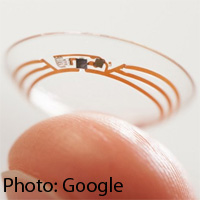
 Google has announced plans to build a contact lens that can monitor blood sugar levels. The device that may come replete with miniature, flexible electronics, sensors and antennae. The lens would keep track of blood sugar levels via human tears. Google’s contact lens would be able to alert wearers when their blood sugar levels are too high or too low. For diabetics, this could theoretically free them from the need for frequent finger pricks to check blood sugar. It could also give them tools to better manage their blood sugar. Diabetes can lead to diabetic retinopathy, a serious eye disease (learn more).
While the device still
Read More »
 The macula is a part of the eye crucial to good vision, but as we age, it can be damaged by macular holes and macular puckers. What are the symptoms, and what are the approaches to treating and preventing these problems?
Let’s start by asking, what is the macula? The macula is the central part of the retina. It is yellowish in color. It is the part of the retina that creates clear, sharp, focused vision. And it is the part of the retina most heavily populated with cones, the type of eye cell that allows us to see in color. The retina is a thin layer at the back of the eye. It is where the lens of the eye focuses
Read More »
 Fuchs’ Corneal Dystrophy is named for the Austrian ophthalmologist Ernst Fuchs, who first described the condition in 1910. He described thirteen patients who suffered from corneal clouding, blisters on the corneal epithelia and loss of corneal sensation.
“Dystrophy” refers to any disorder or condition in which a particular tissue or organ of the body wastes away. In Fuchs’ Dystrophy, the tissue that wastes away is the corneal endothelium. Just as epithelium refers to an external skin layer, endothelium refers to an internal skin layer. The corneal endothelium is the back
Read More »
 Night blindness, also called “Nyctalopia”, is a condition characterized by the inability to see well or to see at all in low light. It can also give a diminished ability to see contrast and difficulty transitioning from bright light to dim light. Night blindness has many causes, some that are treatable and some that are not.
In order to understand night blindness, one must understand a little about how the eye works. The retina is located in the back part of the eye, where light falls after passing through the lens. The retina has two types of cells that respond to light: rods and cones. Cones receive bright light and interpret color and detail. They are primarily
Read More »

Even VIPs have eye conditions. Here’s an interesting collection of ten notables who have serious vision conditions, and who have made a success of their lives nonetheless!
1. Steve Wynn: Las Vegas casino developer and the owner of such resorts as the Wynn Las Vegas, Wynn Macau, Bellagio, The Mirage, et cetera. Wynn has developed retinitis pigmentosa which includes progressive degeneration of the photoreceptor cells of the retina. Such degeneration results in poor night vision, light to dark adaption and impaired peripheral vision. Mr. Wynn recently partnered with the University of Iowa to establish the Stephen A. Wynn Institute for Vision Research. He donated $25 million to help the university find a cure for blinding eye diseases.
Read More »
 Usher Syndrome is a genetic condition that leads to loss of hearing, balance and vision. It is the most common cause of deaf-blindness and accounts for 2-6% of the deaf population. The vision loss from Usher Syndrome is retinitis pigmentosa (degenerating retinal cells).
This condition was described in 1914 by Charles Usher, an English eye doctor. It is autosomal recessive, meaning both parents must carry the gene for the condition to
Read More »
 BPA, or Bisphenol-A, has practically become a household word in America as a dangerous chemical found in certain types of plastic, particularly plastic #7. This polycarbonate is a non-recyclable plastic commonly used for the following products:
 A traditional herb has been getting a lot of attention from researchers lately. Ginseng! It came from the Appalachians and Ozarks, where it was used by American Indians as a medicinal herb. In the 1700s, it was sold extensively to Asian traders who promoted its cultivation in China and Korea. It is now cultivated commercially in the Eastern US and upper Midwest.
Read More »
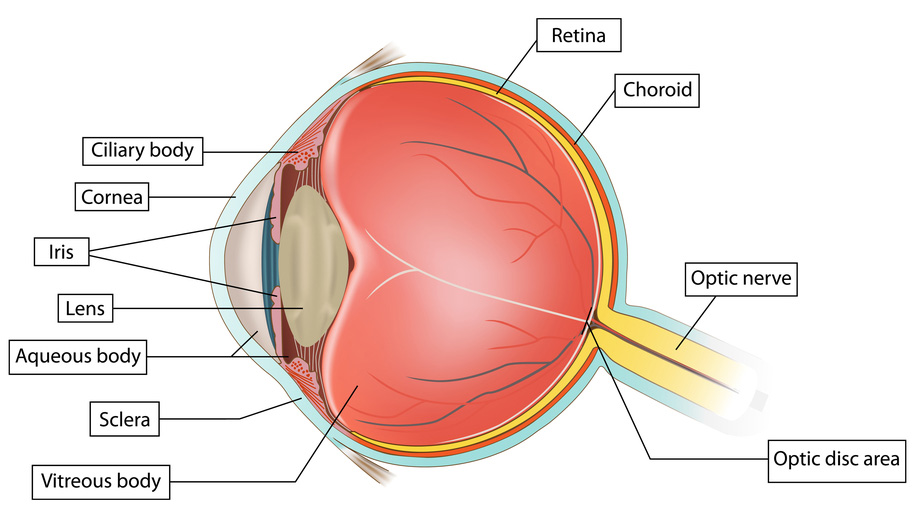 A retinal tear is an eye problem with potentially serious complications that almost always ensue if not treated promptly. The retina feels no pain. Retinal tears can develop suddenly with little to no warning, and because of the lack of pain, people can easily fail to understand that something serious has occurred. Anyone who has symptoms of a retinal tear, or a more serious retinal detachment, should consult an eye doctor immediately.
Read More »
Natural Eye Care, Inc.
3 Paradies Lane
New Paltz, New York 12561
Phone: 845.475.4158

NaturalEyeCare™ started in 1999 to help the public and professionals learn about complementary care in eye disease treatment.
The information and recommendations we offer are based on over 30 years of peer review research and personal clinical experience which guides us in providing a valuable resource to our readers, customers and patients regarding maintaining healthy vision naturally.
We believe that vision health is intimately connected to overall mental, physical and spiritual health. Therefore we encourage people to look at their overall lifestyle and diet as part of keeping healthy vision and reducing the risk of eye disease onset. This includes diet, regular exercise, and management of daily stress. If one has health issues such as high blood pressure, a thyroid imbalance, any autoimmune disease and/or are on medication(s), these possible contributions to eye disease should considered when working with your health care professional.
Please do not hesitate to call us at 845.475.4158 with any questions and concerns.