
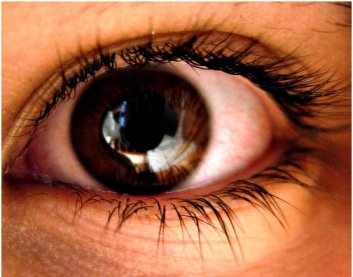
When ophthalmologists look at your eyes, they can see more than you’d anticipate. Not only are they able to see the health of your eyes, but they can see if you have other health issues including high blood pressure, diabetes, high cholesterol and even multiple sclerosis and lupus. A thin white or grey ring around the eye, called a corneal arcus, is one indicator of high cholesterol? in younger patients.
Read More »
 Optic neuritis is an inflammation of the optic nerve that most often strikes young people aged 18-45. It is often accompanied by demyelination of the optic nerve. Demylenation is a loss of some of the fatty covering, called the myelin sheath, that protects the nerve and helps it conduct signals. While most people who develop optic neuritis recover their vision without treatment, a doctor must be consulted. This condition can lead to permanent damage of the optic nerve, creating partial or total blindness or holes in the visual field.
We came across a perfectly fascinating article about the fact that whether a baby is a boy or girl may be related to the mother’s diet at the time of conception … which is also true in nature.
“A joint study conducted by researchers at the Universities of Oxford and Exeter has turned up the tantalizing evidence that a child’s gender might be determined by mother’s diet around the time of conception.
If this is true, it goes a long way in solving the mystery of why there is a decreasing number of male babies born each year in the industrialized nations of the world, including the United States, Canada, and the UK.” (from Medweb)

Study could lead to new therapies to help improve sight following trauma or stroke
University of Texas neuroscientists having been looking at how nerve cells in the visual cortex of the brain handle and adapt to images as they change.
Researchers evaluated the results of stimulating the visual cortex upon optic neurons whose electrical activity was measured at the same time in lab animals. With the animal viewing movies they monitored the behavior of visual cortex neurons as the images changed.
Read More »
Vitamin A deficiency is uncommon in the U.S., but it affects many people in the developing world. One of first symptoms of a vitamin A deficiency is night blindness, which, if untreated can develop into full scale blindness. According to the World Health Organization Report on Vitamin A Deficiency, night blindness is estimated to affect 5.2 million preschool-age children and 9.8 million pregnant women around the globe.
Writing on a case in The Lancet, doctors who treated a pregnant woman who came to the emergency room after several weeks of progressive sight loss described this particular case, “Vitamin A deficiency can be secondary to poor intestinal absorption due to weight loss surgery, Crohn’s disease or pancreatic dysfunction. Our patient had anorexia nervosa and had limited her diet to white onions, white potatoes, and red meat for the past 7 years.”
Read More »
From before birth to the end of your life, smoking has a radical, nasty effect on your life: not only your health, but your social and mental life as well. It impacts every aspect of your life – your vision, your health, your happiness – from the time in the womb until your old age.
Read More »
You make bad health decisions every day – and you’re likely aware of them. You know the impact of two slices of cake after an already big meal, neglecting regular workouts in favor of a sedentary lifestyle, and drinking that second scotch sour. But what about the small choices you make every day that impact your eye health? Some bad habits you know, and you’re probably blissfully unaware of the others.
If you knew exactly how your bad eye care habits impact your vision, would you change your routine? Get ready to see clearly (the error of your ways). Read on to learn seven things you do every day that can damage your vision.
 Currently, most eye disease detection equipment is only available in an optometrist’s office. A new handheld optical device could allow general practitioners to quickly screen all patients for eye disease such as glaucoma and macular degeneration. These visually devastating diseases are most easily treated or controlled in their early stages. The new high-speed prototypes were developed at Massachusetts Institute of Technology.
The idea of a handheld, easy-to-use scanner is not new. However, the new device combines ultrahigh-speed
Read More »
Natural Eye Care, Inc.
3 Paradies Lane
New Paltz, New York 12561
Phone: 845.475.4158

NaturalEyeCare™ started in 1999 to help the public and professionals learn about complementary care in eye disease treatment.
The information and recommendations we offer are based on over 30 years of peer review research and personal clinical experience which guides us in providing a valuable resource to our readers, customers and patients regarding maintaining healthy vision naturally.
We believe that vision health is intimately connected to overall mental, physical and spiritual health. Therefore we encourage people to look at their overall lifestyle and diet as part of keeping healthy vision and reducing the risk of eye disease onset. This includes diet, regular exercise, and management of daily stress. If one has health issues such as high blood pressure, a thyroid imbalance, any autoimmune disease and/or are on medication(s), these possible contributions to eye disease should considered when working with your health care professional.
Please do not hesitate to call us at 845.475.4158 with any questions and concerns.