
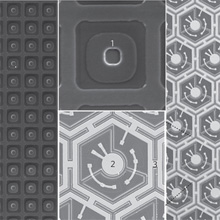
 Experimental research at Stanford University school of medicine may result in the restoration of vision for people whose sight has been lost due to Age-Related Macular Degeneration (ARMD), Retinitis Pigmentosa and other diseases of the retina. Surgeons plan to implant small solar panel-like cells under the retina. When the patient wears a special type of goggles, a camera and small computer will allow them to see the world around them again.
The goggles will have a tiny camera and a small computer. The computer will process data from the camera and display images on an LCD (liquid crystal micro-display) on the goggles. The images on the LCD are beamed using laser pulses of IR-A (near-infrared) light to tiny photovoltaic silicon chips implanted under the retina. The electrical currents from the chips’ photodiodes would trigger signals in the retina. From the retina, the message would flow to the brain, giving the patient the ability to see.
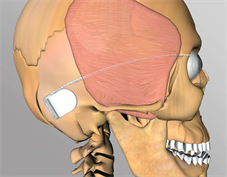 Two men blinded by retinitis pigmentosa have had their sight partially restored by receiving electronic retinal implants at King’s College Hospital in England.
The surgery involves implanting a 3×3 mm2 microchip with 1,500 electrodes below the retina. A thin cable is run to a special sub-dermal control unit that is implanted behind the ear. When light reaches the eye, pixels in the chip are stimulated, sending electronic signals to the optic nerve and then to the brain. An external power unit can be connected to the chip using a magnetic disk implanted on the scalp. This allows the chip’s sensitivity to be altered.
Clinical trials began more than 6 years ago. The technology is improving over time, with the more recent patients reporting better visual acuity.
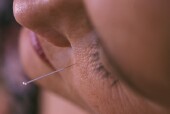
Acupuncture is an effective treatment for the potentially blinding condition retinitis pigmentosa.
An article in the Journal of Clinical Acupuncture and Moxibustion describes how acupuncture treatments alleviate stress on the retinal and optic nerves by relieving intraocular pressure.
Read More »
CBS News is reporting that a implanted artificial retina has been approved by European health officials.
The device is offering partial sight to people who have become blind due to the condition retinitis pigmentosa.
The report describes how a man who had lost his sight completely at age 35 is now able to make out shapes and outlines. As described by CBS: “The device starts with a tiny video camera mounted in a pair of glasses. A transmitter in the glasses sends the images to chip implanted on the back of the damaged eye. There, 60 electrodes send the image along the optic nerve straight to the brain.”
Read More »
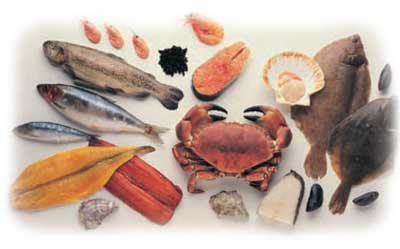
Scientists are continually evaluating the powerful compounds found in omega-3 fatty acids to determine further ways they can be used to make us healthier.
A study published in the Journal of the American Medical Association sought to find out whether taking omega-3 supplements could help those who suffer from atrial fibrillation (irregular heartbeats caused by the upper chambers of the heart beating out of sync with the upper potentially leading to a stroke). In this case, the researchers did not find that taking omega-3 supplements over six months helped decrease instances of atrial fibrillation. Source: https://jama.ama-assn.org/cgi/content/short/304/21/2363?rss=1
Read More »
Natural Eye Care, Inc.
3 Paradies Lane
New Paltz, New York 12561
Phone: 845.475.4158
NaturalEyeCare™ started in 1999 to help the public and professionals learn about complementary care in eye disease treatment.
The information and recommendations we offer are based on over 30 years of peer review research and personal clinical experience which guides us in providing a valuable resource to our readers, customers and patients regarding maintaining healthy vision naturally.
We believe that vision health is intimately connected to overall mental, physical and spiritual health. Therefore we encourage people to look at their overall lifestyle and diet as part of keeping healthy vision and reducing the risk of eye disease onset. This includes diet, regular exercise, and management of daily stress. If one has health issues such as high blood pressure, a thyroid imbalance, any autoimmune disease and/or are on medication(s), these possible contributions to eye disease should considered when working with your health care professional.
Please do not hesitate to call us at 845.475.4158 with any questions and concerns.