

Even VIPs have eye conditions. Here’s an interesting collection of ten notables who have serious vision conditions, and who have made a success of their lives nonetheless!
1. Steve Wynn: Las Vegas casino developer and the owner of such resorts as the Wynn Las Vegas, Wynn Macau, Bellagio, The Mirage, et cetera. Wynn has developed retinitis pigmentosa which includes progressive degeneration of the photoreceptor cells of the retina. Such degeneration results in poor night vision, light to dark adaption and impaired peripheral vision. Mr. Wynn recently partnered with the University of Iowa to establish the Stephen A. Wynn Institute for Vision Research. He donated $25 million to help the university find a cure for blinding eye diseases.
Read More »
 Usher Syndrome is a genetic condition that leads to loss of hearing, balance and vision. It is the most common cause of deaf-blindness and accounts for 2-6% of the deaf population. The vision loss from Usher Syndrome is retinitis pigmentosa (degenerating retinal cells).
This condition was described in 1914 by Charles Usher, an English eye doctor. It is autosomal recessive, meaning both parents must carry the gene for the condition to
Read More »
 The potential is great for these stem cells to aid in healing damaged and diseased tissues. Not to mention most adults wouldn’t mind giving up a little extra fat for something that could save lives.
Stem cells are valued tremendously for their ability to transform into any type of tissue. The capability of the cells to grow into anything from bone to nerve to heart translates to the conceivable treatment of countless diseases. Previous research has largely been
Read More »
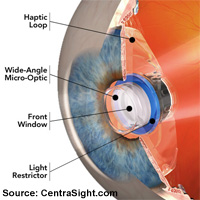 Approval to distribute the Alpha IMS wireless implant for retinitis pigmentosa (RP) has been granted in Europe to Retina Implant AG, based in Reutlingen, Germany. Thirty-six patients have received the subretinal implant, designed to restore useful vision to people legally blinded by RP.
Retinitis pigmentosa is a generative eye disease that begins in young people and may be inherited. RP patients may be able to
Read More »
 Researchers have found a layer of tissue in the eye that can self-renew and may provide cures in the future for retinal diseases such as Age-Related Macular Degeneration (ARMD), Stargardt’s disease, Best’s disease, and some types of retinitis pigmentosa. These eye diseases begin in the retinal pigment epithelium (RPE), which is a layer of eye tissue that supports the cells that make vision possible (photoreceptors). When the RPE degenerates, vision is compromised and can result in blindness.
Around ten percent of the cells in the RPE can renew themselves. In essence, they are dormant RPE stem cells. Cures for retinal diseases could lie in coaxing the dormant stem cells into becoming mature RPE cells. This could undo the damage from retinal diseases
Read More »
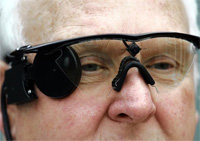 The first implanted device for adults with retinitis pigmentosa has been approved by the U.S. Food and Drug Administration. Called the Argus II Retinal Prosthesis System, the device includes a tiny video camera, a transmitter (on a pair of glasses), and a video processing unit. The patient’s retina is replaced with a prosthesis. The camera wirelessly transmits visual information to the retinal prosthesis to improve vision.
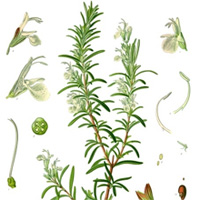 A chemical that occurs naturally in the common herb rosemary has been found to protect the eye from macular degeneration and other eye diseases. This study, published in Investigative Ophthalmology and Visual Science, is one of many recent investigations into the anti-inflammatory and antioxidant effects of the active ingredients in medicinal herbs. The compound in Rosemary is called “carnosic acid.”
Rosemary is a savory herb that adds flavor to a variety of recipes, including chicken, barbeques, salad dressing and tomato dishes. A member of the mint family, it is native to the Mediterranean region. Rosemarinus officinalis has evergreen, needle-like, fragrant leaves and tiny colorful flowers. It is a common decorative plant in gardens.
 Injecting “precursor” photoreceptor cells into the eyes of totally blind mice resulted in the reconstruction the entire light-sensitive layer inside the eye, restoring the experimental animals’ vision. While the quality of vision was not easy to evaluate, the mice ran away from bright light, had pupils that responded to light, and had brain activity showing they were processing visual information.
Researchers at the University of Oxford studied mice that had retinas without any light-sensing photoreceptor cells. Unable to distinguish between dark and light, these mice were completely blind. The precursor cells they used were designed to develop into retinal building blocks after getting injected into the eye. Just two weeks after receiving the injection of cells, each eye developed a retina.
An FDA-guided and -supervised study revealed that microcurrent stimulation, also called electrotherapy, resulted in significant vision improvements in 61% of patients suffering from dry macular degeneration. The research showed promise that microcurrent stimulation could also help patients with diabetic retinopathy or retinitis pigmentosa.
Microcurrent stimulation is a therapy designed to alleviate pain, promote the healing of wounds and improve results with transplanted tissues. The FDA has approved its use for these purposes under specific protocols. This therapy is commonly used by rehab specialists, anesthesiologists, orthopedic surgeons, and plastic surgeons.
 Breakthrough research into vision restoration may result in a new type of prosthetic for people suffering from vision loss due to retinal degenerative diseases such as macular degeneration and retinitis pigmentosa.
Researchers cracked the retinal code that the retina uses to communicate with the brain. Their initial research was on mice. They determined which electrical signals the retina uses when communicating with the brain. Then, they mimicked the signals using electric-signal sending glasses in blind mice. The animals’ vision was restored to near normal.
Natural Eye Care, Inc.
3 Paradies Lane
New Paltz, New York 12561
Phone: 845.475.4158

NaturalEyeCare™ started in 1999 to help the public and professionals learn about complementary care in eye disease treatment.
The information and recommendations we offer are based on over 30 years of peer review research and personal clinical experience which guides us in providing a valuable resource to our readers, customers and patients regarding maintaining healthy vision naturally.
We believe that vision health is intimately connected to overall mental, physical and spiritual health. Therefore we encourage people to look at their overall lifestyle and diet as part of keeping healthy vision and reducing the risk of eye disease onset. This includes diet, regular exercise, and management of daily stress. If one has health issues such as high blood pressure, a thyroid imbalance, any autoimmune disease and/or are on medication(s), these possible contributions to eye disease should considered when working with your health care professional.
Please do not hesitate to call us at 845.475.4158 with any questions and concerns.