
 A study, led by Dr. Daniel Martin, an ophthalmologist at the Cleveland Clinic’s Cole Eye Institute, has found that the cancer drug Avastin (bevacizumab) offers macular degeneration patients the same benefits as the drug Lucentis (ranibizumab), which was specifically formulated to treat the disease.
“The results of our study show that Lucentis and Avastin are virtually identical, in terms of visual acuity achieved, when they’re given on the same dosing frequency,” Martin said in a press release. “For example, if you compare Lucentis given monthly versus Avastin given monthly, it’s virtually identical for visual acuity achieved in one year.”
Read More »

Mother always told you to eat your fruits and vegetables – but why? Modern researchers are finding more and more about antioxidants for health. Scientists publish mountains of peer-reviewed research a year on antioxidants found in fruits and veggies. One type of antioxidant is called “phytonutrients.” Found in plant pigments, phytonutrients are especially good for the eyes and brain. How do phytonutrients slow the impact of aging and reduce disease risk? Which foods contain significant amounts of the best types of phytonutrients?

The genetic eye disease Retinitis Pigmentosa is the target of gene editing research on human embryos by Dr. Dietrich Elgi at Columbia University. National Public Radio reported on this research1 shortly after a Chinese scientist announced he had created the world’s first two gene-edited babies.2 Both scientists use the CRISPR tool to genetically modify human embryos. However, the experiments at Columbia are for research purposes only. These embryos are destroyed within one day for study.
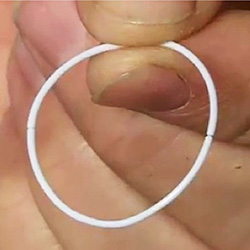 A new medicated ring could replace drops for open-angle glaucoma patients. Impregnated with the glaucoma drug Bimatoprost, the flexible ring is inserted under the eyelids. The Bimatoprost Ring works for six months, delivering pressure-reducing medication directly to the eye. Glaucoma patients currently depend on medicated drops, multiple times per day, to control their condition. Up to half of glaucoma patients do not use their drops correctly. Therefore, a long-acting medicated glaucoma ring could improve their prognosis.
Read More »
 Docosahexaenoic acid or DHA is a naturally-occurring chemical, so why might seniors need to supplement it? Our bodies create small amounts of this omega-3 fatty acid. DHA from the diet, such as seafood, also counts. Docosahexaenoic acid is crucial to brain development in infants, and it is found in large quantities in the brain and retina. Researchers have found that consuming extra DHA can fight eye disease. How much docosahexaenoic acid do you need to get these effects? Can you get enough through your diet, or do you need to supplement DHA for optimum health?
Read More »
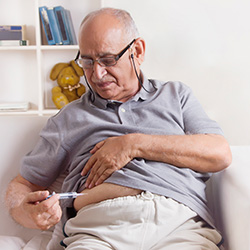
Studies on mice at the Universitat Autònoma de Barcelona (UAB) may lead to an injection that cures Type II Diabetes. This metabolic disorder affects overweight and obese people, due to insulin resistance. The body needs more and more insulin to maintain steady blood sugar, and the pancreas cannot keep up. Diabetes can lead to eye disease in the form of diabetic retinopathy. The chances of developing floaters, cataracts, nerve damage, and glaucoma are higher. Diabetes also causes stroke, amputations, coma, and even death.
The researchers, led by Professor Fátima Bosch, introduced into the mice a gene that creates the FGF21 protein
Read More »
 Carotenoid supplements could mitigate the deleterious effects of electronics screens on sleep, visual performance, and macular pigment density. Eyes that are glued to screens most of the day are exposed to excessive blue light. In a recent study1, subjects who took a combination of macular carotenoids — lutein, zeaxanthin, and mesozeaxanthin — reported better sleep patterns, reduced eyestrain and fewer headaches. They also had better visual performance and higher macular pigment optical density.
Read More »
 Current research on genetic eye diseases focuses mostly on genetic therapies. Scientists have learned how to sequence DNA at a relatively low cost. New tools for modifying genetic materials, such as the CRISPR, have opened the door for new treatments and even cures. Certain eye disorders are caused by mutated genes and genetic predispositions. This article highlights current research into four genetic eye disorders:
Read More »
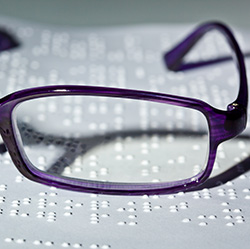 The rare eye disease Leber Congenital Amaurosis, caused by a defective gene, has a new genetic treatment. This is the first time the US Food and Drug Administration has approved gene therapy for an inherited disease.
The RPE65 gene provides a blueprint for a protein that makes light receptors work properly. Individuals with a defective RPE65 gene eventually go blind. Eye doctors may diagnose them with Leber
Read More »
 Smartphones can damage the eyes and cause disturbed sleep. Therefore, Natural Eye Care has issued safety guidelines for smartphones. We have summarized research on how smartphone misuse could contribute to the onset of serious eye diseases such as glaucoma and macular degeneration. Eye strain and discomfort from improper smartphone habits create unnecessary suffering. Night time smartphone use leads to poor sleep.
However, there is much you can do to prevent problems from smartphones. At the end of this article, you will find suggestions for how to use smartphones without damaging your eyes.
Read More »
Natural Eye Care, Inc.
3 Paradies Lane
New Paltz, New York 12561
Phone: 845.475.4158

NaturalEyeCare™ started in 1999 to help the public and professionals learn about complementary care in eye disease treatment.
The information and recommendations we offer are based on over 30 years of peer review research and personal clinical experience which guides us in providing a valuable resource to our readers, customers and patients regarding maintaining healthy vision naturally.
We believe that vision health is intimately connected to overall mental, physical and spiritual health. Therefore we encourage people to look at their overall lifestyle and diet as part of keeping healthy vision and reducing the risk of eye disease onset. This includes diet, regular exercise, and management of daily stress. If one has health issues such as high blood pressure, a thyroid imbalance, any autoimmune disease and/or are on medication(s), these possible contributions to eye disease should considered when working with your health care professional.
Please do not hesitate to call us at 845.475.4158 with any questions and concerns.