
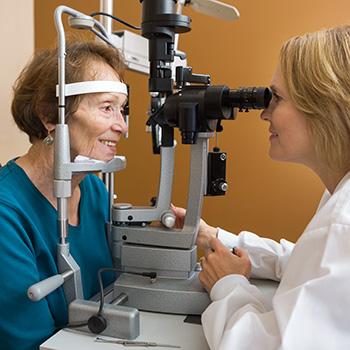
 Did you know that there are three nutrients that are fundamental to visual health? Why are they so important?
The top three nutrients for your eyes (and brain) are lutein, zeaxanthin, and mesozeaxanthin. Lutein, zeaxanthin and mesozeaxanthin are primarily found in the macula, that center part of the retina essential for detailed vision. They are found, not only in the macula, but in all of the retina, in the lenses, and in the aqueous humor. People with macular degeneration, other retinal diseases, and cataracts are deficient in these nutrients.
Read More »
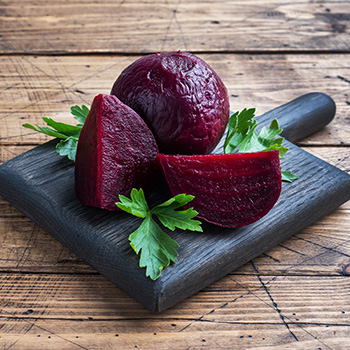
Why is nitric oxide important for vision?
Nitric oxide, one of the principal oxides of nitrogen, is produced naturally to assist with many health aspects. It contributes to vasodilation, relaxing the muscles that line your blood vessels allowing them to widen and improve circulation. In that capacity it allows nutrients and oxygen to travel throughout the body efficiently.
As a free radical, in excess, nitric oxide (NO) contributes to inflammation, so should only be taken in recommended dosages. In a balanced system, it is beneficial and can actually reduce inflammation. And in the case of glaucoma, it can be helpful in reducing elevated eye pressure (IOP) naturally.
Read More »
 These powerhouses provide a great starting point for your vision nutrition. Lutein and zeaxanthin (along with mesozeaxanthin) are carotenoids, a class of mostly yellow, orange, or red fat-soluble pigments, including carotenes, which give color to plant parts such as ripe tomatoes.
These macular pigments act as an internal pair of sunglasses to protect the retina from the damaging effects of UV radiation and blue light. They support microcirculation in the tiny capillaries within the eye. They protect the functions of the immune and anti-inflammation systems within the different regions of the eye.
Read More »
 Researchers have noticed that patients with severe or fatal covid-19 are usually deficient in the amino acid and powerferful antioxidant, glutathione.
In fact, some researchers feel that glutathione deficiency may be the Trojan horse of covid-19-related death.1
 Did you know that how well your gut works is directly related to your healthy vision and your healthy brain?
Healthy gut microbiota function is linked to normal central nervous system (CNS) function. The microbiota is defined as all microorganisms in a particular location, such as the GI tract, and their respective genetic material. The microbiome is initially developed transmission through the placenta, amniotic fluid, and meconium. The human gut microbiota comprises more than 100 trillion microorganisms associated with multiple functions, from nutrient metabolism to protection against pathogens.
Read More »

People with cardiovascular disease may be at a higher risk of developing certain eye diseases including macular degeneration, retinopathy, retinal bleeding, a retinal vein occlusion, and blurred vision.
Good vision requires, among other factors, adequate blood circulation, and normal blood pressure. The eyes have a network of tiny blood vessels, each no wider than a strand of hair, which supply blood to the retina, the light-sensitive tissue at the back of the eyeball.
Read More »
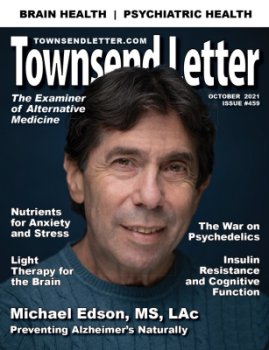 The latest Townsend Letter features co-owner of naturaleyecare.com Michael Edson, L.Ac., MS and his article, Underlying Causes and Natural Treatments for Alzheimer’s and Dementia.
The publisher’s discussion of Michael’s article also mentions that studies report that the Tdap (Tetanus, diphtheria, and pertussis) vaccination reduces the risk of dementia by 42% with similar results for flu and pneumonia vaccines. Both results may be due to reduced overall inflammation in the body.
 The most common form of glaucoma is “open-angle” glaucoma, where the eye pressure or IOP remains higher than normal (typically 8-20 mm Hg). Eye doctors also look at changes in peripheral field typically measured with a visual fields test and any changes in the optic nerve such as optic nerve thinning or increased cupping. Ocular hypertension is diagnosed when IOP is higher than normal but there as no signs of glaucoma. In addition glaucoma can occur without high IOP, “normal or low tension glaucoma.”
Read More »
 Mesozeaxanthin, less well-known than lutein and zeaxanthin, is the most powerful antioxidant of the threesome, but the combined trio presents the most potent protection for the eye than any of the three carotenoids alone.1 Out of all of the roughly 7000 carotenoids known in nature, it is these three that are found in great concentrations in the macula, the key part of the retina, responsible for central vision.
 Melatonin is a hormone primarily released by the pineal gland at night, and has long been associated with control of the sleep–wake cycle. It is typically taken at night before bedtime as a supplement. In addition to melatonin’s application as a sleep aid, this supplement can also be used for lowering eye pressure — such as in cases of open angle glaucoma or glaucoma suspects. Research shows melatonin may also protect the eye’s macula by supporting the functioning of the mitochondria, the tiny “batteries” in each cell. Alzheimer’s disease appears to be linked to poor quality sleep and melatonin production; therefore, melatonin may prove to be a useful supplement and research is underway. Keep reading for details plus information about supplements available on this website.
Read More »
Natural Eye Care, Inc.
3 Paradies Lane
New Paltz, New York 12561
Phone: 845.475.4158

NaturalEyeCare™ started in 1999 to help the public and professionals learn about complementary care in eye disease treatment.
The information and recommendations we offer are based on over 30 years of peer review research and personal clinical experience which guides us in providing a valuable resource to our readers, customers and patients regarding maintaining healthy vision naturally.
We believe that vision health is intimately connected to overall mental, physical and spiritual health. Therefore we encourage people to look at their overall lifestyle and diet as part of keeping healthy vision and reducing the risk of eye disease onset. This includes diet, regular exercise, and management of daily stress. If one has health issues such as high blood pressure, a thyroid imbalance, any autoimmune disease and/or are on medication(s), these possible contributions to eye disease should considered when working with your health care professional.
Please do not hesitate to call us at 845.475.4158 with any questions and concerns.