
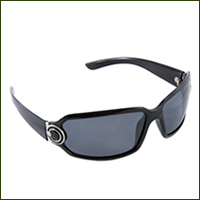
 Sunglasses are the primary way to protect your eyes from the hazards of excess sunlight. Ultraviolet (UV) light from the sun can cause cataracts and macular degeneration, serious eye diseases. It can also cause growths on the eye, eye cancer, retinal burns, and other types of damage. UV light damage is cumulative, but a life-long habit of wearing sunglasses in the sun will help prevent problems.
Good sunglasses do not need to cost a lot of money. In fact, the price tag does not indicate the lens’s ability to block damaging UV light. Neither does the darkness of the lenses. The item’s tag should contain
Read More »
 Several studies have indicated saffron’s power to protect the eye from the effects of Age-Related Macular Degeneration (ARMD). This precious yellow & red spice contains the carotenoids crocin and crocetin, antioxidants that appear to protect the retina. Visual acuity has been shown to be improved in Macular Degeneration patients who take a saffron supplement. These supplements may also increase blood flow to the retinal area, improve light sensitivity, and reduce photo-oxidative damage.
Saffron comes from a crocus flower, and it is a popular food flavoring. These tiny, feather-light
Read More »
 Middle-aged people and seniors are far more likely to develop Macular Degeneration, glaucoma, cataracts and diabetic retinopathy than those in their youth. It is true that some eye diseases strike the young. These tend to be genetically-based diseases, and they are rare. The incidence of eye diseases in the United States goes up dramatically with age:
Read More »
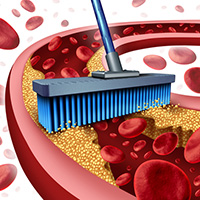 Some patients with dry Age-Related Macular Degeneration (ARMD) have vision improvements after taking high doses a statin. The common cholesterol-lowering drug is called Atorvastatin. It is the statin drug used in a phase I/II clinical trial at Massachusetts Eye and Ear at Harvard Medical School and the University of Crete. A higher-than-normal dose of the drug caused lipid deposits behind the retina to dissolve in some patients.
Statin drugs are FDA approved for controlling blood
Read More »
Eye disease and aging generally go hand-in-hand. That means that more people are likely to need surgery for cataracts, but that also means that those same patients are likely to suffer from other conditions like macular degeneration, glaucoma, and diabetic retinopathy. According to the OSN Supersite, this changes the ways that doctors counsel their patients and how they proceed with treatment plans, especially in relation to cataract surgery.
Some sources say that the risk of AMD decreases after one undergoes cataract surgery, but no conclusive scientific studies on the topic have yet been published.
Read More »
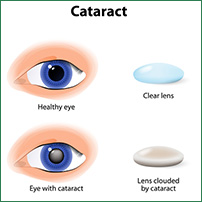 A large study has found no association between prior cataracts surgery and the development of Age-Related Macular Degeneration (ARMD).1 This study supports the long-term safety and low possibility of side-effects from replacing a cataract-damaged lens with an artificial lens.
Both cataracts and ARMD are eye diseases associated with ageing. By the age of 75, 50% of Americans have cataracts.2 It affects 24+ million Americans over age 39. Advanced Age-Related Macular Degeneration affects 1-in-10 eighty-year-olds; 9+ million Americans age 50 and up have the disease in early or late stages.
Read More »
 Aflibercept is currently a treatment for wet Age-Related Macular Degeneration (AMD), but it may also prove useful for patients with dry AMD.
The researchers accidentally discovered that an anti-placental growth factor antibody could provide retinal protection for the dry form of Macular Degeneration. They tried using a known protein called placental growth factor (PlGF) on a simulation of wet AMD in animal tissues. The PIGF made the retinal cells worse. So, they tried an anti-PlGF antibody treatment. This treatment provided protection against retinal damage.
Aflibercept is an anti-PlGF antibody treatment. It is used
Read More »
 Scientists are putting significant focus on Age-Related Macular Degeneration in their research. This eye disease strikes mostly older adults, over aged 50. The “Baby Boomer” generation is well above age 50, as are their living parents. Understanding the causes and potential treatments for Macular Denegation (ARMD) are important, because vision-impaired elderly people need extra help with their daily activities. Also, quality of life is lowered when vision is poor.
The macula is a tiny yellowish spot in the back of the eye, on the retina. It allows for central vision. Central vision is possible because of the macula. If it breaks down, reading, writing, watching TV, cooking, driving and even facial recognition are impaired. Macular Degeneration is degenerative, meaning that it gets worse over time.
ARMD comes in two forms. The more common
Read More »
 Lutein absorption can be improved by adding solid-lipid particles to the formula. What does that mean? Lipids are fats and solid-lipids are fats which are solid at room temperature. Researchers have noted that lutein from egg yolks is more readily absorbed than the ester form of lutein. Researchers wanted to know whether combining ester lutein with egg-like phospholipids and fatty acids would improve its absorption rate.
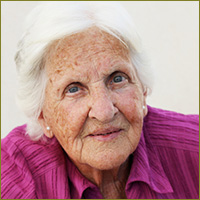 Age-Related Macular Denegation is a significant cause of vision loss that can often be managed and even improved through targeted nutritional support. It affects mostly people over age 50. While the precise cause of ARMD is not clear, oxidative damage is suspected as being a major factor. It strikes the elderly possibly due to poor diet and nutritional intake over a lifetime, less efficient absorption of nutrients and poor circulation as the body ages. The care needed by vision-impaired elderly could become overwhelming. Let’s take a look at some of the newest research in preventing macular degeneration, as well as treatment and support options.
Read More »
Natural Eye Care, Inc.
3 Paradies Lane
New Paltz, New York 12561
Phone: 845.475.4158
NaturalEyeCare™ started in 1999 to help the public and professionals learn about complementary care in eye disease treatment.
The information and recommendations we offer are based on over 30 years of peer review research and personal clinical experience which guides us in providing a valuable resource to our readers, customers and patients regarding maintaining healthy vision naturally.
We believe that vision health is intimately connected to overall mental, physical and spiritual health. Therefore we encourage people to look at their overall lifestyle and diet as part of keeping healthy vision and reducing the risk of eye disease onset. This includes diet, regular exercise, and management of daily stress. If one has health issues such as high blood pressure, a thyroid imbalance, any autoimmune disease and/or are on medication(s), these possible contributions to eye disease should considered when working with your health care professional.
Please do not hesitate to call us at 845.475.4158 with any questions and concerns.