
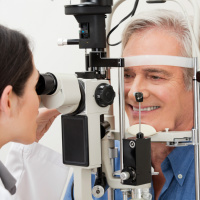
 Ocular Coherence Tomography (OCT) is a powerful technology for diagnosing and monitoring common eye diseases. Though the technology has existed for many years, it has not previously been available to a large number of optometry practices. Now, however, patients are getting access to OCT scans in more offices as a result of technological improvements and lower costs.
OCT creates images and measures the tissue structures of the eye by a process similar to ultrasound, but with light instead of sound. The patient simply rests his or her chin onto a chin rest and looks into a blue light.
Read More »
RetroSense Therapeutics has received Orphan Drug designation from the Food and Drug Administration (FDA) for its lead product, RST-001, to treat retinitis pigmentosa (RP).
 RP is a rare eye disease in which light receptors in the eye gradually die off, eventually leading to blindness. RP can be due to any one of over a hundred different gene defects. Currently there is no conventional treatment or cure, but nutritional therapies have been shown to slow the progress of the retinitis pigmentosa.
However, RetroSense is employing
Read More »
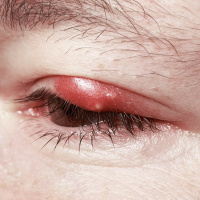 Most people have heard of styes mainly because they have had one. A chalazion is somewhat similar to a sty, but it is not the same thing. A sty is an acute infection of one of the oil-producing glands of the upper and lower eyelids, called meibomian glands. Each eye has 30-40 meibomian glands.
A chalazion is a clogged meibomian gland. The gland becomes blocked and oil builds up inside it. Eventually, the gland breaks open and leaks excess oil into the surrounding tissue, causing inflammation. While chalazia can hurt like styes do, they are more frequently painless lumps on the upper or lower eyelid. They occur most frequently in persons 30-50 years of age, but children can also get them.
Read More »
 A study in the British Medical Journal has shown that exercise can be as effective a treatment as conventional medication for some conditions. By examining 305 different trials, researchers found that patients that used exercise regularly as treatment rivaled or surpassed patients taking pills for the same conditions when examining their life expectancies.
The study was conducted by researchers at the London School of Economics, Stanford University School of Medicine, and the Harvard Pilgrim Health Care Institute at Harvard Medical School. Researchers scanned thousands of studies comparing exercise and medication and narrowed their analysis down to 305 of them. The cases included nearly 340,000 patients, treating conditions such as stroke rehab, heart disease and heart failure, and pre-diabetes.
 Patients with early signs of age-related macular degeneration (AMD) may benefit from an oral treatment of key nutrients. In a study published in the journal Ophthalmology, a solution of carotenoids with co-antioxidants was shown to both improve vision and slow further degeneration in participants with early AMD.
In the randomized double-masked trial, 433 adults with early AMD who were 55 years of age or older were given either an active solution or a placebo. At the start of the trial, all participants had either early AMD in one eye and late-stage AMD in the other, or early AMD in both eyes. The active oral solution contained
Read More »
 Researchers at Oxford University have developed smart glasses intended to aid people with severe loss of sight. The glasses, which enhance an individual’s residual vision, are currently in trial, both in a closed obstacle course setting and in a “real life” trial in the streets of Oxford.
The smart glasses use a set of video cameras that record nearby objects and movement, which are projected onto the glasses lenses with the help of
Read More »
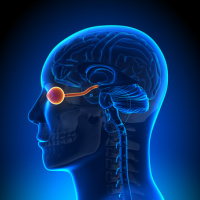 Optic nerve atrophy, also called optic neuropathy, is damage to the optic nerve from any cause.
Some of these causes include: diabetes, glaucoma, certain health problems associated with aging, brain tumors, head trauma, infection, multiple sclerosis, radiation, inflammatory blood vessel diseases, sleep apnea, excessive blood coagulation, high cholesterol, genetic disorders, poisoning, malnutrition, and drug side effects.
The optic nerve is the conduit between the retina of the eye and the visual processing center at the back of the brain. It contains 1.2 million nerve fibers that send sight signals to be processed by the brain. It is sheathed in the fatty nerve casing called myelin. Myelin protects nerves from damage and speeds nerve signals along. When it becomes damaged, nerves are exposed. Then they are very vulnerable to damage, much like an exposed
Read More »
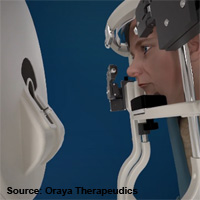 A one-time treatment for patients with wet age-related macular degeneration (AMD) is gaining popularity in Europe. Oraya Therapy, made by US-based company Oraya Therapeutics, Inc., is being offered at more locations in Europe, including a National Health Service hospital in the UK and several hospitals in Germany.
Oraya Therapy has already been a regular treatment option in hospitals throughout Germany, the UK, and Switzerland, increasingly embraced by patients, doctors, and insurance providers. The one-time treatment is a non-invasive therapy for wet AMD patients meant to maintain or improve vision and decrease frequency of anti-vascular endothelial growth
Read More »
 Blepharitis is inflammation of the eyelids, and for many this is a chronic condition. It is a common condition that affects both adults and children. There are two kinds of blepharitis – anterior (front) and posterior (back) blepharitis. Anterior blepharitis affects the front of the eye, including the eyelid and eyelashes. It is often associated with a bacterial growth and/or an increase in the activity of the meibomian gland. Posterior blepharitis causes dry eyes and is created by the dysfunction of the meibomian gland. So it generally isn’t caused by a bacterial infection.
In the eyes, the meibomian glands (also called the “tarsal glands”) are a type of
Read More »
 Research shows that simple exercise could be the answer to improving your vision. Exercise is linked to improved retinal health and prevention of common eye diseases. Although exercise in general is considered to be essential to overall health, for the first time a study has linked exercise directly with retinal health. This research could lead to better prevention and treatment of common retinal diseases, including age-related macular degeneration (AMD).
Natural Eye Care, Inc.
3 Paradies Lane
New Paltz, New York 12561
Phone: 845.475.4158

NaturalEyeCare™ started in 1999 to help the public and professionals learn about complementary care in eye disease treatment.
The information and recommendations we offer are based on over 30 years of peer review research and personal clinical experience which guides us in providing a valuable resource to our readers, customers and patients regarding maintaining healthy vision naturally.
We believe that vision health is intimately connected to overall mental, physical and spiritual health. Therefore we encourage people to look at their overall lifestyle and diet as part of keeping healthy vision and reducing the risk of eye disease onset. This includes diet, regular exercise, and management of daily stress. If one has health issues such as high blood pressure, a thyroid imbalance, any autoimmune disease and/or are on medication(s), these possible contributions to eye disease should considered when working with your health care professional.
Please do not hesitate to call us at 845.475.4158 with any questions and concerns.