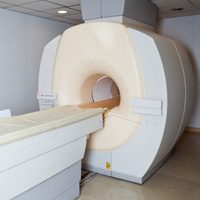
 Researchers from the University of Erlangen-Nuremberg Hospital in Germany have determined that advanced MRI (magnetic resonance imaging) can assist in accurately diagnosing optic nerve health – in particular, optic neuritis and the prognosis for short-term recovery and decision as to the most appropriate therapies.
Optic neuritis is a potentially serious inflammation of the optic nerve, sometimes accompanied by loss or damage to the myelin sheath that surrounds the optic nerve. It is most often experienced by younger adults, and whose symptoms can include pain, vision changes in perception of color, light/dark perception, and blurriness. It can come on suddenly and often is of short duration with full recovery in 90% of patients.
Optic neuritis may arise out of auto-immune conditions (such as lupus), fungal, viral or bacterial infections (such as herpes zoster), or prescription drugs, including chloramphenicol and ethambutol.
The researchers found that utilizing an MRI of the eyes (“orbital MRI”) with a color contrast agent to enhance the view of the nerve allowed doctors to see the size and location of the inflamed area (lesion). The back of the eye (intraconal space) is shaped in a cone of muscles that support eye movement and protect the optic nerve. The optic nerve of each eye exits its cone and crosses the other optic nerve to go to other side of the brain; for example, the optic nerve of the right eye terminates in the left hemisphere of the brain. The nerve passes through a protective channel called the canaliculus,
Good likelihood of recovery were associated with lesions located in the canaliculus (canalicular lesions) , as well as lesions that were located at the point where the two nerves cross each other (chiasmal lesions), and inflammation out at the edge of the skull cavity (intracranial). In such cases, recovery might be expected from several weeks to several months.
The prognosis was less encouraging for lesions within the cavity enclosing the eyeball (intraorbital), where doctors then consider more serious conditions like multiple sclerosis, Devic’s syndrome (where both the optic nerve and the spinal cord are inflamed due to loss and/or damage to the myelin sheath surrounding those nerves), tumors optic nerve (optic nerve glioma), or benign optic nerve tumors such as optic nerve meningioma.
This ability to pinpoint the location of inflammation was helpful not only in determining prognosis, but in determining the best treatment.
Learn more about how to support the health of your optic nerve.
Reference: Baseline magnetic resonance imaging of the optic nerve provides limited predictive information on short-term recovery after acute optic neuritis, S. Berg, et al, University of Erlangen-Nuremberg Hospital, PloS one, 1/30/2015.
Additional sources: Wikipedia; RadiologyAssistant article by David Youssen.