
Lion’s Mane mushrooms have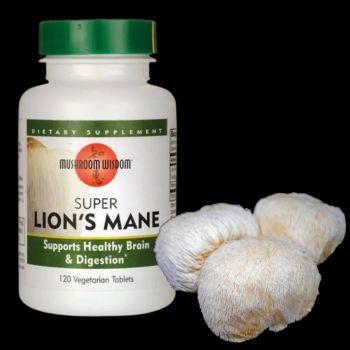 gained attention in natural medicine because it appears to support the body in several important ways at once. For those of us interested in protecting the brain, calming inflammation, and supporting healthy nerve function as we age, Lion’s Mane is one of the most interesting mushrooms in the natural health world.
At Natural Eye Care, we believe that the health of the eyes is closely connected to the health of the brain and entire body. Healthy vision depends on healthy circulation, healthy nerves, a healthy brain, and a balanced inflammatory response. That is one reason Lion’s Mane deserves attention. It may offer meaningful support for the systems that help us maintain clarity, function, and resilience over time.
Why Lion’s Mane Matters
Lion’s Mane, also known as Hericium erinaceus, contains natural compounds that have been studied for their antioxidant, anti-inflammatory, and neuroprotective effects. Some of these compounds appear to support nerve growth factor, which is important for the growth, repair, and maintenance of nerve cells.
This is especially relevant as we get older. Oxidative stress and chronic inflammation are linked with many degenerative changes in the body, including those that affect the brain and nervous system. When we support the body’s ability to manage these processes, we support healthier aging overall.
Brain and Nerve Support
One of the most exciting areas of Lion’s Mane research involves memory, focus, and cognitive function. Studies have suggested that Lion’s Mane may help support mental clarity and healthy brain performance, particularly in older adults. It is not a magic bullet, but it may be a valuable part of a broader program for protecting the brain.
From a holistic perspective, this matters for vision as well. The eyes depend on the brain to interpret what we see, and the optic pathways depend on healthy nerve communication. Anything that supports the nervous system probably helps the eyes. The retina is neural tissue.
Inflammation and Healthy Aging
Lion’s Mane also contains polysaccharides and other bioactive compounds that may help the body respond more effectively to oxidative stress and inflammation. This is important because chronic inflammation is one of the underlying factors in many long-term health problems.
There is also increasing interest in the gut-brain connection. Lion’s Mane may help support a healthier intestinal environment, and that can have ripple effects throughout the body. In natural medicine, we often see that when digestion, inflammation, and nervous system function improve, people feel clearer and more resilient.
Food vs. Supplements
There are two main ways to get Lion’s Mane into your body: as a food and as a supplement. Fresh Lion’s Mane mushrooms can be found at Chinese and Asian grocery stores, health food markets, some mainstream grocery stores, or reputable mushroom growers. When cooked properly, they can be a flavorful addition to soups, sautés, and other meals. Food is often a wonderful place to begin, especially for people who enjoy experimenting with functional foods.
Supplements are a practical option for those who want convenience, consistency, and a concentrated form. Lion’s Mane is available as capsules, tablets, powders, and liquid formulas. This mushroom is sometimes included in blended mushroom or brain-support products.
- Fresh food forms may be appealing for cooking and general wellness support.
- Supplements are easier for regular daily use.
- Some formulas contain Lion’s Mane alone, while others combine it with additional mushrooms or supportive nutrients.
- Quality matters, so it is best to buy from trusted companies rather than random online sellers.
At the Natural Eye Care store, you can find dedicated Lion’s Mane options such as Lion’s Mane Capsule 30 Vegcaps and Super Lion’s Mane 120 Vegtabs . Lion’s Mane is an ingredient in our Mushroom Emperors 120 vegtabs.
Important Safety Note
One thing to be very clear about: do not go wandering around your neighborhood, backyard, or the woods trying to collect your own wild mushrooms. This can be extremely dangerous. Many wild mushrooms look similar, and misidentification can lead to serious poisoning or even death. If you want Lion’s Mane, get it from a reputable food source or a trusted supplement company. Wild mushroom foraging is not a casual hobby and should never be treated lightly.
A Balanced View
Lion’s Mane should not be seen as a cure for disease. Instead, it is best understood as one promising natural tool that may help support healthy brain function, nerve health, and overall vitality. For many people, that makes it a worthwhile addition to a larger wellness strategy that includes excellent nutrition, movement, stress reduction, and targeted supplementation.
Supplements to Consider
Dr. Grossman’s Complete Eye Formula 2oz (oral spray)
Dr. Grossman’s Complete Eye (oral Spray)/Meso Plus Combo Package
Mushroom Master Blend 84 caps (OM6720) – includes a broad range of mushroom extract including Lion’s Mane, Shiitake and Reishi mushrooms.
Dr. Grossman’s ReVision Formula (wild-crafted herbal formula) 2 oz – support healthy circulation and energy flow in the eyes and whole body, and supports healthy nerve function.
Advanced Eye & Vision Support Formula (whole food) 60 vcaps
Dr. Grossman’s Advanced Eye and Dr. G’s Whole Food Superfood Multi1 20 Vcap Combo – 2 months supply
NMN Wonderfeel Capsul 60 vegcaps
Dr. Grossman’s Premium Turmeric Vcaps (Organic)
Brain and Memory Power Boost 120 caps
Cognirev Extra Strength 2 oz Oral Spray
Brain and Memory Support Package 1
Recommended Books
Natural Eye Care: Your Guide to Healthy Vision and Healing
Natural Parkinson’s Support: Your Guide to Preventing and Managing Parkinson’s
Select References
- Contato AG, Conte-Junior CA. Lion’s Mane Mushroom (Hericium erinaceus): A Neuroprotective Fungus with Antioxidant, Anti-Inflammatory, and Antimicrobial Potential-A Narrative Review. Nutrients. 2025 Apr 9;17(8):1307. doi: 10.3390/nu17081307. PMID: 40284172; PMCID: PMC12030463.
- Khan MA, Tania M, Liu R, Rahman MM. Hericium erinaceus: An edible mushroom with medicinal values. J Complement Integr Med. 2013;10:253–258.
- Szućko-Kociuba I, Trzeciak-Ryczek A, Kupnicka P, Chlubek D. Neurotrophic and neuroprotective effects of Hericium erinaceus. Int J Mol Sci. 2023;24:15960.
- Mori K, Inatomi S, Ouchi K, Azumi Y, Tuchida T. Improving effects of the mushroom Yamabushitake (Hericium erinaceus) on mild cognitive impairment: A double-blind placebo-controlled clinical trial. Phytother Res. 2009;23:367–372.
- Hetland G, Tangen JM, Mahmood F, et al. Antitumor, anti-inflammatory and antiallergic effects of Agaricus blazei mushroom extract and the related medicinal basidiomycetes mushrooms, Hericium erinaceus and Grifola frondosa: A review of preclinical and clinical studies. Nutrients. 2020;12:1339.
- Ren Y, Geng Y, Du Y, et al. Polysaccharide of Hericium erinaceus attenuates colitis in C57BL/6 mice via regulation of oxidative stress, inflammation-related signaling pathways and modulating the composition of the gut microbiota. J Nutr Biochem. 2018;57:67–76.
- Lew SY, Lim SH, Lim LW, Wong KH. Neuroprotective effects of Hericium erinaceus against high-dose corticosterone-induced oxidative stress in PC-12 cells. BMC Complement Med Ther. 2020;20:340.
- Singh A, Saini RK, Kumar A, Chawla P, Kaushik R. Mushrooms as Nutritional Powerhouses: A Review of Their Bioactive Compounds, Health Benefits, and Value-Added Products. Foods. 2025;14:741.
