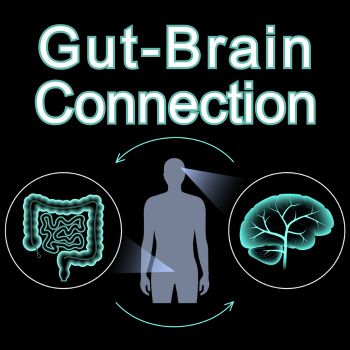
 The connection between the gut and the brain is gaining increasing attention as research continues to reveal how strongly digestive health may influence memory, mood, inflammation, and overall brain function. In previous blog posts, we explored how imbalances in the gut microbiome may affect vision and general health. Newer studies now point to an even broader role for the microbiota-gut-brain axis, suggesting that changes in the gut may also contribute to age-related cognitive decline and neurodegenerative conditions such as Alzheimer’s and Parkinson’s disease.
The gut and brain are linked through an intricate communication network involving the vagus nerve, the enteric nervous system, immune signaling, and microbial activity. Beneficial gut bacteria help break down nutrients, support immune balance, and produce important neuroactive compounds such as serotonin, dopamine, and GABA, all of which influence brain health. When the microbiome becomes imbalanced, however, this communication system may be disrupted, potentially contributing to inflammation, blood-brain barrier dysfunction, and changes in memory and cognition. In this article, we look at recent research on brain aging, diet, and the microbiome, along with practical lifestyle considerations that may help support both gut and neurological health.
Gut-Brain Axis
The vagus nerve and the enteric nervous system are key parts of the gut-brain axis, which serves as a major pathway for two-way communication between the gastrointestinal tract and the central nervous system.1 This brain-gut connection is frequently examined in the context of gastrointestinal conditions, mental health concerns, and the broader effects of the microbiome on overall health.
Micro-Organisms in the Gut
The microbiome plays an important role in nutrient breakdown and absorption, cholesterol metabolism, immune response modulation, and antimicrobial peptide production.2 The microbiota-gut-brain axis (MGBA) is also closely involved in maintaining brain structure and function, including neuroplasticity,3 4 neurogenesis,5 6 neuronal dendritic morphology, axonal myelination, microglia structure, blood-brain barrier (BBB) structure and permeability, and synaptic structure.
When the blood-brain barrier is disrupted, potentially as a result of immune responses that begin in the gut, harmful molecules or immune cells may enter the brain. This can contribute to neuroinflammation and is associated with disorders such as multiple sclerosis and Alzheimer’s disease.
The gut microbiome plays a significant role in converting ingested food into nutrients and in the breakdown and absorption of dietary nutrients.7 It is also involved in cholesterol metabolism, modulation of immune responses, and the production of antimicrobial peptides.8 Because of this, the microbiota may be viewed as both a “filter” and a “sensor” for exogenous compounds entering the body.9 The gut microbiota makes up about 1-2 kg of the adult human body, which is roughly equivalent to the weight of a normal adult brain.
The brain-gut axis is often examined in connection with gastrointestinal disorders, mental health conditions, and the influence of the microbiome on overall health.10 Among the notable biological functions of the gut microbiome is the secretion of neuroactive substances such as serotonin, dopamine, and gamma-aminobutyric acid (GABA), which affect behavior, cognition, and emotions.11 Research has shown that about 90% of the body’s serotonin is synthesized by enteroendocrine cells (EECs) in the gut.
These imbalances may contribute to conditions such as irritable bowel syndrome (IBS) and inflammatory bowel diseases, including Crohn’s disease and ulcerative colitis.
Memory Loss and Gut Microbiome
A recent mouse study published in Nature concluded that age-related memory loss function may be driven by changes in the gut microbiome.12 The scientists identified a mechanism by which signals from the gut-brain connection can impair memory function in the hippocampus. This effect is mediated by sensory neurons in the gut that communicate with the brain via the vagus nerve. Scientists in this study identified ways to reverse this decline in cognitive ability.
High-Fat Diets and Their Role in Gut Microbiota Imbalance
Diet has a major influence on overall health and plays an important role in shaping the gut microbiota. Because the gut microbiota is deeply involved in the brain-gut axis and immune function, dietary choices are important for supporting both physical and mental well-being.13 Greater microbial diversity is commonly seen as a sign of a healthy microbiota and has been associated with a lower risk of chronic diseases such as obesity, diabetes, and cardiovascular disease.14
A diet that includes fiber, prebiotics, and fermented foods can help support a healthy and diverse microbiota, while diets high in sugar, fat, and processed foods may contribute to imbalance and negatively affect gut and systemic health. Dietary fibers found in fruits, vegetables, whole grains, and legumes function as prebiotics. Although these fibers are not digested by the human body, they serve as nourishment for beneficial gut bacteria.
When gut microbes ferment food, fibers are converted into short-chain fatty acids (SCFAs). These compounds have anti-inflammatory effects and help maintain the integrity of the gut barrier.15
Fermented Foods
Fermented foods such as yogurt, kefir, kimchi, sauerkraut, and kombucha are rich in microorganisms that help balance gut flora and restore balance to the microbiome. Probiotics, whether obtained from fermented foods or supplements, can support this process, particularly in cases of dysbiosis or following antibiotic treatment.16
By promoting the growth of beneficial gut microorganisms, probiotics can increase gut diversity, improve digestion, and support immune function.17
2026 Study: Imbalanced Gut Bacteria Travel to the Brain
A new study from Emory University, published in PLOS Biology, explains the gut-brain connection, indicating that live bacteria from the gut can directly enter the brain, with potential implications for neurological health. This research establishes that live bacteria from an imbalanced gut microbiome can enter the brain via the vagus nerve. Responsible for critical functions, such as heart rate and breathing, the vagus nerve connects the brainstem to the heart, lungs, and major abdominal organs, including the stomach, intestines, liver, and more.
This study compared different diets in mice, concluding that a high-fat diet increased the bacterial load in the brain, and that this could be reversed when returned to a normal diet.
Researchers also identified low levels of bacteria in the brains of mouse models of neurological diseases, such as Parkinson’s disease, Alzheimer’s, and more, potentially explaining how these conditions may be initiated in humans.
Lifestyle Considerations
In addition to maintaining a healthy diet, lifestyle factors also play an important role in shaping the gut microbiota and influencing the brain-gut axis. Regular physical activity has been shown to positively affect the gut microbiota by promoting the growth of beneficial bacteria, which helps support healthy digestion and reduce the risk of constipation.
Maintaining healthy sleep patterns is also important. Poor or irregular sleep, including sleep disrupted by low oxygen levels or sleep-disordered breathing, can disturb the gut microbiota. These disrupted sleep patterns may affect brain function and mental health, while also contributing to gastrointestinal symptoms such as bloating, pain, and altered motility.
Intermittent fasting may lead to beneficial changes in the microbiota and is associated with improved metabolism and reduced inflammation. Periods of fasting may allow for a “gut reset,” helping reduce dysbiosis and promote the growth of beneficial species.18 Chronic stress, anxiety, and depression can also have major effects on the gut microbiome, potentially worsening digestive issues, increasing inflammation, and affecting the immune system through changes in microbiota composition.
Alzheimer’s and Parkinson’s
Emerging research indicates that gut microbiota dysbiosis has been associated with neurodegenerative diseases such as Alzheimer’s and Parkinson’s. In many cases, gastrointestinal symptoms appear before neurological signs become evident. This has led to growing interest in the gut-brain axis as a potentially important factor in the pathogenesis of these conditions.
As a result, targeting the gut microbiota through probiotics, prebiotics, or dietary modifications may offer a possible therapeutic approach for influencing the progression of neurodegenerative disease.19
Professional Guidance
Functional medicine practitioners are trained to work with whole-body health, starting with the microbiome. To try to locate a practitioner near you, go to https://www.ifm.org/find-a-practitioner
Suggested Supplements
Dr. Grossman’s Complete Eye Formula 2oz (oral spray)
Dr. Grossman’s Complete Eye (oral Spray)/Meso Plus Combo Package
Advanced Eye & Vision Support Formula (whole food) 60 vcaps
Dr. Grossman’s Meso Plus Retinal Support and Computer Eye Strain Formula with Astaxanthin 90 vcaps
Dr. Grossman’s Advanced Eye and Dr. G’s Whole Food Superfood Multi1 20 Vcap Combo – 2 months supply
ReVision Formula (wild-crafted herbal formula) 2 oz – based on classic Chinese medicine Liver tonic formula to help support healthy circulation and blood flow throughout the eyes and body.
Dr. Grossman’s Vitamin C Plant-Based Formula – 60 caps
Red Yeast Rice Extract 90 vegcaps
Recommended Books
Natural Eye Care: Your Guide to Healthy Vision and Healing
Natural Parkinson’s Support: Your Guide to Preventing and Managing Parkinson’s
- Furness J.B., Callaghan B.P., Rivera L.R., Cho H.J. The enteric nervous system and gastrointestinal innervation: Integrated local and central control. Adv. Exp. Med. Biol. 2014;817:39-71. doi: 10.1007/978-1-4939-0897-4_3 ↩
- Yassin LK, Nakhal MM, Alderei A, Almehairbi A, Mydeen AB, Akour A, Hamad MIK. Exploring the microbiota-gut-brain axis: impact on brain structure and function. Front Neuroanat. 2025 Feb 12;19:1504065. doi: 10.3389/fnana.2025.1504065. PMID: 40012737; PMCID: PMC11860919. ↩
- Lu Y., Yu X., Wang Z., Kong L., Jiang Z., Shang R., et al. (2024). Microbiota-gut-brain axis: natural antidepressants molecular mechanism. Phytomedicine 134:156012. doi: 10.1016/j.phymed.2024.156012, PMID ↩
- Damiani F., Cornuti S., Tognini P. (2023). The gut-brain connection: exploring the influence of the gut microbiota on neuroplasticity and neurodevelopmental disorders. Neuropharmacology 231:109491. doi: 10.1016/j.neuropharm.2023.109491, PMID ↩
- De Vadder F., Grasset E., Mannerås L., Karsenty G., Macpherson A. J., Olofsson L. E., et al. (2018). Gut microbiota regulates maturation of the adult enteric nervous system via enteric serotonin networks. Proc. Natl. Acad. Sci. USA 115, 6458-6463. doi: 10.1073/pnas.1720017115, PMID ↩
- Sawada N., Kotani T., Konno T., Setiawan J., Nishigaito Y., Saito Y., et al. (2018). Regulation by commensal bacteria of neurogenesis in the subventricular zone of adult mouse brain. Biochem. Biophys. Res. Commun. 498, 824-829. doi: 10.1016/j.bbrc.2018.03.064, PMID ↩
- Petrut SM, Bragaru AM, Munteanu AE, Moldovan AD, Moldovan CA, Rusu E. Gut over Mind: Exploring the Powerful Gut-Brain Axis. Nutrients. 2025 Feb 28;17(5):842. doi: 10.3390/nu17050842. PMID: 40077713; PMCID: PMC11901622. ↩
- Dietert R. The Human Superorganism: How the Microbiome Is Revolutionizing the Pursuit of a Healthy Life. 1st ed. Dutton; London, UK: 2016. pp. 1-50. ↩
- Clarke G., Stilling R. M., Kennedy P. J., Stanton C., Cryan J. F., Dinan T. G. (2014). Minireview: gut microbiota: the neglected endocrine organ. Mol. Endocrinol. 28, 1221-1238. doi: 10.1210/me.2014-1108, PMID: ↩
- Mayer E.A. Gut feelings: The emerging biology of gut-brain communication. Nat. Rev. Neurosci. 2011;12:453-466. doi: 10.1038/nrn3071. ↩
- Strandwitz P. Neurotransmitter modulation by the gut microbiota. Brain Res. 2018;1693:128-133. doi: 10.1016/j.brainres.2018.03.015. ↩
- Cox, T.O., Devason, A.S., de Araujo, A,et al. Intestinal Interceptive dysfunction drives age-associated cognitive decline. Nature (2026). https://doi.org/10.1038.s41586-026-10191-6 ↩
- Fusco W., Lorenzo M.B., Cintoni M., Porcari S., Rinninella E., Kaitsas F., Ianiro G. Short-chain fatty-acid-producing bacteria: Key components of the human gut microbiota. Nutrients. 2023;15:2211. doi: 10.3390/nu15092211 ↩
- Goralczyk-Binkowska A., Szmajda-Krygier D., Kozlowska E. The Microbiota-Gut-Brain Axis in Psychiatric Disorders. Int. J. Mol. Sci. 2022;23:11245. doi: 10.3390/ijms231911245. ↩
- Portincasa P., Bonfrate L., Vacca M., De Angelis M., Farella I., Lanza E., Di Ciaula A. Gut microbiota and short chain fatty acids: Implications in glucose homeostasis. Int. J. Mol. Sci. 2022;23:1105. doi: 10.3390/ijms23031105. ↩
- Petrut S.M., Sarbu I., Pelinescu D., Vassu T. Safety assessment of lactic acid bacteria strains isolated from traditional Romanian fermented foods. J. Biotechnol. 2019;305:S47-S48. doi: 10.1016/j.jbiotec.2019.05.169 ↩
- Corbu V., Petrut S., Vassu T., Pelinescu D., Sarbu I., Rusu E., Csutak O. Environmental stress responses in yeasts and lactic acid bacteria strains isolated from dairy traditional Romanian fermented products. Rom. Biotechnol. Lett. 2021;26:2548-2559. doi: 10.25083/rbl/26.2/2548.2559. ↩
- Hillestad E.M., van der Meeren A., Nagaraja B.H., Bjorsvik B.R., Haleem N., Benitez-Paez A., Sanz Y., Hausken T., Lied A.T., Lundervold A., et al. Gut Bless You: The Microbiota-Gut-Brain Axis in Irritable Bowel Syndrome. World J. Gastroenterol. 2022;28:412-431. doi: 10.3748/wjg.v28.i4.412 ↩
- Kim K.O., Gluck M. Fecal microbiota transplantation: An update on clinical practice. Clin. Endosc. 2019;52:137-143. doi: 10.5946/ce.2019.009 ↩