
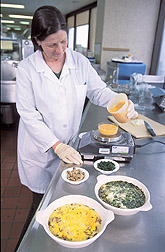
US government scientists realize the important role that nutrition plays in the health of the eyes.
Cataracts are caused by an accumulation of free radicals that cloud the lens of the eye through a process called oxidation. Antioxidants, these researchers agree, “are compounds in foods that help maintain healthy cells and tissues in the eye and other organs.” Prime sources of antioxidants include: leafy greens, eggs, blueberries, and bilberries.
In a study of almost 500 middle aged and older women, it was discovered that those who consumed more riboflavin, folate, beta carotene, lutein, zeaxanthin, and vitamins C and E were less likely to suffer from cataract symptoms than did those who consumes the least amounts of these nutrients.
Read More »
Women under 75 | Annual Survey | Vitamin D3 | D Sources

Vitamin D – and the fact that so many people are deficient in this vital compound – has been in the news a lot lately. A lack of vitamin D has been linked to asthma in children, the development of cancers, cognitive impairment, and increased risk of cardiovascular diseases.
Vitamin D impacts the health of the eyes as well.
A number of studies show that low vitamin D3 levels correspond to an increase in the incidence of age related macular degeneration.
Read More »
A new study further supports the benefits of eating eggs.
Michigan State University researchers sought to determine how eggs might be part of a healthy diet and also determine the impact egg consumption may have on cholesterol. Egg eaters showed higher levels of such vital nutrients as vitamins B12, A, E, and C. The study does remind us to enjoy eggs in moderation – four eggs per week is optimal. Eating more than four eggs per week can lead to increased cholesterol.
Source: maculardegenerationassociation.org
Eating eggs can also help prevent a number of eye conditions including macular degeneration, cataracts, and glaucoma.
Read More »
The Food and Drug Administration (FDA) has published a warning to parents and caregivers about the dangers of accidental overdose when giving infants liquid vitamin D supplement products.
Some products are sold with droppers that could allow harmful amounts of the vitamin to be given to an infant. These droppers can hold a greater amount of liquid vitamin D than an infant should receive. Infants should not receive more than 400 international units (IUs) of vitamin D a day.
Read More »
Natural Eye Care, Inc.
3 Paradies Lane
New Paltz, New York 12561
Phone: 845.475.4158

NaturalEyeCare™ started in 1999 to help the public and professionals learn about complementary care in eye disease treatment.
The information and recommendations we offer are based on over 30 years of peer review research and personal clinical experience which guides us in providing a valuable resource to our readers, customers and patients regarding maintaining healthy vision naturally.
We believe that vision health is intimately connected to overall mental, physical and spiritual health. Therefore we encourage people to look at their overall lifestyle and diet as part of keeping healthy vision and reducing the risk of eye disease onset. This includes diet, regular exercise, and management of daily stress. If one has health issues such as high blood pressure, a thyroid imbalance, any autoimmune disease and/or are on medication(s), these possible contributions to eye disease should considered when working with your health care professional.
Please do not hesitate to call us at 845.475.4158 with any questions and concerns.