
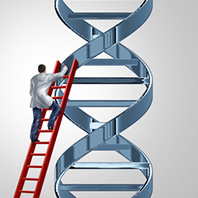
 An animal study has shown gene therapy to be effective even in the later stages of retinitis pigmentosa, which gives hope to more patients of this often inherited condition. This eye disease affects approximately 1 in 4,000 people. Up to 20% of these patients have X-linked retinitis pigmentosa. These individuals, mostly male, have night blindness before they enter puberty, and gradual vision loss by middle age. Around 70% of them have a genetic mutation that prevents the correct production of a protein important for the health of the photo receptors.
The study looked at dogs who naturally
Read More »
 Scientists are putting significant focus on Age-Related Macular Degeneration in their research. This eye disease strikes mostly older adults, over aged 50. The “Baby Boomer” generation is well above age 50, as are their living parents. Understanding the causes and potential treatments for Macular Denegation (ARMD) are important, because vision-impaired elderly people need extra help with their daily activities. Also, quality of life is lowered when vision is poor.
The macula is a tiny yellowish spot in the back of the eye, on the retina. It allows for central vision. Central vision is possible because of the macula. If it breaks down, reading, writing, watching TV, cooking, driving and even facial recognition are impaired. Macular Degeneration is degenerative, meaning that it gets worse over time.
ARMD comes in two forms. The more common
Read More »
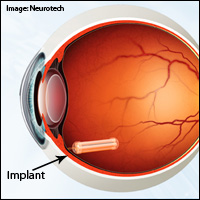 Clinical trials are underway for an implantable device that delivers medication directly to the eyes of people with age-related macular degeneration. Current treatment involves eye injections every four-to-eight weeks, which is difficult to comply with and can create complications. The new technology is a tiny device that is put into the eye and lasts up to 2 years, reducing or eliminating the need for the injections. The devices are being developed by Cumberland, Rhode Island-based Neurotech.
Read More »
 Women with specific genes may be more likely to develop age-related macular degeneration (AMD) if they are deficient in Vitamin D, according to new research in JAMA Ophthalmology.
The genetic variant (Y402H) studied is the complement factor H gene, called CFH for short. The genes in question are related to the immune system. The development of macular degeneration is believed to involve inflammation. In AMD, drusen, lipids (fats) and proteins build up in the eye. The body perceives the drusen to be an invader and attacks it. The genes appear to cause a stronger immune response.
Read More »
 Many advances in technology that could improve the lives of blind people are on the horizon. Solutions that were thought impossible not long ago are now becoming a reality for many patients suffering from retinal diseases. Treatments such as gene therapy, stem cells, and bionic retinas have shown that vision loss can in fact be reversible.
Common degenerative diseases of the retina, like age-related macular degeneration (AMD) and retinitis pigmentosa (RP), affect tens of millions of people worldwide, but blindness resulting from these conditions had previously been considered irreversible.
Read More »
The six patients had severe vision loss from choroideremia, a form of retinopathy that is genetic. The disease is fairly rare and manifests only in males. The cells at the back of the eye gradually die, leading to gradual vision loss and ultimately, blindness. Working copies of the faulty gene were injected into retina cells, along with a fluid to halt further degeneration.
Read More »
Natural Eye Care, Inc.
3 Paradies Lane
New Paltz, New York 12561
Phone: 845.475.4158
NaturalEyeCare™ started in 1999 to help the public and professionals learn about complementary care in eye disease treatment.
The information and recommendations we offer are based on over 30 years of peer review research and personal clinical experience which guides us in providing a valuable resource to our readers, customers and patients regarding maintaining healthy vision naturally.
We believe that vision health is intimately connected to overall mental, physical and spiritual health. Therefore we encourage people to look at their overall lifestyle and diet as part of keeping healthy vision and reducing the risk of eye disease onset. This includes diet, regular exercise, and management of daily stress. If one has health issues such as high blood pressure, a thyroid imbalance, any autoimmune disease and/or are on medication(s), these possible contributions to eye disease should considered when working with your health care professional.
Please do not hesitate to call us at 845.475.4158 with any questions and concerns.