
The American Optometric Association has played an active role in the Centers for Disease Control and Prevention (CDC) Division of Diabetes Translation (DDT) for over ten years. Eye docs hanging out with diabetes specialists? Of course. Diabetic retinopathy, according to the National Institute of Health, affects “4.2 million—28.5%— of people with diabetes ages 40 years or older … and of these, 655,000—4.4% of those with diabetes—had advanced diabetic retinopathy that could lead to severe vision loss.”
W. Lee Ball, O.D., AOA Associate Director for Quality Improvement gave a presentation entitled “Working Together to Manage Diabetes: Development and Testing of a Comprehensive Checklist.” Of the medical professionals across several fields who responded to a questionnaire regarding the efficacy of the checklist, 74% said they found it useful in a real-world clinical setting. Source: News from the AOA
Read More »
Researchers, specifically a group at Harvard’s Joslin Diabetes Center, are understanding the connection between diabetic retinopathy and proteins present in the eyes. In a 2007 study, scientists describe how they found a group of proteins that they believe are responsible for causing the leakage from blood vessels that marks diabetic retinopathy. They found that these proteins were also the cause of swelling in the eyes, a discovery that could have an impact on research related to cerebral swelling caused by head injuries and strokes. Figuring out the role of proteins in this condition opens up new treatment avenues for both eye diseases and brain injuries and conditions.
Read More »
Inflammation and Diabetic Retinopathy
At Natural Eye Care, we know that eye conditions are often related to diseases that affect the entire body. At a conference last year, Clement Trempe, MD reminded colleagues to consider the role of overall inflammation when diagnosing patients with diabetic retinopathy.
According to Dr. Trempe, “Diabetic retinopathy is not an eye disease, but part of a chronic systemic inflammatory disease process that shares the same risk factors and elevated biomarkers associated with coronary vascular and neurodegenerative diseases such as age-related macular degeneration, glaucoma and Alzheimer’s.”
Read More »
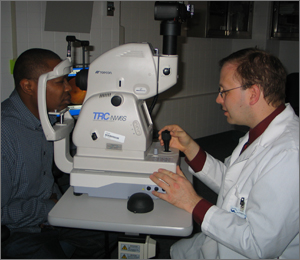
A new study confirms what might sound like common sense: the more severe one’s case of diabetic retinopathy, the more likely one’s quality of life is to deteriorate.
Published in the journal Ophthalmology (Issue 118, 2011), research suggests that individuals’ quality of life declines more rapidly when their sight loss due to diabetic retinopathy becomes more severe. The study involved over 1,000 type 2 diabetes patients taking part in the Los Angeles Latino Eye Study.
Read More »
Diabetic retinopathy is a potentially blinding condition that affects almost 5% of diabetics. Peer reviewed scientific research has found that the following nutritional supplements may help people who are concerned about diabetic retinopathy and diabetes in general.
Chromium: 73% of type I and II diabetics who took chromium supplements reduced their requirement for insulin or oral hypoglycemic agents. Taking chromium and niacin together reduced fasting blood sugar levels and improved glucose tolerance.
Read More »
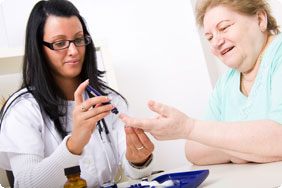
Why do some people with type 1 diabetes remain free of diabetic retinopathy and other complications while others suffer from sight loss as well as kidney and cardiovascular problems?
Researchers publishing in Diabetes Care set out to answer this question by studying individuals who have been living with type 1 diabetes for over 50 years. It seems that the sample group of 351 people with longterm diabetes diagnoses was mostly good at maintaining stable blood sugar levels, but blood sugar control did not seem to be the determining factor when it came to eye, kidney, and heart problems.
Read More »
Natural Eye Care, Inc.
3 Paradies Lane
New Paltz, New York 12561
Phone: 845.475.4158

NaturalEyeCare™ started in 1999 to help the public and professionals learn about complementary care in eye disease treatment.
The information and recommendations we offer are based on over 30 years of peer review research and personal clinical experience which guides us in providing a valuable resource to our readers, customers and patients regarding maintaining healthy vision naturally.
We believe that vision health is intimately connected to overall mental, physical and spiritual health. Therefore we encourage people to look at their overall lifestyle and diet as part of keeping healthy vision and reducing the risk of eye disease onset. This includes diet, regular exercise, and management of daily stress. If one has health issues such as high blood pressure, a thyroid imbalance, any autoimmune disease and/or are on medication(s), these possible contributions to eye disease should considered when working with your health care professional.
Please do not hesitate to call us at 845.475.4158 with any questions and concerns.