 Poor sleep and glaucoma may be more closely connected than previously understood. Recent research links short sleep, insomnia, and sleep apnea with changes in the retina and a higher risk of glaucoma. If you regularly struggle to sleep, there are practical steps you can take, including supporting healthy sleep and circulation, and getting medical help for an underlying sleep disorder.
Glaucoma damages retinal ganglion cells and the optic nerve, which carries visual information from the eye to the brain. Eye pressure is important, but it is not the whole story. Researchers are also studying blood flow, oxygen supply, oxidative stress, and the energy needs of these sensitive nerve cells.
What New Research Says About Sleep and Glaucoma
In 2025, researchers in Kyoto, Japan, compared sleep and retinal health in 5,958 adults ages 40–80. 1 Participants wore devices that objectively measured sleep and underwent retinal imaging. Retinal nerve fiber layer thickness was greatest among people getting six to seven hours of actual sleep per night. Sleeping fewer than six hours was independently associated with a thinner retinal nerve fiber layer.
The researchers also analyzed nationwide medical records. People diagnosed with insomnia had a 30% higher relative rate of subsequent glaucoma, while those with sleep apnea had a 43% higher rate than comparison groups. These numbers show associations and do not mean that poor sleep causes glaucoma.
Glaucoma patients reported more sleep problems than a control group in a 2026 study. The participants were older adults in the United States and China. Among participants with primary open-angle glaucoma, poorer sleep was also associated with thinner retinal nerve fiber layers and more severe structural damage. 2
Why Might Sleep Affect the Optic Nerve?
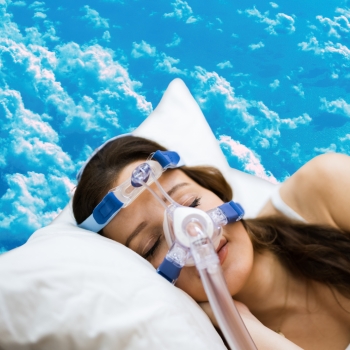
Sleep apnea repeatedly restricts or stops airflow during sleep. This can cause cycles of falling and recovering blood oxygen levels.
Researchers are investigating whether this intermittent low oxygen, changes in circulation, oxidative stress, and changes in eye pressure may make the optic nerve more vulnerable. A recent review describes intermittent hypoxia and reduced ocular perfusion pressure as possible links between obstructive sleep apnea and glaucoma. 3
This may be particularly important in normal-tension glaucoma, where optic nerve damage occurs even though measured eye pressure is within the statistically normal range.
Blood pressure also normally falls while you sleep. However, in people with normal-tension glaucoma, research has associated an excessive nighttime blood-pressure drop with faster visual-field loss. 4
If you have glaucoma and take blood-pressure medicine, do not change the dose or timing yourself. Ask your ophthalmologist and primary care clinician whether your blood pressure, medications, and nighttime patterns need to be considered together.
Sleep Apnea Deserves Special Attention
You are generally unaware during sleep. So detecting your own sleep apnea symptoms is difficult. Possible warning signs of sleep apnea include:
- Loud, frequent snoring.
- Gasping or choking during sleep.
- Breathing pauses noticed by another person.
- Morning headaches or dry mouth.
- Excessive daytime sleepiness and brain fog.
- Frequent nighttime awakenings.
You can lie in bed for 7 to 8 hours and still get poor-quality sleep if breathing is repeatedly interrupted.
If these symptoms sound familiar, start with your general practitioner or primary care clinician. A sleep study may be appropriate, along with referral to a sleep medicine specialist or pulmonologist.
For persistent insomnia, ask about cognitive behavioral therapy for insomnia (CBT-I), which goes beyond ordinary sleep-hygiene advice.
Support Your Optic Nerve From Several Directions
Glaucoma is increasingly studied as more than a problem of eye pressure alone. Retinal ganglion cells have high energy requirements and depend heavily on mitochondria, the structures inside cells that produce energy. Mitochondrial dysfunction and oxidative stress are among the mechanisms being investigated in glaucoma. 5
This helps explain interest in nutrition as an adjunct to standard glaucoma care.
Researchers have studied B vitamins, flavonoids, carotenoids, CoQ10, Ginkgo biloba, and other nutrients and plant compounds for possible antioxidant, metabolic, circulatory, or neuroprotective effects. However, clinical evidence varies considerably, and nutritional supplements have not been shown to replace treatments that lower eye pressure. 6
What should you eat? At Natural Eye Care, we recommend following the Vision Diet. This is a variation on the Mediterranean diet, a well-researched and popular way to eat healthily. Eat plenty of colorful vegetables and fruits, lean protein, fish, and whole grains. Try to reduce refined carbohydrates and added sugars. Nutrients and compounds commonly discussed for optic nerve and eye support include taurine, alpha-lipoic acid, bilberry, magnesium, Ginkgo biloba, vitamin B12, folate, N-acetyl-cysteine, grapeseed extract, CoQ10, and vitamins C and E. Some come from food, while others are available in targeted supplements.
What Can You Do Now?
- If you have persistent sleep problems, talk to your doctor. You should not have to struggle to sleep or remain exhausted despite spending enough time in bed.
- Ask about sleep apnea. Snoring, gasping, breathing pauses, morning headaches, and unexplained daytime sleepiness deserve attention.
- Keep moving within your abilities. Regular physical activity can support sleep, circulation, metabolic health, and overall health.
- Support healthy sleep habits. Keep reasonably consistent sleep and waking times, get daylight during the day, limit late caffeine, and make the bedroom as dark, quiet, and comfortable as practical.
- Keep your eye doctor informed. Tell your ophthalmologist if you have sleep apnea or significant sleep problems. Continue prescribed glaucoma treatment and regular eye examinations.
Note: If you have glaucoma, watch for sudden severe eye pain, redness, blurred vision, or nausea. These can be symptoms of acute angle-closure glaucoma and require immediate medical attention.
Suggested Supplements
Dr. Grossman’s Circulation and Optic Nerve Support Formula
Dr. Grossman’s Complete Eye Formula 2oz (oral spray)
Dr. Grossman’s Bilberry/Ginkgo Combination 2oz
Dr. Grossman’s Coleus Ultra Herbal Formula 2oz (60ml)
Advanced Eye & Vision Support Formula (whole food) 60 vcaps – our foundation eye formula which is a whole food, organic, GMO free formulation.
Dr. Grossman’s Meso Plus Retinal Support and Computer Eye Strain Formula with Astaxanthin 90 vcaps – with lutein, zeaxanthin, meso-zeaxanthin, taurine and astaxanthin.
Dr. Grossman’s Advanced Eye and Dr. G’s Whole Food Superfood Multi1 20 Vcap Combo – 2 months supply
ReVision Formula (wild-crafted herbal formula) 2 oz – based on classic Chinese medicine Liver tonic formula to help support healthy circulation and blood flow throughout the eyes and body.
Dr. Grossman’s Vitamin C Plant-Based Formula – 60 caps
OmegaGenics™ EPA-DHA 720 Lemon 120 gels – also available if 240 gelcaps or liquid.
NMN Wonderfeel Capsul 60 vegcaps
Recommended Books
Natural Eye Care: Your Guide to Healthy Vision and Healing
Natural Parkinson’s Support: Your Guide to Preventing and Managing Parkinson’s
- Akada M, Nakanishi Y, Ideyama M, et al. Sleep Disturbance as a Risk Factor for Retinal Neurodegeneration and Subsequent Glaucoma. Am J Ophthalmol. 2025;280:193-202. PMID: 40819702. ↩
- Luo Z, Lin Z, Yu Y, et al. Sleep Pattern and Structural Damage in Older Adults with Glaucoma: A United States and China Study. Ophthalmol Sci. 2026;6(7):101237. PMID: 42339337. ↩
- Mazurek W, Mazurek Ł, Rękas-Mazurek B, Rękas M. The Pathophysiological Association Between Obstructive Sleep Apnea and Glaucoma: A Current Update. J Clin Med. 2026;15(13):5215. PMID: 42452675. ↩
- Charlson ME, de Moraes CG, Link A, Wells MT, Harmon G, Peterson JC, Ritch R, Liebmann JM. Nocturnal systemic hypotension increases the risk of glaucoma progression. Ophthalmology. 2014;121(10):2004-12. PMID: 24869467. ↩
- Yang TH, Kang EYC, Lin PH, Yu BBC, Wang JHH, Chen V, Wang NK. Mitochondria in Retinal Ganglion Cells: Unraveling the Metabolic Nexus and Oxidative Stress. Int J Mol Sci. 2024;25(16):8626. PMID: 39201313. ↩
- Hui F, Williams PA. Vitamins and nutraceuticals in glaucoma research. Eur J Ophthalmol. 2026 May;36(3):512-528. doi: 10.1177/11206721261419640. Epub 2026 Feb 4. PMID: 41637226. ↩