
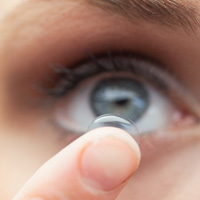
 A biodegradable contact lens is being developed that would administer glaucoma medication and then disappear. The problem with eye drops is that they slip out of the eye and much of the medication is lost. This contact lens, designed by Mridula P. Menon in India, uses a nano-carrier loaded with the glaucoma drug acetazolamide that is dissolved in a transparent vinyl polymer.
The resulting lens can be easily inserted into the
Read More »
 In a new article, “Vision & Posture,” Dr. Mark Fillipi, D.C., illuminates the relationship between vision and posture in the body. These two systems develop differently, but they become intricately intertwined as the brain and body advance. Dr. Fillipi unravels this complex relationship to explain why vision and posture depend so strongly on the health and functioning of the eye itself.
In order to receive and interpret light signals as vision, the physical posture is corrected so that the head and eyes can take in visual information. Visual input,
Read More »
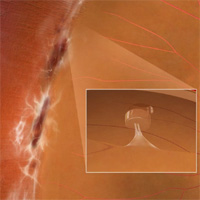 When our far peripheral retina, which is responsible for our extreme side vision, becomes weak and thin, its most common form is called “lattice degeneration.” This condition occurs in 8 to 11 percent of the normal population. It affects both eyes in 30-50% of patients who have the condition.
The fibrosed vessels within the atrophied retina form a “lattice” pattern, hence its name. Sometimes it is accompanied by retinal pigment epithelium (RPE) hyperplasia (an increase in cells), which gives the lesions a pigmented appearance. Some 18 to 42 percent of the
Read More »
 Lattice degeneration’s development is often found only as a doctor examines the eyes in peripheral retinal exams or for other conditions. It doesn’t affect central vision or cause noticeable symptoms, although the patient may notice many sudden floaters, light flashes, or loss of peripheral vision.
There are no specific measurable risk factors for lattice degeneration. However, research has repeatedly shown that healthy vision for those with retinal (kidney) conditions can be supported and even maintained with a healthy lifestyle (included a good vision diet and regular exercise) and taking targeted supplements.
Therefore we recommend a general health protocol that includes fresh juices, lots of
Read More »
 According to market research by Persistence Market Research, the global market for ophthalmic devices is predicted to increase significantly by 2020. The prediction is based on information from a number of geographic locations, including the United States and countries in Europe and Asia. Increasing prevalence of eye disease contributes to the ophthalmic devices market, which includes vision care, diagnostic, and surgery devices.
Higher incidence of common eye disorders such as age-related macular degeneration, diabetic retinopathy, cataracts, and glaucoma are leading more and more patients all over the world to seek out treatment for vision loss. Aging populations, lifestyle-associated diseases (such as diabetes or high blood pressure), and government healthcare
Read More »
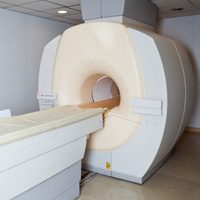 Researchers from the University of Erlangen-Nuremberg Hospital in Germany have determined that advanced MRI (magnetic resonance imaging) can assist in accurately diagnosing optic nerve health – in particular, optic neuritis and the prognosis for short-term recovery and decision as to the most appropriate therapies.
Optic neuritis is a potentially serious inflammation of the optic nerve, sometimes accompanied by loss or damage to the myelin sheath that surrounds the optic nerve. It is most often experienced by younger adults, and whose symptoms can include pain, vision changes in perception of color, light/dark perception, and blurriness. It can come on suddenly and often is of short duration with full recovery in 90% of patients.
 Donated eyes from the dead may be the key to giving sight back to the living. Researchers have found that cells from the back of the eye may be taken from donated eyes and used to repair the eyes of the blind. Human cells have successfully been used to restore some sight to blind mice, with human trials set to begin in the next three years.
The special type of cells extracted from the back of the eye are called
Read More »
 Vision is the sense most heavily relied on by modern, technological society. Hearing may come in as a close second, but even without a sense of hearing, we could still navigate most electronics. Without our eyes, that becomes a laborious task. But what, exactly, are the screens we look at so much, doing to our eyes?
Those glowing flat panes, held mere inches from our face, emit a powerful light that can, opticians say, lead to permanent eye damage. Much of the light that comes out of a screen is blue-violet. Studies show that, over time, too much exposure to blue-violet light can injure the retina. Retina damage can lead to macular degeneration,
Read More »
 Everyone is sensitive to light to some degree, but light sensitivity, or photophobia is an abnormal intolerance for light. Discomfort can be experienced from light sources such as sunlight and fluorescent or other artificial lights. It may cause the person with light sensitivity to squint or to have to close their eyes. It can cause pain and/or tears. In some cases, this may be accompanied by a headache.
The brighter the light, the greater the discomfort. Generally people
Read More »
 Technology for restoring vision to the blind continues to improve with devices like the Argus II, a system of special glasses and electrodes implanted directly in the retina. While only six people in the U.S. are using the Argus II, more and more similar means of achieving “bionic eyes” are becoming available. These systems allow patients who have lost sight due to certain eye diseases to regain basic recognition of light and shapes.
The Argus II involves a simple set of glasses equipped with a camera not unlike those in smartphones. The camera sends
Read More »
Natural Eye Care, Inc.
3 Paradies Lane
New Paltz, New York 12561
Phone: 845.475.4158
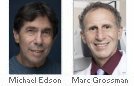
NaturalEyeCare™ started in 1999 to help the public and professionals learn about complementary care in eye disease treatment.
The information and recommendations we offer are based on over 30 years of peer review research and personal clinical experience which guides us in providing a valuable resource to our readers, customers and patients regarding maintaining healthy vision naturally.
We believe that vision health is intimately connected to overall mental, physical and spiritual health. Therefore we encourage people to look at their overall lifestyle and diet as part of keeping healthy vision and reducing the risk of eye disease onset. This includes diet, regular exercise, and management of daily stress. If one has health issues such as high blood pressure, a thyroid imbalance, any autoimmune disease and/or are on medication(s), these possible contributions to eye disease should considered when working with your health care professional.
Please do not hesitate to call us at 845.475.4158 with any questions and concerns.