At Natural Eye Care, we want to keep our readers informed about new developments in health and wellness. Sometimes that means looking at breakthrough medical research, such as promising new cancer treatment technology or new findings about inflammation and Alzheimer’s disease. It also means helping you better understand how inflammation may affect eye health and sharing natural ways to support overall wellness. In this article, we bring these topics together to highlight how ongoing research and whole-body health can both contribute to long-term well-being.
Promise for More Effective Cancer Treatments
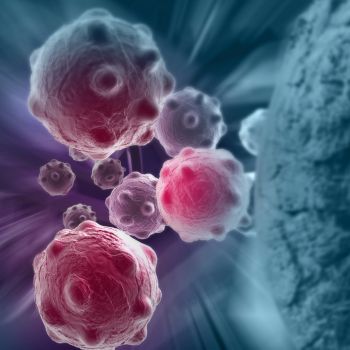
Scientists have created a “smart” DNA drug that targets cancer cells with extreme precision. 1 2 They can deliver multiple drugs at once directly into the tumor cells.
DNA drugs are a class of therapeutic agents designed to interact with, repair, or use DNA to treat cancer, genetic disorders, and infectious diseases. They are essentially a “programmable” drug system that only activates when it detects a precise combination of tumor markers. DNA drugs dramatically reduce damage to healthy cells in the body, because they only get released in the targeted cancer cells.
These drugs are an improvement over antibody-drug conjugates (ADCs), which use monoclonal antibodies to deliver treatments directly to cancer cells. One major drawback of ADCs is their relatively large size, which limits their ability to penetrate cancer cells. They are also more limited in the amount of medication they can carry.
The significance of this new smart DNA technology is that these molecules are much smaller than ADC antibodies. Therefore, they can move more easily through tumor tissue while delivering larger amounts of drugs.
This new method is a two-part system. First, it identifies the tumor cells. Then, it releases the medication. Both markers must be detected before activation occurs.
Inflammation and Alzheimer’s Disease
A recent study suggests that Alzheimer’s disease may start much earlier than we once thought – and that inflammation may be a trigger. The researchers say inflammation in the body’s “barrier” organs, like the gut, lungs, and skin, may help trigger changes that eventually affect the brain. 3 These organs act as the body’s first line of defense, and when their normal balance is disrupted, harmful microbes and inflammatory signals may spread throughout the body, contributing to Alzheimer’s-related damage.
The study also helps explain why many Alzheimer’s drugs have had limited success. Most current treatments focus on just one part of the disease, such as amyloid plaques or tau tangles in the brain. But Alzheimer’s appears to be much more complex, involving long-term changes in the immune system, the microbiome, and communication between multiple organs and the brain. Earlier research has already linked chronic inflammation and immune dysfunction to a higher risk of dementia, and this paper builds on that idea by showing how those processes may begin outside the brain.
What Are Inflammatory Eye Diseases?
Inflammatory eye disease is a broad term for conditions that cause swelling, irritation, redness, pain, or damage in different parts of the eye. Some forms are mild and improve with treatment, while others can become serious and threaten vision if they are not treated quickly. In some people, inflammation affects only the eye. In others, it is linked to inflammation happening elsewhere in the body.
That is why eye inflammation can sometimes be an early warning sign of a larger health problem. Doctors often look beyond the eye itself to see whether an autoimmune or inflammatory disease may be involved. Autoimmune disease means the immune system mistakenly attacks the body’s own tissues.
Eye Conditions Linked to Inflammation
Uveitis: Inflammation inside the eye, usually affecting the middle layer. It can cause redness, pain, blurred vision, light sensitivity, and floaters. Uveitis can become serious and may lead to vision loss if not treated.
Scleritis: Inflammation of the white outer wall of the eye. It is often very painful and may be linked to autoimmune disease. This condition needs prompt medical attention.
Keratitis: Inflammation of the cornea, the clear front surface of the eye. It may be caused by infection, injury, dry eye, or immune problems. Symptoms can include pain, tearing, blurred vision, and sensitivity to light.
Episcleritis: Inflammation of the thin layer covering the white part of the eye. It is usually milder than scleritis and often causes redness and irritation rather than severe pain.
Diabetic retinopathy: A diabetes-related eye disease that damages blood vessels in the retina. Inflammation is believed to play a role in how the disease develops and worsens over time.
Retinitis or retinal vasculitis: Inflammation of the retina or its blood vessels. This can happen on its own or as part of a broader inflammatory disease. It may affect vision and should be evaluated quickly.
Dry eye disease: Often thought of as simple irritation, but many cases involve ongoing inflammation of the eye surface. It can cause burning, grittiness, fluctuating vision, and discomfort.
Macular degeneration: Especially in age-related forms, chronic low-level inflammation may contribute to damage in the central retina, affecting sharp, detailed vision.
Autoimmune and Inflammatory Diseases Commonly Linked to Eye Inflammation
Rheumatoid arthritis: A disease that mainly affects the joints but can also cause dry eye, scleritis, and other eye problems.
Lupus: An autoimmune disease that can affect many organs, including the eyes, through inflammation of tissues or blood vessels.
Juvenile idiopathic arthritis (JIA): A childhood arthritis that can be associated with uveitis, sometimes without obvious eye symptoms at first.
Sarcoidosis: An inflammatory disease that can affect the lungs, lymph nodes, skin, and eyes. It is a well-known cause of uveitis.
Inflammatory bowel disease: Conditions such as Crohn’s disease and ulcerative colitis can be linked to uveitis, episcleritis, and other inflammatory eye problems.
Natural Ways to Help Manage Chronic Inflammation
Diet: Stay on an alkaline diet, which includes lots of green, leafy vegetables, salads, fish or chicken, with meat in moderate amounts if desired. Limit your intake of dairy products, sugar, and refined carbohydrates. For more information on an alkaline diet, go to our website at https://naturaleyecare.com/studylist/mediterranean-diet-2015/ .
Exercise: Regular exercise helps older adults maintain strength, balance, heart health, and mental sharpness as they age. Typical recommendations include at least 150 minutes of moderate activity each week, plus strength training, balance work, and flexibility exercises, such as brisk walking, swimming, chair exercises, light weights, tai chi, or gentle stretching.
Supplements: Taking targeted supplements may help fill nutritional gaps that become more common with age, especially when diet, digestion, or medications reduce nutrient absorption. Common examples include vitamin D, vitamin B12, calcium, magnesium, omega-3s, and eye-supporting nutrients such as lutein and zeaxanthin. Seniors should choose supplements based on their personal health needs and medical guidance.
Manage daily stress: Ongoing stress can affect sleep, mood, memory, immune function, and overall well-being in older adults. Helpful strategies often include regular routines, walking outdoors, prayer or meditation, deep breathing, social connection, hobbies, journaling, and limiting overstimulation from news or screens.
Herbs That Reduce Inflammation and Pain Naturally
Herbs that reduce inflammation and pain naturally include turmeric (curcumin), ginger, Boswellia (frankincense), willow bark, holy basil, garlic, green tea, capsaicin, Hu Zhang, Chinese Goldthread extract, barberry, omega-3 fatty acids, certain omega-6 fatty acids including black currant seed oil and borage oil, omega-7, and mushrooms including reishi, shiitake, and cordyceps.
Natural anti-inflammatory spices include oregano, cinnamon, rosemary, and black pepper.
Supplements to Consider
Dr. Grossman’s Complete Eye Formula 2oz (oral spray)
Dr. Grossman’s Complete Eye (oral Spray)/Meso Plus Combo Package
Mushroom Master Blend 84 caps (OM6720) – includes a broad range of mushroom extract including Lion’s Mane, Shiitake and Reishi mushrooms.
Dr. Grossman’s ReVision Formula (wild-crafted herbal formula) 2 oz – support healthy circulation and energy flow in the eyes and whole body, and supports healthy nerve function.
Advanced Eye & Vision Support Formula (whole food) 60 vcaps
Dr. Grossman’s Advanced Eye and Dr. G’s Whole Food Superfood Multi1 20 Vcap Combo – 2 months supply
NMN Wonderfeel Capsul 60 vegcaps
Dr. Grossman’s Premium Turmeric Vcaps (Organic)
Dr. Grossman’s Vitamin C Supreme (Plant-Based Formula) – 60 caps
Dr. Grossman’s Whole Food Organic Superfood Multi-Vitamin 120 Vcaps
Anti-Inflammatory Eye and Whole Body Package 1 (1 month supply)
Brain and Memory Support Package 1
Recommended Books
Natural Eye Care: Your Guide to Healthy Vision and Healing
Natural Parkinson’s Support: Your Guide to Preventing and Managing Parkinson’s
- Mieville V, Gubala J, Han S, Ota M, Andreu-Carbo M, Molica F, et al. Leveraging multi-organ models for drug combination therapy safety. Biomed Pharmacother. 2025;193:118847. doi:10.1016/j.biopha.2025.118847. ↩
- Ribeiro BFM, Machado-Santelli GM. Layers of hope: how graphene and nanostructures hold promise for cancer therapy. Int J Mol Sci. 2026 Mar 2;27(5):2336. doi:10.3390/ijms27052336. PMID: 41828559; PMCID: PMC12985096. ↩
- Liao J, Mou H, Luo S, Shen L, Jiao B. Microbiota and Alzheimer’s disease: mechanistic insights from a multi-organ perspective. Transl Neurodegener. 2026 Feb 11;15(1):3. doi:10.1186/s40035-026-00541-9. PMID: 41673679; PMCID: PMC12892757. ↩