
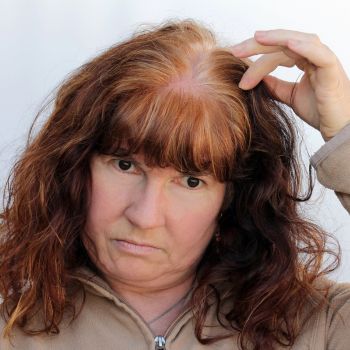
Hair loss is one of the most frequent concerns people bring to their doctors, regardless of age or gender. What many do not realize is that thinning hair or lash loss can sometimes signal deeper health issues that also impact vision. The eyes are closely connected to the rest of the body, so chronic conditions like diabetes, arthritis, high blood pressure, and autoimmune diseases can affect both hair and eye health.
Alopecia
Alopecia is known as the loss of hair from the scalp or other parts of the body where hair normally exists. Androgenetic alopecia is the most common form of alopecia, generally genetically triggered. One study found a correlation between patients with alopecia and dry eyes. Dry eye disease (DED) was diagnosed in 27 (84%) of 32 alopecia areata patients. This relationship may be related to the inflammatory mechanisms causing alopecia areata that may trigger dry eye disease or vice versa. 1
Another study looked at the relationship between alopecia and the Ocular Surface Disease Index (OSDI) (which can include disorders of the surface of the cornea), and conjunctival impression cytology (CIC), which can affect tear production and quality. The results of this study showed that androgenetic alopecia was correlated with significant disturbances in conjunctival cytology and tear function. 2
Hyperthyroidism and Hair Loss
The thyroid is a hormone-producing gland located in the neck that helps regulate many of the body’s functions. Both hyperthyroidism (excess thyroid hormone) and hypothyroidism (insufficient thyroid hormone) can contribute to eyelash and other hair loss. Thyroid disorders are also commonly associated with changes in weight, heart rate, and blood pressure.
Hyperthyroidism can lead to hair loss, and this can be most visible in your eyebrows. If the outer third of your eyebrow starts looking patchy, your thyroid hormones may be responsible. Often called Thyroid Eye Disease (TED) or Graves’ ophthalmopathy, this autoimmune condition causes inflammation of the extraocular muscles and orbital fat behind the eyes. It affects roughly one-quarter of individuals with hyperthyroidism and commonly presents with protruding or “bulging” eyes.
Other symptoms include:
- Dry, gritty, red, or irritated eyes
- Double vision
- Puffy eyelids
- Eye pain or pressure
- Eyelids that pull back more than usual or do not close all the way
- Sensitivity to light
- Trouble moving your eyes when you look around
Symptoms often last 1–2 years and may disappear on their own.
Eyelash Loss
Rapid eyelash loss, known as madarosis, may signal an underlying eye condition or a systemic health issue. Common causes include:
- Blepharitis (often associated with chronic dry eye)
- Irritation from cosmetic products
- Trichotillomania — a disorder in which emotional or psychological stress leads to habitual eyelash pulling
Less common causes:
- Eyelid skin cancer
- Chronic or recurrent styes and chalazia
- Ocular rosacea
- Eyelash mites
- Bacterial or fungal infections
Other less common causes can include: chronic stress, 3 nutritional deficiencies, chronic inflammatory diseases such as psoriasis, rheumatoid arthritis, lupus, and scleroderma, hormonal changes often related to perimenopause and menopause, chemotherapy and radiation therapy, or reactions to certain medications.
How To Prevent Eyelash Loss
Cleanse your face and eyelids daily with a mild soap and water. The glands in your eyelids naturally moisturize the lashes, so additional lotions or conditioners are usually unnecessary unless your lashes feel particularly dry.
Eat a healthy diet including vegetables, fruits, and healthy protein sources.
If you notice eyelash loss, visit your doctor.
Chinese Medicine’s Perspective on Hair Loss
From a Chinese medicine perspective, the primary meridian (flow of energy) overseeing healthy hair is the Kidney meridian, which also supports eye vision through helping nourish the eyes. Kidney deficiency can contribute to eye issues including congenital eye conditions such as myopia and strabismus, as well as chronic eye diseases and age-related eye problems — particularly glaucoma, cataracts, and macular degeneration.
Taking a wild-crafted Kidney tonic (see below) can help support overall health and energy as well.
Diet and Vitamin Deficiency
If you notice that your hair has become thin and is breaking off easily, you should check your diet. Excess shedding of hair while combing could mean that you are suffering from a lack of iron.
Low levels of vitamin D have been implicated in hair loss, as vitamin D is involved in various signaling pathways of growth and differentiation of hair follicles. 4
Low vitamin D levels can also affect eye health. Vitamin D deficiency has been linked to age-related macular degeneration, diabetic retinopathy, uveitis, dry eye syndrome, and reduced tear production. 5 6
Vitamin D deficiency can cause dry eyes, which can lead to eye symptoms that may include:
- Redness, irritation, and eye discomfort
- Burning and gritty, sore, itchy eyes
- Foreign body sensation
- Transient blurring of vision
Foods rich in vitamin D include fatty fish — such as trout, salmon, tuna, and mackerel — as well as fish liver oils, which are among the most concentrated dietary sources. Beef liver, egg yolks, and cheese have small amounts of vitamin D, primarily in the form of vitamin D3. Mushrooms provide variable amounts of vitamin D2.
Check out our healthy diet recommendations.
Suggested Supplements
Vitamin D3 5,000 + K 60 softgels
Advanced Eye & Vision Support Formula (whole food) 60 vcaps
Dr. Grossman’s Meso Plus Retinal Support and Computer Eye Strain Formula with Astaxanthin 90 vcaps
Dr. Grossman’s Advanced Eye and Dr. G’s Whole Food Superfood Multi1 20 Vcap Combo – 2 months supply
ReVision Formula (wild-crafted herbal formula) 2 oz – based on classic Chinese medicine Liver tonic formula to help support healthy circulation and blood flow throughout the eyes and body.
Advanced Eye & Vision Support + Revision Formula Combo
Dr. Grossman’s Vitamin C Plant-Based Formula – 60 caps
Lid Cleaning Support
LidHygenix Foam Eyelid Cleansor 1.60 f/oz (50ml)
Recommended Books
Natural Eye Care: Your Guide to Healthy Vision and Healing
- Cakmak S, Cakmak Z, Cetinkaya E, Yildiz L, Kocaturk E. Evaluation of dry eye disease in patients with alopecia areata. Eye Contact Lens. 2015 Sep;41(5):296-9. doi:10.1097/ICL.0000000000000112. PMID:26147700. https://pubmed.ncbi.nlm.nih.gov/26147700/ ↩
- Cakmak S, Cakmak Z, Kocaturk E, Yildiz L, Yildiz S. Evaluation of ocular surface disease in patients with alopecia areata. Int Ophthalmol. 2022 Feb;42(2):531-538. doi:10.1007/s10792-021-02001-0. PMID:34331623. https://pubmed.ncbi.nlm.nih.gov/34331623/ ↩
- Mayo Clinic Staff. Stress and hair loss: Are they related? Mayo Clinic. Updated April 7, 2022. Accessed November 14, 2025. https://www.mayoclinic.org/healthy-lifestyle/stress-management/expert-answers/stress-and-hair-loss/faq-2005782 ↩
- Aksu Cerman A, Sarikaya Solak S, Kivanc Altunay I. Vitamin D deficiency in alopecia areata. Br J Dermatol. 2014 Jun;170(6):1299-304. doi:10.1111/bjd.12980. PMID:34553483. https://pubmed.ncbi.nlm.nih.gov/34553483/ ↩
- Jee D, Kang S, Yuan C, Cho E, Kim EC. Serum 25-hydroxyvitamin D levels and dry eye syndrome: differential effects of vitamin D on ocular diseases. PLoS One. 2016 Feb 10;11(2):e0149294. doi:10.1371/journal.pone.0149294. PMC8215305. https://www.ncbi.nlm.nih.gov/pmc/articles/PMC8215305/ ↩
- American Academy of Ophthalmology. Vitamin D and ocular diseases. EyeNet Magazine. American Academy of Ophthalmology. Accessed November 14, 2025. https://www.aao.org/eyenet/article/vitamin-d-and-ocular-diseases ↩
