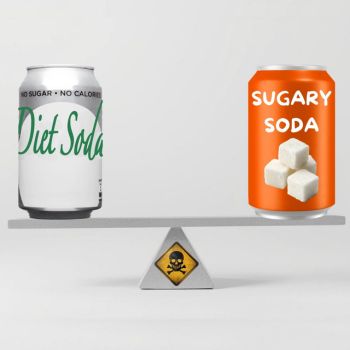
 Artificially sweetened sodas are popular, but research suggests their ingredients may have serious consequences for our health, especially when it comes to fatty liver disease, heart health, and brain function. In this article, we take a closer look at the latest studies on diet sodas, added sugars, and their surprising effects on everything from your gut microbiome to your risk for chronic disease. If you care about long-term wellness or want to make informed choices about what you drink, read on for the evidence and practical alternatives.
In the past, we have discussed the health dangers of artificial sweeteners. A new study1 shows that drinking diet soda is even worse than drinking regular soda (both being very unhealthy). This study concludes that drinking diet soda may raise your liver disease risk by up to 60%.
Key Conclusions of the Fatty Liver Disease Study:
- Drinking more than one soda daily may increase liver disease risk by 50% to 60%.
- Replacing soda with water could reduce liver disease risk by up to 15%.
- Both sugary and diet sodas were linked to higher liver fat and liver-related deaths.
The condition in question is Metabolic Dysfunction-associated Steatotic Liver Disease, or MASLD. Previously referred to as nonalcoholic fatty liver disease, MASLD develops when too much fat accumulates in the liver. If left unchecked, this buildup can trigger inflammation, cause scarring, and eventually result in serious liver damage. MASLD has become the most common chronic liver disease globally, affecting an estimated 30% of adults in certain countries and is a growing cause of liver-related deaths.
Those who drink 250 grams of soda daily (less than 9 ounces) are more likely to develop MASLD. Standard soda cans contain 12 ounces.
The findings, part of an unpublished study from the First Affiliated Hospital of Soochow University, in Suzhou, China, were presented at UEG Week, a conference by the nonprofit organization United European Gastroenterology, which advocates for “excellence in digestive health”.2
Dangers of Sugary and Diet Soda Drinks
Beverages high in sugar, like soda, are closely linked to obesity3 —a factor that’s also tied to the progression of Parkinson’s Disease (PD). Interestingly, even diet sodas may accelerate PD progression, potentially because they contain aspartame. When broken down, aspartame produces phenylalanine, aspartic acid, and methanol. Elevated levels of phenylalanine and aspartic acid can disrupt the transport of serotonin and dopamine to the brain, heighten neuronal excitability, and contribute to the degeneration of both astrocytes and neurons.4
Astrocytes are a type of glial cell—a broader group responsible for maintaining balance in the brain’s environment. Glial cells help form the myelin sheath that insulates nerve fibers, and they offer crucial support and protection for neurons. They also help maintain synaptic connections and enhance the communication between neurons. Notably, glial cells outnumber neurons in the brain by about three to one. When the myelin sheath breaks down, it’s linked to conditions like Multiple Sclerosis.
Types of Glial Cells and Their Function in Supporting Brain Health5
Astrocytes, recognized by their star-like shape, are the biggest and most abundant glial cells found in the central nervous system. Their broad role is to maintain brain homeostasis and neuronal metabolism. They support brain plasticity and synaptogenesis, provide neurons with mechanical support, control neuronal cell development, release nutritional and energy substrates like glucose and lactate that regulate neurotransmission, vasomodulation, and repair, and protect neurons from oxidative damage, and control the blood-brain barrier and blood flow.6
Oligodendroglia cells are located within the central nervous system, where their primary role—shared with Schwann cells in the peripheral nervous system—is to produce myelin, the insulating layer that protects nerve fibers.
Satellite cells are a type of glial cell that surround nerve cell bodies within sensory, sympathetic, and parasympathetic ganglia, helping to manage the surrounding chemical environment. Much like astrocytes, they’re connected through gap junctions and respond to the neurotransmitter ATP by increasing their internal calcium ion levels.
A wide range of nutrients and foods can promote brain health and support the growth of new brain cells (neurogenesis). These include acetyl-l-carnitine, apigenin, ashwagandha, choline, curcumin, ginkgo, ginseng, goji berries, grapeseed extract, green tea, beneficial gut microbes, hesperidin, huperzine A, iron, lecithin, lotus root extract, lutein, magnesium, magnolol, melatonin, milk thistle extract, mulberries, various mushrooms (such as lion’s mane, shiitake, and reishi), olive leaf extract, omega-3 fatty acids, pantethine, piperine, phosphatidylserine, pinocembrin, PQQ, quercetin, red sage (salvia), resveratrol, rhodiola, selenium, shankhpushpi, taurine, theanine, tryptophan, vinpocetine, and vitamins A, B6, B12, E, and D.
Nutrients that Support Myelin Sheath
Lecithin (comprises 30% of dry brain weight), Vitamin B12 and DHA
Effects of Artificial Sweeteners on Gut Health
A healthy gut relies on a balanced community of microbes to function properly. When this balance is disrupted—a state known as dysbiosis—it can contribute to a range of health problems.
The human gut hosts a remarkably diverse ecosystem, containing more than 1,500 bacterial species spread across over 50 different phyla.7 Just 30 to 40 of these species make up the vast majority—over 99%—of all gut bacteria, with the large intestine alone harboring up to 100 trillion individual microbes.8 9
Gut microbes defend the body by occupying mucosal surfaces and generating substances that inhibit harmful invaders. Beyond this protective role, they’re vital for digestion, metabolism,10 and immune function,11 and they also influence how epithelial cells grow and develop.12 Gut microbes can influence both how the body manages insulin and how much is produced.13 14 They also play a part in mental and neurological health by shaping the communication pathways between the gut and the brain.15
A variety of factors shape the makeup and activity of gut microbes—these include genetics, age,16 how a person was born,17 antibiotic use,18 and environmental influences such as living conditions and socioeconomic status.19 20 21
Diet plays a key role—either positively or negatively—by altering which bacterial species thrive and by changing the types of metabolites produced in the gut.22
Recent studies have highlighted how the gut microbiota interacts with its human host, showing that the makeup of these microbial communities may influence the development of several conditions—such as metabolic syndrome, obesity, and both type 1 and type 2 diabetes.23
Huge Study Links 99% of Heart Attacks And Strokes With Four Risk Factors
According to health data from more than 9 million adults in South Korea and the US, nearly everyone who develops heart disease and suffers a major cardiovascular event has one of four major risk factors in the lead-up.
These factors encompass elevated blood pressure, increased cholesterol, raised blood glucose, and a history of tobacco use—whether current or past.
Combined as a group, they preceded 99 percent of all cardiovascular events during the long-term study.
Even in women under 60 – the demographic with the lowest risk of cardiovascular events – more than 95 percent of heart attacks or strokes were linked to one of these existing risk factors.
High blood pressure was the factor most commonly tied to cardiovascular events. In both the US and South Korea, more than 93 percent of individuals who experienced a heart attack, stroke, or heart failure had hypertension beforehand.
Managing this risk factor could, therefore, be crucial in preventing serious cardiovascular disease in the future.
Note that half of heart attacks in younger women are not from clogged arteries. Atherothrombosis accounted for 75 percent of heart attacks in men. In women, it was the cause of 47 percent – less than half. That has major implications for the prevention and treatment of heart attacks.
Among the other factors significantly contributing to heart attacks were spontaneous coronary artery dissections (SCADs), where tears in artery walls collect blood, embolisms (blood clots traveling from other areas of the body), and other stressors acting on the body (such as anemia).
Added Sugar Intake, Artificial Sweeteners, and Cardiovascular Disease (CVD) Mortality Among US Adults
The majority of adults in the United States take in higher amounts of added sugars than what’s advised for optimal health. Findings from this study indicate a notable link between the intake of added sugars and a heightened risk of death from cardiovascular disease.24
Another study confirmed that a diet with a greater proportion of sugar increased CVD risk via negative changes in metabolic profiles including body weight, waist circumference and lipid parameters, whereas LS produced the positive effects. A restriction of sugar intake to lower than 10% energy intake is vital to reduce CVD risk.25
One study’s findings from this large scale prospective cohort study suggests a potential direct association between higher artificial sweetener consumption (especially aspartame, acesulfame potassium, and sucralose) and increased cardiovascular disease risk.26
Alternatives to Artificial Sweeteners
Some natural alternative sweeteners include: stevia, monk fruit, erythritol and xylitol. Raw honey in limited amounts contains many nutrients as well.
Suggested Supplements
Dr. Grossman’s Complete Eye Formula 2oz (oral spray) – 6 sprays by mouth 1-2 times per day.
Advanced Eye & Vision Support Formula (whole food) 60 vcaps
Dr. Grossman’s Advanced Eye and Dr. G’s Whole Food Superfood Multi1 20 Vcap Combo – 2 months supply
ReVision Formula (wild-crafted herbal formula) 2 oz – based on classic Chinese medicine Liver tonic formula to help support healthy circulation and blood flow throughout the eyes and body.
Dr. Grossman’s Blood Vessel Control Formula 2oz – helps reduce the risk of unwanted blood vessel growth, supports healthy circulation, reduces inflammation, and more.
Dr. Grossman’s Bilberry/Ginkgo Combination 2oz (60ml) – helps support healthy circulation, and strengthens blood vessels and capillaries.
Dr. Grossman’s Whole Food Organic Superfood Multi-Vitamin 120 Vcaps – whole food, organic, GMO free multivitamin.
H2 Elite Molecular Hydrogen 60 tabs – helps bring more oxygen to the eyes, among other benefits.
NMN Wonderfeel Capsul 60 vegcaps – helps protect ganglion cells in the retina and optic nerves from damage, reduces inflammation, supports the immune system.
Recommended Books
Natural Eye Care: Your Guide to Healthy Vision and Healing
Natural Parkinson’s Support: Your Guide to Preventing and Managing Parkinson’s
- Girish V, John S. Metabolic Dysfunction-Associated Steatotic Liver Disease (MΑSLD). 2025 Aug 9. In: StatPearls (Internet). Treasure Island (FL): StatPearls Publishing; 2025 Jan–. PMID: 31082077. ↩
- Fatty Liver Disease: Signs, Symptoms, Causes and How to Reverse Fatty Liver Naturally at Home. https://www.lafiyata.com.ng/2025/01/fatty-liver-disease-signs-symptoms.html ↩
- Malik VS, Schulze MB, Hu ↩
- Rycerz K, Jaworska-Adamu JE. (2013). Effects of aspartame metabolites on astrocytes and neurons. Folia Neuropathol. 51(1):10-7. ↩
- From our book “Natural Brain Support: Your Guide to Preventing and Treating Alzheimer’s and Other Related Diseases Naturally” ↩
- Blackburn D, Sargsyan S, Monk PN, Shaw PJ. (2009). Astrocyte function and role in motor neuron disease: a future therapeutic target? Glia. Sep;57(12):1251-64. ↩
- Robles-Alonso V., Guarner F. Progress in the knowledge of the intestinal human microbiota. Nutr. Hosp. 2013;28:553–557. doi: 10.3305/nh.2013.28.3.6601. ↩
- Shapira M. Gut Microbiotas and Host Evolution: Scaling Up Symbiosis. Trends Ecol. Evol. 2016;31:539–549. doi: 10.1016/j.tree.2016.03.006 ↩
- Rinninella E., Raoul P., Cintoni M., Franceschi F., Miggiano G.A.D., Gasbarrini A., Mele M.C. What is the Healthy Gut Microbiota Composition? A Changing Ecosystem across Age, Environment, Diet, and Diseases. Microorganisms. 2019;7:14. doi: 10.3390/microorganisms7010014. ↩
- Rothschild D., Weissbrod O., Barkan E., Kurilshikov A., Korem T., Zeevi D., Costea P.I., Godneva A., Kalka I.N., Bar N., et al. Environment Dominates over Host Genetics in Shaping Human Gut Microbiota. Nature. 2018;555:210–215. doi: 10.1038/nature25973. ↩
- Mills S., Stanton C., Lane J.A., Smith G.J., Ross R.P. Precision Nutrition and the Microbiome, Part I: Current State of the Science. Nutrients. 2019;11:923. doi: 10.3390/nu11040923 ↩
- Wiley N.C., Dinan T.G., Ross R.P., Stanton C., Clarke G., Cryan J.F. The Microbiota-Gut-Brain Axis as a Key Regulator of Neural Function and the Stress Response: Implications for Human and Animal Health. J. Anim. Sci. 2017;95:3225–3246. doi: 10.2527/jas.2016.1256. ↩
- Kelly C.J., Zheng L., Campbell E.L., Saeedi B., Scholz C.C., Bayless A.J., Wilson K.E., Glover L.E., Kominsky D.J., Magnuson A., et al. Crosstalk between Microbiota-Derived Short-Chain Fatty Acids and Intestinal Epithelial HIF Augments Tissue Barrier Function. Cell Host Microbe. 2015;17:662–671. doi: 10.1016/j.chom.2015.03.005 ↩
- Kelly J.R., Kennedy P.J., Cryan J.F., Dinan T.G., Clarke G., Hyland N.P. Breaking down the Barriers: The Gut Microbiome, Intestinal Permeability and Stress-Related Psychiatric Disorders. Front. Cell Neurosci. 2015;9:392. doi: 10.3389/fncel.2015.00392. ↩
- Zheng P., Zeng B., Liu M., Chen J., Pan J., Han Y., Liu Y., Cheng K., Zhou C., Wang H., et al. The Gut Microbiome from Patients with Schizophrenia Modulates the Glutamate-Glutamine-GABA Cycle and Schizophrenia-Relevant Behaviors in Mice. Sci. Adv. 2019;5:eaau8317. doi: 10.1126/sciadv.aau8317. ↩
- Odamaki T., Kato K., Sugahara H., Hashikura N., Takahashi S., Xiao J., Abe F., Osawa R. Age-Related Changes in Gut Microbiota Composition from Newborn to Centenarian: A Cross-Sectional Study. BMC Microbiol. 2016;16:90. doi: 10.1186/s12866-016-0708-5. ↩
- Nagpal R., Tsuji H., Takahashi T., Nomoto K., Kawashima K., Nagata S., Yamashiro Y. Ontogenesis of the Gut Microbiota Composition in Healthy, Full-Term, Vaginally Born and Breast-Fed Infants over the First 3 Years of Life: A Quantitative Bird’s-Eye View. Front. Microbiol. 2017;8:1388. doi: 10.3389/fmicb.2017.01388. ↩
- Hasan N., Yang H. Factors Affecting the Composition of the Gut Microbiota, and Its Modulation. PeerJ. 2019;7:e7502. doi: 10.7717/peerj.7502 ↩
- Rothschild D., Weissbrod O., Barkan E., Kurilshikov A., Korem T., Zeevi D., Costea P.I., Godneva A., Kalka I.N., Bar N., et al. Environment Dominates over Host Genetics in Shaping Human Gut Microbiota. Nature. 2018;555:210–215. doi: 10.1038/nature25973. ↩
- Ahn J., Hayes R.B. Environmental Influences on the Human Microbiome and Implications for Noncommunicable Disease. Annu. Rev. Public Health. 2021;42:277–292. doi: 10.1146/annurev-publhealth-012420-105020. ↩
- Gacesa R., Kurilshikov A., Vich Vila A., Sinha T., Klaassen M.A.Y., Bolte L.A., Andreu-Sánchez S., Chen L., Collij V., Hu S., et al. Environmental Factors Shaping the Gut Microbiome in a Dutch Population. Nature. 2022;604:732–739. doi: 10.1038/s41586-022-04567-7. ↩
- Hills R.D., Pontefract B.A., Mishcon H.R., Black C.A., Sutton S.C., Theberge C.R. Gut Microbiome: Profound Implications for Diet and Disease. Nutrients. 2019;11:1613. doi: 10.3390/nu11071613. ↩
- Harsch I.A., Konturek P.C. The Role of Gut Microbiota in Obesity and Type 2 and Type 1 Diabetes Mellitus: New Insights into “Old” Diseases. Med. Sci. 2018;6:32. doi: 10.3390/medsci6020032. ↩
- JAMA Intern Med. 2014 Apr;174(4):516-24. doi: 10.1001/jamainternmed.2013.13563. ↩
- J Nutr Sci Vitaminol (Tokyo). 2020;66(Supplement):S18-S24. doi: 10.3177/jnsv.66.S18. ↩
- BMJ. 2022 Sep 7:378:e071204. doi: 10.136/bmj-2022-071204. ↩