
 Dry eye is a common complaint at the optometrist’s office.
Symptoms include dry, itchy, eyes. Causes of dry eye are diverse. Sometimes the root cause is treatable, and sometimes only the symptoms can be managed. However, dry eye syndrome is not new. Neither is Traditional Chinese Medicine (TCM), an ancient system of healthcare that dates back thousands of years. TCM has techniques for addressing the complete spectrum of human wellness, including dry eye syndrome.
syndrome.TCM Perspective on Dry Eye
Traditional Chinese Medicine (TCM) is based on the flow of energy in the body. This energy, called “chi,” needs to flow uninhibited for good health. The energy flows through “meridians” — invisible energy channels. TCM seeks to balance the meridians using acupuncture and herbs. The most common meridians used in acupuncture are associated with specific organs.
Meridians Associated with Dry Eye
The liver meridian “opens the eyes.” This meridian is the main support for energy and circulation through the eyes. A TCM practitioner can insert tiny acupuncture needles into points on the liver meridian along the feet and hands to unblock the energy flow. Common Liver imbalanced include Liver Yang Rise and Liver Qi Stagnation. Treating the liver meridian can increase natural tear production.
Deficiencies in the Kidney meridian can also cause dry eyes, very common in particular with women over 45 where menopause caused internal dryness. One of the functions of the Kidney (meridian) is the disbursement of water metabolism throughout the body.
Other meridians can also be out of balance that can affect the free flow of the Liver and Kidney meridians, best determined by an acupuncturist doing an intake.
Chinese Medicine Patent Formulas for Dry Eyes
Preserve Vistas Pill (Zhu Jing Wan). Tonifies and nourishes the liver and kidneys, enriches the yin and improves vision. (See VisionTone Formula at website below).
Ming Mu Di Huang Wan (Rehmannia Pills to Brighten the Eyes). Related to the following patterns: Liver Blood Deficiency, Kidney Yin Deficiency, Liver Yin Deficiency
Xiao Yao San (Rambling Powder). Classic Liver tonic support the flow of the Liver meridian energy (see ReVision Formula as website below)
Herbal Tea
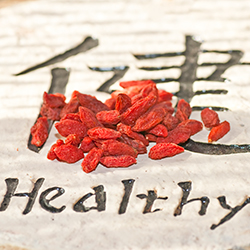
Chrysanthemum and goji berry tea. Chrysanthemum flowers have heat-clearing properties which are important in helping cool off red, dry eyes. Goji berries are beneficial for the kidneys, the lungs, the liver, and build yin fluids such as tears. Brew the chrysanthemum flowers like you would any loose tea and then put a small handful of goji berries into the made tea. After drinking the tea, you can eat the berries.
Other formulas that can help with dry eye symptoms include:
- Women’s Tear Stimulation Dry Eye Homeopathic Eyedrops or Tear Stimulation Forte Homeopathic Eyedrops
- Oasis Tears Plus Eyedrops (preservative-free)
 Up Next: