
 At Natural Eye Care, we view vision health from a whole-body perspective. Eye studies can reveal how to manage the visual system. However, the health of the eyes is connected to overall health. The visual system requires as much as 25% of the nutrients we take into our bodies. The brain needs even more. How we take care of ourselves goes a long way in helping to preserve healthy vision. Personal care includes emotional balance, and lifestyle considerations such as eating a healthy diet, exercising regularly, and targeted supplementation.
Read More »
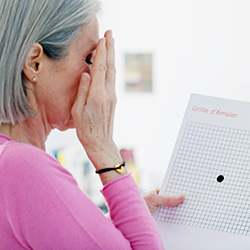 Wet Age-Related Macular Degeneration and Diabetic Retinopathy can lead to vision loss from angiogenesis. Angiogenesis is the growth of unwanted blood vessels in the retina. These excess blood vessels obscure or distort vision and damage the eye. They can result in permanent damage if not treated, typically by injection of EyLea, Avastin, or Lucentis. Macular Degeneration (ARMD) and Diabetic Retinopathy are most prevalent among seniors over age 60. Are there any natural methods to help retard the growth of extra blood vessels in the eye?
Read More »
 Three time-tested supplements stand out as champions for eye and brain health: garlic, ginseng, and ginkgo. Research on these supplements backs up why they have been used for thousands of years. Garlic plays an important role in all three major traditional medicines–Traditional European Herbal Medicine, Ayurveda, and Traditional Chinese Medicine. Ginseng and ginkgo are crucial herbs in Traditional Chinese Medicine. Do these supplements work? Are they beneficial for aging brains and eyes? What does the research show?
Read More »
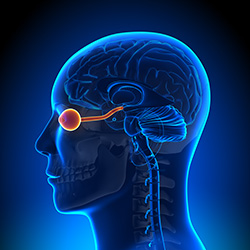 Several nutrients and vitamins such as bilberry and taurine help protect the optic nerve from damage. Glaucoma causes optic nerve damage. Optic neuritis and optic nerve atrophy are serious conditions that harm the optic nerve. Since the optic nerve sends electrical signals from the eye to the brain, any interruption damages vision. How does the optic nerve work? Which diseases damage the optic nerve? What does the research show about how nutrients, foods, and vitamins protect the optic nerve? Taurine, gingko biloba, a fruit called bilberry, Vitamin C, and Vitamin B12 among others have demonstrated their usefulness.
Read More »
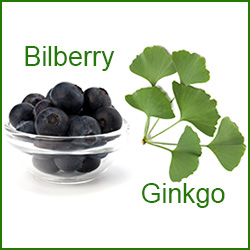 Natural Eye Care has created a new antioxidant supplement, “Dr. Grossman’s Bilberry/Ginkgo Combination Wild Crafted Extract Formula” to help support vision health and circulation. These natural extracts contain powerful antioxidants that counteract free radicals. The formula is designed to help prevent cellular damage, and even reverse it. Many eye diseases, including macular degeneration, cataracts, and glaucoma, are rooted in cellular damage from free radicals.1 2
Read More »
 Retinal Vein Occlusion is the blockage of veins that drain blood from the retina in the eye. The eye circulatory system depends on releasing blood back to the heart after it has nourished the retina. When the vein is blocked, hemorrhaging occurs, damaging the retina. It is typically caused by atherosclerosis, a common condition especially in older people that damages the arteries. “Occlusion” means the blockage or closing of a blood vessel.
 A significant study has found that the deleterious effects of traumatic brain injury in American football players can be mitigated using a natural regimen of weight loss (if needed), fish oil, vitamins, and brain-enhancing supplements including ginkgo biloba. The positive results could help reverse brain damage in contact sport athletes, alcohol and drug addicts, chronic traumatic encephalopathy (CTE) and people who have had brain damage from concussions.
 Transplanting light-sensitive photoreceptor cells into mice with night blindness resulted in improved night vision. Night blindness means seeing poorly in the darkness, but seeing normally when there is enough light. In this groundbreaking research, scientists injected light-sensitive photoreceptor cells into night-blind mice’s eyes. After this treatment, the animals were able to see well enough to navigate a water maze and swim toward a visual cue in dimly lit conditions. Controls who did not receive the treatment were unable to efficiently navigate the maze.
 A study has found that a type of glaucoma called “low-tension” may be helped using gingko biloba extract, a natural supplement.
At the optometrist’s office, a puff of air is one of the ways patients are screened for glaucoma risk. This test measures intraocular pressure (IOP). When the tension in the eye is high (ocular hypertension), the patient receives further tests for glaucoma. Glaucoma is a progressive eye disease that damages the optic nerve, leading to serious vision loss and blindness.
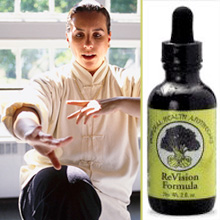 What is ReVision formula, and how can its classic Chinese medicinal ingredients help improve eye health and conditions such as eye floaters? ReVision formula is a liquid taken orally several times per day with water. This tincture is based on Rambling Powder, also known as Xiao Yao San.
ReVision Formula is designed to support healthy vision. Some of the conditions it may address include macular degeneration, eye floaters, and glaucoma. The idea is that ReVision Formula helps improve blood circulation to the eye. From the point of view of Chinese medicine, it helps eliminate stagnation of the body’s energy (chi) to the eyes.
Natural Eye Care, Inc.
3 Paradies Lane
New Paltz, New York 12561
Phone: 845.475.4158

NaturalEyeCare™ started in 1999 to help the public and professionals learn about complementary care in eye disease treatment.
The information and recommendations we offer are based on over 30 years of peer review research and personal clinical experience which guides us in providing a valuable resource to our readers, customers and patients regarding maintaining healthy vision naturally.
We believe that vision health is intimately connected to overall mental, physical and spiritual health. Therefore we encourage people to look at their overall lifestyle and diet as part of keeping healthy vision and reducing the risk of eye disease onset. This includes diet, regular exercise, and management of daily stress. If one has health issues such as high blood pressure, a thyroid imbalance, any autoimmune disease and/or are on medication(s), these possible contributions to eye disease should considered when working with your health care professional.
Please do not hesitate to call us at 845.475.4158 with any questions and concerns.