

The rise of myopia, also known as shortsightedness, has increased significantly in the past 30 years in the United States. Time spent outdoors has dropped off in this time period. Researchers at the National Eye Institute conducted a study of children and teens that shows a possible link between less time spent in outdoor activity and myopia.
In the early 1970’s, 25% of 12 to 54 year olds in the United States had myopia. In 1999-2004, that figure was 42%, a huge increase.
Read More »
As the “Baby Boomer” generation in the United States approaches their 60’s and beyond, the incidence of eye disease in this aging population will rise. Eye problems become more prevalent as an individual ages. What are the most common eye diseases in older people? How can eye geriatric eye disease be prevented and addressed naturally? And what does Baby Boomer natural eye care look like?
Read More »
Eye floaters are clumps of protein that may look like dots, squiggles, strands or any of a hundred other shapes. Though annoying, floaters are harmless, and there are ways to prevent them through proper diet. They commonly result from the natural aging process where the vitreous gel (that keeps the shape of the back of the eyes) starts to liquefy, resulting in gel pulling on the retina (people who are nearsighted are also at a greater risk of eye floaters). This results in protein debris being released into the vitreous gel that are referred to as “floaters”.
Read More »

The brain and the body are in constant relationship. This truth is further supported by the recent study published in General Hospital Psychiatry that describes how people who suffer from both depression and diabetes are more likely to end up with diabetic retinopathy.
In a study that controlled such factors as obesity, smoking, and activity, diabetic retinopathy was linked to occurrences of depression. Over the five year trial, almost one quarter of patients with depression developed the eye disease compared to less than 20% of those who did not have depression. Researchers extrapolate that depression increases one’s risk of developing retinopathy by 15%.
Read More »
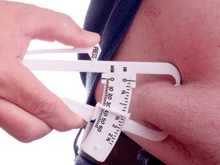
Don’t just take it from us that glaucoma risk increases in those who have diabetes, high blood pressure, and who are overweight. Researchers publishing in the journal Ophthalmology have found that these conditions, which together are labeled “metabolic syndrome” are all linked to the development of open-angle glaucoma.
A staggering 20% of people in America are said to have metabolic syndrome. Both metabolic syndrome and glaucoma are associated with aging, so, as the US population gets older, scientists believe that both conditions with become more prevalent.
Read More »
Is it harder to “see the bigger picture” as we get older? New research published in Cortex indicates that as people age, the brain is less able to process information in the wider visual field.
A study of young and elderly people showed that the older subjects found it harder to focus on the “global picture.” The participants were shown a figure similar to that which appears below. Smaller letters made up a larger letter. The elderly study subjects took longer to spot the larger letter.
According to Medical News Today, this experiment provides insight into the processes of aging, including the changes in attention (meaning, the ability to concentrate on one thing, while ignoring other) which naturally happen over time.
Read More »

The role of intraocular pressure (a.k.a. IOP or eye pressure) and glaucoma is still a point of discussion.
At a meeting of the World Glaucoma Association, speaker Felipe Medeiros, MD described a common myth: “21 mm Hg threshold, above which IOP is supposed to be abnormal and below which is thought to be normal.”
In fact, according to this story’s source, the OSN Supersite, only 9.5% of patients with what is considered a high IOP are ever diagnosed with glaucoma.
Read More »
Natural Eye Care, Inc.
3 Paradies Lane
New Paltz, New York 12561
Phone: 845.475.4158

NaturalEyeCare™ started in 1999 to help the public and professionals learn about complementary care in eye disease treatment.
The information and recommendations we offer are based on over 30 years of peer review research and personal clinical experience which guides us in providing a valuable resource to our readers, customers and patients regarding maintaining healthy vision naturally.
We believe that vision health is intimately connected to overall mental, physical and spiritual health. Therefore we encourage people to look at their overall lifestyle and diet as part of keeping healthy vision and reducing the risk of eye disease onset. This includes diet, regular exercise, and management of daily stress. If one has health issues such as high blood pressure, a thyroid imbalance, any autoimmune disease and/or are on medication(s), these possible contributions to eye disease should considered when working with your health care professional.
Please do not hesitate to call us at 845.475.4158 with any questions and concerns.