
The American Academy of Ophthalmology (AAO) reminds Americans that there are over 9,000 fireworks related injuries each year. Of these injuries, almost half affect the head and nearly 30% of those are injuries to the eyes. One quarter of these fireworks related injuries leave victims with permanent vision loss or blindness.
It is especially important to note that children age fifteen and younger suffer half of all fireworks eye injuries. Sparklers, which can cause third degree burns, can be especially dangerous for young children. Bottle rockets are considered the most dangerous fireworks.
The month of July has been established as “Eye Safety Awareness Month.” The AOA offers the following safety tips:
Read More »

Changes in lifestyle are usually the most important way that individuals with diabetes can control their conditions. Most people seem to know this, but a new survey shows that many diabetics do not follow that advice.
A study called SHIELD (The Study to Help Improve Early Evaluation and Management of Risk Factors Leading to Diabetes), which was presented at the annual meeting of the American Diabetes Association, surveyed nearly 4,000 people with type 2 diabetes. In response to questions about the link between diabetes and obesity, 87% said they knew excessive weight contributed the disease, but only 70% of respondents reported trying to lose weight in the preceding year. Only a third of those surveyed had managed to maintain their target weight for longer than six months. Almost one-fifth of those studied (17%) said they preferred to take medication to control their conditions rather than try diet and exercise.
Read More »

Can artichokes, blueberries and pecans save your sight?
A study out of Brigham Young University and Weill Medical College of Cornell University showed that the antioxidants found in these common foods can impede the onset of age-related blindness. Antioxidants disrupt the link between two processes within the retina that cause macular degeneration.
Learn more about this study, as published in the Journal of Biological Chemistry and other studies related to macular degeneration at our website.
Read More »
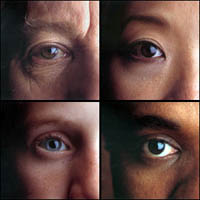
Ideally, doctors look at patients in a holistic manner, rather than just a collection of symptoms. At Natural Eye Care, when we talk to glaucoma patients, we are concerned about more than their intraocular pressure measurements. We want to talk about diet, lifestyle habits, and stress levels. We want to get an idea of the whole person, and understand their overall health. Learn more about these complementary approaches to glaucoma management.
An article appearing at the site EyeWorld by Tony Realini, M.D. describes how many eye doctors take an “event-based approach” to managing glaucoma patients’ care. Though he posits that there is still validity in this approach, he points out that it does not help determine the rate of progression of an individual’s condition.
Read More »
The American Optometric Association has played an active role in the Centers for Disease Control and Prevention (CDC) Division of Diabetes Translation (DDT) for over ten years. Eye docs hanging out with diabetes specialists? Of course. Diabetic retinopathy, according to the National Institute of Health, affects “4.2 million—28.5%— of people with diabetes ages 40 years or older … and of these, 655,000—4.4% of those with diabetes—had advanced diabetic retinopathy that could lead to severe vision loss.”
W. Lee Ball, O.D., AOA Associate Director for Quality Improvement gave a presentation entitled “Working Together to Manage Diabetes: Development and Testing of a Comprehensive Checklist.” Of the medical professionals across several fields who responded to a questionnaire regarding the efficacy of the checklist, 74% said they found it useful in a real-world clinical setting. Source: News from the AOA
Read More »
Optic gliomas are rare tumors of the brain targeting one or both optic nerves or location where the two optic nerves cross each other, the optic chiasm. This condition is not known to get better naturally, although nerve growth factor eye drops could help in milder causes. So far, the results are limited and more research is needed.
Nerve growth factor is is a neuropeptide (a small protein-like molecule essential for nerve cell communication) which has the capacity to maintain and regulate the growth and integrity of nerve cells, or neurons. Administered in the form of eyedrops it has been used in the treatment of macular degeneration, glaucoma, and various optic nerve conditions.
Read More »
Natural Eye Care, Inc.
3 Paradies Lane
New Paltz, New York 12561
Phone: 845.475.4158

NaturalEyeCare™ started in 1999 to help the public and professionals learn about complementary care in eye disease treatment.
The information and recommendations we offer are based on over 30 years of peer review research and personal clinical experience which guides us in providing a valuable resource to our readers, customers and patients regarding maintaining healthy vision naturally.
We believe that vision health is intimately connected to overall mental, physical and spiritual health. Therefore we encourage people to look at their overall lifestyle and diet as part of keeping healthy vision and reducing the risk of eye disease onset. This includes diet, regular exercise, and management of daily stress. If one has health issues such as high blood pressure, a thyroid imbalance, any autoimmune disease and/or are on medication(s), these possible contributions to eye disease should considered when working with your health care professional.
Please do not hesitate to call us at 845.475.4158 with any questions and concerns.