
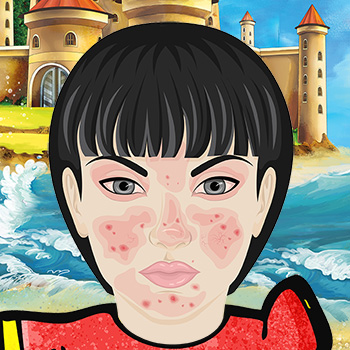
Ocular rosacea is an inflammation of the white of the eye caused by immune system weakness. It can also affect the cornea and usually develops only in the eyes. It appears in combination with the skin version of rosacea in 20% of facial rosacea patients.
Read More »

Our eyes are constantly exposed to the external environment with frequent excess exposure to UVA/UVB light. Natural exposure to the sun is exacerbated by blue light exposure from mobile phones, E-readers, handheld gaming electronics, TV, computer monitors, and fluorescent and LED lighting.
In addition to blue/UV light, our long hours on computers and mobile phones cause stress on our visual system. Physical and visual fatigue reduces the free flow of energy and circulation to the eyes, often accompanied by muscle tension in the neck, shoulders, and lower back.
Read More »
 The standard Western diet, with many processed foods, white grains, fats, sugars, preservatives, and flavorings lacks essential nutrients to support the retina. These non-beneficial components aggravate inflammation in the body – an underlying, and sometimes a direct cause of illness, premature aging, and cellular degeneration.
Essential nutrients include a wide range of amino acids, minerals, vitamins, and vitamin-like nutrients. Among them, a star component of good health and good vision, are the omega-3 fatty acids.
Read More »
Your Eyes Benefit from Lutein, Zeaxanthin, and Meso-zeaxanthin
 Lutein, zeaxanthin, and meso-zeaxanthin are potent antioxidants found in green leafy vegetables, eggs, corn and even chocolate. They have a profound effect on preserving healthy vision, brain function, the immune and cardiovascular systems.
New research is focusing less on the well-established understanding of local benefit from nutrients, e.g. lutein for macular degeneration or cataract, and more on its systemic benefits affecting the immune system, the brain and cognitive function, the eye, cancer, and cardiovascular health.1 In addition, new research is focused on the “why” of the benefit of these carotenoids.
Read More »

The most frequent complaint to eye doctors is dry eyes, known as aqueous insufficiency, meibomian gland dysfunction, or dry eye syndrome. Twenty-five percent of patients who visit ophthalmic clinics report symptoms of dry eye, making it a growing public health problem and one of the most common conditions seen by eye care practitioners.
Read More »
Untreated dry eye syndrome can cause permanent eye damage,1 particularly to the cornea.
Relief for Dry Eyes
Dry eye syndrome affects up to 49 million Americans. It is an epidemic partially the result of excessive computer and cell phone use. Studies have shown that people who use computers, smart phones and tablets are at greater risk for dry eye syndrome,2 at least partially due to the fact that they blink less during computer usage, reducing the protective tear film over the surface of the cornea.
Read More »
 Did you know that how well your gut works is directly related to your healthy vision and your healthy brain?
Healthy gut microbiota function is linked to normal central nervous system (CNS) function. The microbiota is defined as all microorganisms in a particular location, such as the GI tract, and their respective genetic material. The microbiome is initially developed transmission through the placenta, amniotic fluid, and meconium. The human gut microbiota comprises more than 100 trillion microorganisms associated with multiple functions, from nutrient metabolism to protection against pathogens.
Read More »
 Our bodies are designed to handle stressful situations, referred to as the “flight or fight” mode, wherein when we need to quickly react, the body goes into action and produces hormones that stimulate the adrenal system, raise cortisol levels, and gets our muscles instantly ready to go. Once that situation is resolved, our body has the remarkable ability to return back to homeostasis or normal balance quickly.
But modern-day life may keep one in flight or fight readiness too often. This may be due to ongoing work pressure, relationship and money issues, or the stress related to COVID-19. Chronic stress can, over time, overwork the adrenal system resulting in fatigue and poor circulation. In turn, fatigue and poor circulation limit the ability of the body to deliver essential nutrients to the eyes.
 Tired eyes are one of the most common complaints eye doctors get from their patients. In this era of computers and mobile devices, the average person in the United States spends about 10 hours, 39 minutes daily in screen time.1
Asthenopia is the technical name for tired eyes. It describes a number of symptoms resulting in eye strain and/or fatigue, red eyes, blurred vision, pain in or around the eyes, mild or severe headaches, and rare double vision which generally begins after many hours of close work on the computer or other close work. Some of these problems arise because computer/smartphone users’ blink rate slows2 causing the eyes to be dry and resulting in eye tiredness. 3
Read More »
 With drier weather of windy fall and cold winter, added to our hours on the computer, come increased dry, burning, and itchy eyes, known as dry eye syndrome. This is the number one complaint that eye doctors hear from patients. Most of us experience it at least from time to time.
Some nutrients and formulations are especially helpful.
Dry eye syndrome (DES) develops either because fewer tears are produced (aqueous-deficient DES) or tears evaporate too quickly (hyper-evaporative DES).
Read More »
Natural Eye Care, Inc.
3 Paradies Lane
New Paltz, New York 12561
Phone: 845.475.4158

NaturalEyeCare™ started in 1999 to help the public and professionals learn about complementary care in eye disease treatment.
The information and recommendations we offer are based on over 30 years of peer review research and personal clinical experience which guides us in providing a valuable resource to our readers, customers and patients regarding maintaining healthy vision naturally.
We believe that vision health is intimately connected to overall mental, physical and spiritual health. Therefore we encourage people to look at their overall lifestyle and diet as part of keeping healthy vision and reducing the risk of eye disease onset. This includes diet, regular exercise, and management of daily stress. If one has health issues such as high blood pressure, a thyroid imbalance, any autoimmune disease and/or are on medication(s), these possible contributions to eye disease should considered when working with your health care professional.
Please do not hesitate to call us at 845.475.4158 with any questions and concerns.