
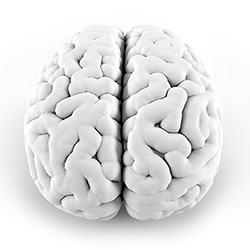
This is the 4th article in our series on the brain, memory, and dementia. This article discusses the blood-brain barrier which protects the brain.
What is the Blood-Brain Barrier?
The blood-brain barrier prevents toxins and microorganisms from crossing from the blood stream into the tissue of the brain. At the same time, beneficial nutrients are capable of crossing this barrier. Generally, integrity of the blood-brain barrier is important and its compromise contributes to a number of neurodegenerative conditions.
 Alzheimer’s disease (AD) is a devastating fatal neurological condition that we’ve all heard or read about or have first-hand experience through our family connection. It is characterized by memory loss and abnormal behavior.
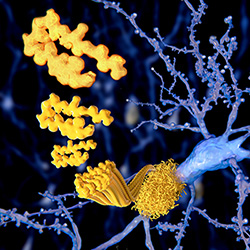
Amyloid beta plaque
This article discusses the role of amyloid beta plaque and the possibility of preventing or slowing its development. Formation of this plaque is the first event in the pathology of Alzheimer’s eventually resulting in nerve cell death.1

We continue our series on brain health with this short discussion of nutrient deficiencies and a number of health issues which can cause symptoms similar to Alzheimer’s Disease. These should be checked for anyone showing signs of dementia. And we should all pay attention to getting a balanced diet with enough of these important nutrients, supplementing if necessary.
Read More »
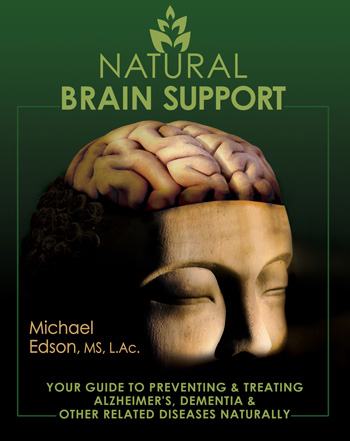 This is the first of a series of articles discussing how to maintain healthy brain function based on my newest book Natural Brain Support: Preventing and Treating Alzheimer’s and Dementia Naturally.
There is a strong connection between eye and brain health, and in fact the optic nerve is brain tissue and the retina was created prenatally from brain cells. Many of the nutrients discussed below are needed for healthy vision but also are found in the brain as well.
An eye doctor can often identify health issues because of observed changes in the retina. An eye doctor can detect hypertension, diabetes, multiple sclerosis, and even Alzheimer’s disease before it gets to the point that the specialists can identify them.
Read More »
 Parkinson’s disease is a multi-neurological disease. Currently, most Parkinson’s treatments focus on increasing dopamine production and reducing motor symptoms and tremors through medication. However, this disease has many causative or contributing factors that cause changes in healthy brain function. Many of these factors are also relevant for dementia, Alzheimer’s, Huntington’s, and Wilson’s diseases as well. Which factors impact brain functioning and the development of brain disease? Are there natural approaches to preventing and slowing the progress of such devastating diseases? This article offers a brief overview, based on the new book, Natural Parkinson’s Support: Your Guide to Preventing and Managing Parkinson’s.
Read More »
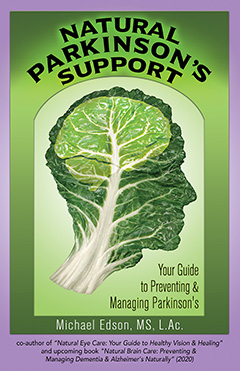 Parkinson’s Disease is a multi-faceted neurological disease that appears to result from breakdowns in aspects of healthy body function. How can you support Parkinson’s naturally? Can you prevent this disease? Find out by ordering Michael Edson’s new book, “Natural Parkinson’s Support: Your Guide to Preventing and Managing Parkinson’s.”
This 141-page book is a self-empowerment guide. Learn specific ways to help improve brain function. Find out how diet, exercise, targeted nutrients and herbs can help manage Parkinson’s Disease. Read about essential oils and alternative modalities such as Traditional Chinese Medicine, Ayurveda, Light Therapy and intravenous Glutathione.
“Natural Parkinson’s Support: Your Guide to Preventing and Managing Parkinson’s Disease” includes 620-plus peer review research studies and discusses over 50 targeted nutrients.
Read More »
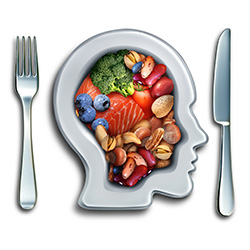 Brain health is especially important in seniors. Seniors are susceptible to dementia, Alzheimer’s disease, memory problems, and cognitive decline. Which foods boost brain power the most? At Natural Eye Care, we have picked eleven common foods that have brain-saving properties. Scientists have been studying the nutrients in foods for decades. They have isolated specific nutrients that cross the blood-brain barrier. These types of nutrients get direct access to the brain and even the retina. The retina is made from neural tissue. Researchers find that many of the nutrients helpful for the brain also stave off eye diseases such as macular degeneration and glaucoma.
Try adding some of these foods to your regular diet. Seniors need fewer calories than younger folks. Therefore, replace “junk food” like cookies, candy, and chips with these brain-boosters.
Read More »
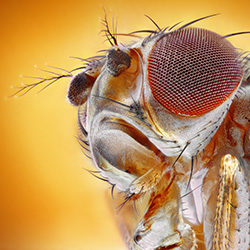 Findings from a recent study suggest that blue light, the same light emitted from smartphones and fluorescent light bulbs, causes brain damage and premature aging in fruit flies.
Why would research on fruit flies be important for human brains? Surprisingly, many of the genes of fruit flies are the same as the genes in humans, and studies on fruit flies often reveal information valuable for human health. Fruit flies’ life cycle is short so scientists can see aging patterns.
As published in the journal Aging and Mechanisms of Disease, researchers at Oregon State University conducted an experiment where they subjected adult fruit flies to blue light. The targeted group of adult flies was exposed to twelve hours of blue light, followed by twelve hours of darkness. They then compared these flies to the control group. Those flies were kept in total darkness for twenty-four hours or bathed in light where blue wavelengths were blocked.
Read More »
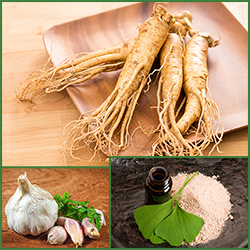 Three time-tested supplements stand out as champions for eye and brain health: garlic, ginseng, and ginkgo. Research on these supplements backs up why they have been used for thousands of years. Garlic plays an important role in all three major traditional medicines–Traditional European Herbal Medicine, Ayurveda, and Traditional Chinese Medicine. Ginseng and ginkgo are crucial herbs in Traditional Chinese Medicine. Do these supplements work? Are they beneficial for aging brains and eyes? What does the research show?
Read More »
 The links between antioxidants and vision health are strong. Antioxidants are the antidote to oxidization. Normal metabolism creates free radicals. These are atoms that lack an electron. Free radicals roam about the body, scavenging electrons and stealing electrons from healthy cells. This results in permanent damage to these afflicted cells which ultimately can result in disease. Significant research has shown that antioxidants protect against this cellular damage and are essential for maintaining health. The eye is especially vulnerable to free radical damage. Therefore, providing the body with sufficient antioxidants
Read More »
Natural Eye Care, Inc.
3 Paradies Lane
New Paltz, New York 12561
Phone: 845.475.4158

NaturalEyeCare™ started in 1999 to help the public and professionals learn about complementary care in eye disease treatment.
The information and recommendations we offer are based on over 30 years of peer review research and personal clinical experience which guides us in providing a valuable resource to our readers, customers and patients regarding maintaining healthy vision naturally.
We believe that vision health is intimately connected to overall mental, physical and spiritual health. Therefore we encourage people to look at their overall lifestyle and diet as part of keeping healthy vision and reducing the risk of eye disease onset. This includes diet, regular exercise, and management of daily stress. If one has health issues such as high blood pressure, a thyroid imbalance, any autoimmune disease and/or are on medication(s), these possible contributions to eye disease should considered when working with your health care professional.
Please do not hesitate to call us at 845.475.4158 with any questions and concerns.