
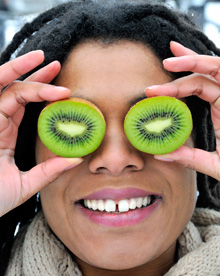
 A recent study showed that bipolar children spend less time making eye contact with people – looking at their eyes – versus typical children. Instead of looking at the eyes, bipolar children and children with severe mood dysregulation in the study spent less time looking at the eyes when observing faces. Instead, they spent more time with their eyes on the mouth and nose.
U.S. National Institute of Mental Health investigators suggested the eye contact habits of bipolar children as a possible explanation why these children have trouble determining how other people feel.
Read More »

The rise of myopia, also known as shortsightedness, has increased significantly in the past 30 years in the United States. Time spent outdoors has dropped off in this time period. Researchers at the National Eye Institute conducted a study of children and teens that shows a possible link between less time spent in outdoor activity and myopia.
In the early 1970’s, 25% of 12 to 54 year olds in the United States had myopia. In 1999-2004, that figure was 42%, a huge increase.
Read More »

Uveitis means “inflammation of the uvea,” an inner layer of the eye, that can result in severe and permanent vision loss. In addition, uveitis can lead to other ocular complications including glaucoma, cataracts, or retinal damage all of which can severely damage the eyes. Early detection and treatment is necessary to reduce the risk of permanent vision loss.
A study published in the British Journal of Ophthalmology examines cases of the condition in children. The study found that the younger a child is when he develops the disease, the more likely he is to have complications.
Read More »

A genetic glitch may be responsible for incidents of cataracts in children.
According to a press release from Maine’s Jackson Laboratory, researchers have found that RNA granules, which are key components in the reproduction of genes, might be linked to eye development. Problems with RNA granules can result in juvenile cataracts and glaucoma. If there is a problem with a key gene, Tdrd7, the development of the lens of the eye will be compromised, leading to these potentially blinding conditions.
Read More »
Natural Eye Care, Inc.
3 Paradies Lane
New Paltz, New York 12561
Phone: 845.475.4158

NaturalEyeCare™ started in 1999 to help the public and professionals learn about complementary care in eye disease treatment.
The information and recommendations we offer are based on over 30 years of peer review research and personal clinical experience which guides us in providing a valuable resource to our readers, customers and patients regarding maintaining healthy vision naturally.
We believe that vision health is intimately connected to overall mental, physical and spiritual health. Therefore we encourage people to look at their overall lifestyle and diet as part of keeping healthy vision and reducing the risk of eye disease onset. This includes diet, regular exercise, and management of daily stress. If one has health issues such as high blood pressure, a thyroid imbalance, any autoimmune disease and/or are on medication(s), these possible contributions to eye disease should considered when working with your health care professional.
Please do not hesitate to call us at 845.475.4158 with any questions and concerns.