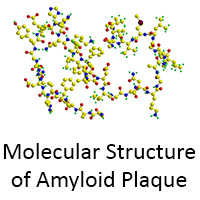
An antibody known as aducanumab may be helpful in removing amyloid plaque in Alzheimer’s patients.
Alzheimer’s: Where we are now
The presence of amyloid plaque deposits in the brain are characteristic Alzheimer’s disease. The condition presents as amyloid plaque deposits, tangles in the brain neurons, poorly functioning nerve synapses and nerve cell deterioration. Alzheimer’s is linked to glaucoma, cerebrovascular disease, poor sleep and to nutrient deficiencies. A number of possibilities exist for improving the condition or slowing its development, including a number of different drugs, antioxidants, some cancer drugs, and compounds found in green tea.
Focus on Reducing Amyloid Plaque
Thus far researchers have been looking at ways to reduce amyloid plaque as a means to combat Alzheimer’s disease, without success. But the problem may be that the various possibilities are unable to actively connect with the correct target in the brain in order to reduce amyloid plaque.
Researchers looking for solutions to the Alzheimer’s dilemma are now focusing on a specific antibody which is promising. They tested multiple variations of certain brain (memory) cells to see which would successfully react with an antibody. They found that the antibody called aducanumab was able to cross from blood vessels in the brain into brain tissue.
The positive results from lab animals gave rise to clinical trials. Researchers designed a placebo-controlled, double-blind randomized trial to test safety, side effects, and effectiveness of aducanumab. The patients either had not-yet-detectable symptoms or were patients with mild Alzheimer’s.
Promising Results for Aducanumab
So far, the results are promising. The researchers randomly treated 165 patients between 2012 and 2014. They were given either placebo or the antibody aducanumab at various doses for a year. 125 completed the treatment; 20 reported unpleasant side-effects, and 14 withdrew otherwise. After a little more than a year of treatment researchers determined that the patients receiving the antibody had improved. They noted reduced plaque levels correlated to dosage. This clinical trial is still a preliminary investigation but it did have that patients receiving the largest doses had the greatest reduction on plaque.
However, some patients experienced headaches, UTI or respiratory infections, and in some patients abnormalities such as edema were detected by the MRI.
Learn more about Alzheimer’s disease.