 Omega-3 fatty acids and macular degeneration have been studied for years, but new research raises an important question: Does eating omega-3-rich food protect your vision better than taking fish oil supplements?
A 2026 review offers encouraging findings, especially for EPA, one of the omega-3 fats found in seafood. However, the results are not as simple as they first appear.
In this article, we explain what the research found, why your retina needs omega-3s, and five practical ways to improve your intake.
What Does New Research Say About Omega-3 Fatty Acids and Macular Degeneration?
Age-related macular degeneration (AMD) affects the macula, the small central part of the retina responsible for sharp, detailed vision. It can make reading, driving, and recognizing faces difficult.
A 2026 systematic review and meta-analysis examined 18 studies of omega-3 fatty acids and AMD.
People who consumed the most omega-3 fatty acids were less likely to have macular degeneration than people who consumed the least.
The researchers also examined different forms of AMD:
- Early AMD: Higher omega-3 intake was linked to a slightly lower likelihood of early AMD.
- Wet AMD: The association was stronger for the advanced form of macular degeneration. Wet AMD involves abnormal blood vessel growth and can cause significant vision loss.
- Geographic Atrophy: Higher intake was also linked to a lower likelihood of this advanced form of dry AMD.
However, analyses that followed people over time did not establish a significant reduction in long-term AMD risk.
This is an important distinction. The findings suggest a possible protective relationship, but they do not establish that omega-3s prevent macular degeneration. 1
Why Does Your Retina Need DHA and EPA?
Two omega-3 fatty acids found in fish and algae are particularly important to eye health:
- DHA (docosahexaenoic acid) is a major structural component of retinal cells, especially photoreceptors. These light-sensitive cells help convert light into signals your brain can recognize as images. DHA also participates in processes involved in cell protection and the regulation of inflammation.
- EPA (eicosapentaenoic acid) helps the body produce substances involved in regulating inflammation. Researchers are investigating whether these effects may influence retinal health.
Omega-3 Fatty Acids and Inflammation
Inflammation is one way the body responds to injury or infection. However, ongoing inflammation may contribute to several eye conditions, including age-related macular degeneration. Omega-3 fatty acids, particularly EPA and DHA, help regulate inflammatory processes throughout the body.
Certain omega-6 fatty acids, including GLA found in black currant seed oil and evening primrose oil, are also being studied for their potential anti-inflammatory effects. However, there is not enough evidence to recommend these supplements as treatments for AMD or inflammatory eye diseases.
Natural Eye Care has discussed these functions in its foundational article, DHA Is a Crucial Omega-3 Fatty Acid. 2
The new review found an interesting difference between these nutrients.
Higher EPA intake was linked to a lower likelihood of AMD. DHA showed a possible association, but the statistical evidence was less certain.
This does not mean EPA is better for the retina than DHA. DHA remains essential to normal retinal structure and function. It means the two nutrients may have different relationships with AMD risk.
Why Did Omega-3 Supplements Disappoint in AREDS2?
If omega-3 fatty acids are important for retinal health, why did the large AREDS2 clinical trial fail to show additional protection from omega-3 supplements?
AREDS2 tested a daily combination of 350 mg DHA and 650 mg EPA in people at increased risk of advanced AMD.
Adding these omega-3 supplements did not significantly reduce progression to advanced AMD.
However, AREDS2 was not designed to determine whether eating fish throughout adulthood prevents AMD from developing.
The distinction matters:
- Dietary studies examine the eating habits of people who may consume different combinations of nutrients over many years.
- Clinical trials test a particular supplement, dose, and treatment period in a defined group of participants.
A healthy dietary pattern may provide benefits that an isolated supplement does not reproduce.
The National Eye Institute continues to recommend AREDS2 supplements for appropriate patients with intermediate AMD or certain cases involving advanced AMD in one eye. These formulas contain lutein, zeaxanthin, vitamins C and E, zinc, and copper. They do not require added omega-3s. 3
Is EPA Different From DHA?
Yes. Although EPA and DHA often occur together in fish, they perform different jobs.
DHA is especially concentrated in the retina and brain. It helps maintain cell membranes and supports normal visual function.
EPA is involved in producing signaling substances that help regulate inflammatory processes.
Both EPA and DHA are found in fatty fish, but the amounts vary. For example, a three-ounce serving of cooked Atlantic salmon contains about twice as much DHA as EPA, while sardines provide substantial amounts of both.
Another omega-3 fatty acid, called ALA (alpha-linolenic acid), is found in flaxseeds, chia seeds, and walnuts. Your body can turn small amounts of ALA into EPA and DHA, but this process is not very efficient.
In a 2026 review, researchers found no clear link between ALA intake and macular degeneration.
Plant foods remain valuable parts of a healthy diet, but ALA should not be considered an equal substitute for EPA and DHA when discussing retinal nutrition.
Five Practical Ways to Get More Omega-3s
You do not need a complicated diet to improve your omega-3 intake.
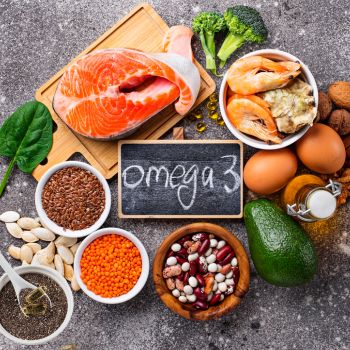
- Eat fatty fish regularly. Salmon, sardines, trout, herring, and mackerel are useful sources of EPA and DHA. Aim for two servings weekly if fish is suitable for you.
- Consider affordable food sources. Canned salmon and sardines are often less expensive than fresh fish. Canned fish is also pre-cooked and easy to prepare.
- Include plant-based omega-3 foods. Add ground flaxseed or chia seeds to your oatmeal, yogurt, or smoothies. Walnuts are another convenient source of Omega-3 fatty acids.
- Consider a fish oil supplement. Fish oil capsules are widely available, generally affordable, and an easy way to obtain EPA and DHA if you do not eat much fish. Some products have a lemon flavor or special coating to reduce a fishy aftertaste or burps, although these features do not work for everyone. Check the label for the amounts of EPA and DHA, not just the total fish oil. Algae-derived omega-3 supplements are another option, especially for people who avoid fish, but they often cost more.
- Review supplements with your clinician. Fish oil is not a proven AMD treatment. High-dose omega-3 supplements may be unsuitable for some people, especially those taking blood thinners or those at risk of certain heart rhythm problems. 4
A simple meal could be baked salmon with spinach and roasted sweet potatoes. This supplies omega-3 fatty acids alongside carotenoids and other nutrients involved in maintaining healthy vision.
What If You Already Have Macular Degeneration?
If you have AMD, nutrition can be part of your overall eye care plan, but it should not replace established treatment.
Ask your eye care professional which stage of AMD you have and whether an AREDS2 formula is appropriate.
AREDS2 supplements can help slow progression in certain patients. They have not been shown to prevent AMD in people who do not have the disease.
For wet AMD, treatments such as anti-VEGF injections can help control abnormal blood vessel growth and protect vision. Do not delay treatment while trying nutritional approaches.
If straight lines suddenly appear wavy, a new dark spot develops in your central vision, or your vision changes suddenly, contact an eye care professional promptly.
The Bottom Line
The relationship between omega-3 fatty acids and macular degeneration remains promising but uncertain.
The 2026 research suggests that people who consume more omega-3 fatty acids found in fish, particularly EPA, may be less likely to have AMD. However, it does not prove that omega-3 supplements prevent the disease or slow its progression.
A practical approach is to include omega-3-rich foods in a varied diet, maintain regular eye examinations, and follow recommended treatment for any existing macular degeneration.
Good retinal nutrition supports healthy vision, but protecting your macula requires more than any single nutrient.
Dr. Grossman’s Blood Vessel Control Formula 2oz – helps reduce the risk of unwanted blood vessel growth, supports healthy circulation, reduces inflammation, plus more.
Supplements to Consider
- Dr. Grossman’s Complete Eye Formula 2oz (oral spray)
- Dr. Grossman’s Complete Eye (oral Spray)/Meso Plus Combo Package
- Advanced Eye & Vision Support Formula (whole food) 60 vcaps – this is our whole food, organic, GMO-free foundation eye formula.
- Dr. Grossman’s Meso Formula Optimal Ocular Health in Digital Age – 90 vcaps
- OmegaGenics EPA-DHA 2400 5 fl oz OR
- OmegaGenics™ EPA-DHA 720 Lemon 120 gels
- Vegan Omega 975 90 softgels (V89116)
- Dr. Grossman’s Whole Food Organic Superfood Multi-Vitamin 120 Vcaps – this is our whole food, organic, GMO-free formula
- Dr. Grossman’s Circulation and Optic Nerve Support Formula
- Dr. Grossman’s Bilberry/Ginkgo Combination 2oz (60ml)
- Dr. Grossman’s Retinal Support (wild-crafted herbal formula) 2 oz – helps nourish the blood in the body and eyes, balance the immune system, supports the Liver and Spleen (meridians), improves blood flow, helps strengthen blood vessels, promotes energy, and more.
Books to Read
- Natural Eye Care: Your Guide to Healthy Vision and Healing
- Natural Brain Support: Your Guide to Preventing and Treating Alzheimer’s, Dementia, and Other Related Diseases Naturally
- Natural Parkinson’s Support: Your Guide to Preventing and Managing Parkinson’s
- Chen KY, Chan HC, Chan CM. Can Omega-3 Fatty Acids Serve as a Preventive Strategy for Age-Related Macular Degeneration? A Systematic Review and Meta-Analysis. J Nutr. 2026;156(2):101289. doi: 10.1016/j.tjnut.2025.101289. PMID: 41482231. ↩
- Natural Eye Care. DHA is a Crucial Omega-3 Fatty Acid. Natural Eye Care. Accessed October 14, 2026. ↩
- National Eye Institute. AREDS/AREDS2 Clinical Trials. National Eye Institute. Updated October 22, 2025. Accessed October 14, 2026. ↩
- National Institutes of Health, Office of Dietary Supplements. Omega-3 Fatty Acids: Fact Sheet for Health Professionals. Office of Dietary Supplements. Accessed October 14, 2026. ↩