
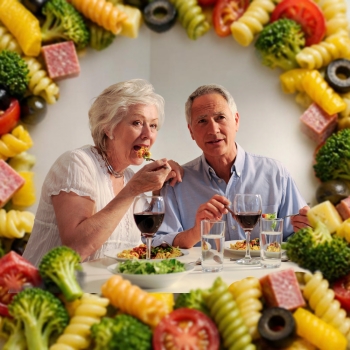
 The Mediterranean Diet and dementia have an encouraging research connection. In a large observational study, people whose eating habits most closely followed a Mediterranean-style pattern had a lower risk of developing dementia. What can we conclude from this study? How can your eating habits help prevent disease in the future? Keep reading for details about the study and practical tips for better nutrition.
What the Mediterranean Diet Study Found
Researchers followed 60,298 adults in the United Kingdom for an average of 9.1 years. The participants were ages 40 to 69 when they entered the study. Researchers compared their diets with two Mediterranean diet scoring systems and recorded new cases of dementia.
One system was the Mediterranean Diet Adherence Screener, commonly shortened to MEDAS. It gives points for habits that fit a Mediterranean-style pattern, such as eating vegetables, fruit, legumes, fish, and olive oil. A higher score means closer adherence to the pattern.
Each one-point increase in the MEDAS score was associated with about a 4.5% lower relative risk of dementia. People in the highest-scoring group had a 23% lower relative risk than those in the lowest-scoring group. The absolute difference was much smaller: about 0.55 percentage points during the study period. This distinction matters. A 23% relative reduction can sound dramatic, but it does not mean that 23 out of every 100 people avoided dementia. 1
What “Independent of Genetic Risk” Means
The researchers also estimated each participant’s inherited risk using a group of genetic variants linked with dementia. The association between stronger adherence to the Mediterranean diet and lower dementia risk remained after accounting for genetic risk. In plain language, the dietary pattern was associated with lower risk in the study even among people with a higher inherited risk. It does not mean that food can cancel a person’s genes or guarantee protection.
What Connects Vision and Dementia
Vision depends on both the eyes and the brain. The retina receives light, while the brain turns those signals into recognizable images. Researchers are studying whether changes in the retina may eventually help identify early signs of Alzheimer’s disease. Retinal imaging is promising, but it is not currently a stand-alone test for diagnosing or predicting Alzheimer’s disease. 2
A review of 30 long-term studies found that people with vision loss had a 38% higher relative risk of dementia. Cataracts and diabetic retinopathy were also linked to increased risk, while the evidence for glaucoma and age-related macular degeneration was unclear. These results do not mean that eye disease causes dementia. 3
A UK Biobank study also connected cataracts, age-related macular degeneration, and diabetes-related eye disease with a higher risk of dementia. The risk rose further among people who also had conditions such as diabetes, heart disease, stroke, high blood pressure, or depression. These findings do not mean that eye disease causes dementia. The connection may partly reflect health problems that affect both the eyes and the brain, especially diabetes and poor circulation. 4
How the Mediterranean Diet May Help
The Mediterranean Diet is not a single menu, nor is it specifically a weight-loss program. It is a flexible eating pattern built around vegetables, fruit, beans and other legumes, nuts, whole grains, fish, and olive oil. It usually includes smaller amounts of red and processed meat, highly processed foods, and foods with added sugar.
Many of the foods in the Mediterranean Diet provide fiber, unsaturated fats, vitamins, minerals, and plant compounds. This diet may support heart and blood vessel health, blood sugar control, and a healthy inflammatory response. Those effects could also benefit the brain and eyes.
The Vision Diet: A Mediterranean Diet for Eye Health
Natural Eye Care’s Vision Diet is an eye-focused variation of the Mediterranean diet. It is mainly plant-based, with an emphasis on dark leafy greens and colorful fruits and vegetables that provide lutein, zeaxanthin, and other antioxidants. It also includes beans, nuts, seeds, whole grains, olive oil, and more omega-3-rich fish, especially wild salmon.
The Vision Diet limits white sugar, refined carbohydrates, highly processed foods, poor-quality oils, and excess salt. People who eat animal products may include small portions of preferably organic, responsibly raised meat or poultry. The goal is not a rigid menu. It is a nutrient-rich eating pattern designed to support the eyes, brain, circulation, and overall health. Learn more about the Vision Diet.
A Simple Mediterranean-Style Plate
| Part of the meal | Practical choices |
|---|---|
| Half the plate | Vegetables, with fruit on the side when desired |
| About one quarter | Beans, lentils, fish, poultry, eggs, or another protein food |
| About one quarter | A whole grain such as oats, brown rice, barley, or whole-grain bread |
| Added fat | Olive oil, nuts, seeds, or avocado in an amount that suits your needs |
You do not need to change every meal at once. One useful starting point is to add one vegetable or serving of beans to a meal you already enjoy. Frozen and canned foods can count. If you use canned beans or vegetables, you can choose lower-sodium products or rinse them when appropriate. People with food allergies, digestive conditions, diabetes, kidney disease, swallowing problems, or medication-related dietary restrictions may need individual guidance.
Conclusion
Research suggests that following the Mediterranean diet may help lower dementia risk, even for people with a higher inherited risk. Studies have also linked vision loss and some eye conditions with dementia, but researchers do not yet fully understand these connections. Eating a balanced diet that supports healthy circulation, along with getting regular eye and medical care, is a sensible way to protect both brain and eye health.
Suggested Supplements
Dr. Grossman’s Complete Eye Formula 2oz (oral spray)
Dr. Grossman’s Complete Eye (oral Spray)/Meso Plus Combo Package
Advanced Eye & Vision Support Formula (whole food) 60 vcaps
Dr. Grossman’s Meso Plus Retinal Support and Computer Eye Strain Formula with Astaxanthin 90 vcaps
Dr. Grossman’s Whole Food Organic Superfood Multi-Vitamin 120 Vcaps – this is our whole food, organic, GMO free multivitamin for maximum absorption and benefit.
Dr. Grossman’s Advanced Eye and Dr. G’s Whole Food Superfood Multi1 20 Vcap Combo – 2 months supply
ReVision Formula (wild-crafted herbal formula) 2 oz – based on classic Chinese medicine Liver tonic formula to help support healthy circulation and blood flow throughout the eyes and body.
Dr. Grossman’s Blood Vessel Control Formula 2oz – helps reduce the risk of unwanted blood vessel growth, supports healthy circulation, reduces inflammation, and more.
Dr. Grossman’s Premium Turmeric Vcaps (Organic)
Brain and Memory Power Boost 120 caps
Packages
Brain and Memory Support Package 1
AMD Package 1 (3-month supply)
Sugar Balance & Blood Vessel Support Package 1 (1 month)
- Shannon OM, Ranson JM, Gregory S, Macpherson H, Milte C, Lentjes M, Mulligan A, McEvoy C, Griffiths A, Matu J, Hill TR, Adamson A, Siervo M, Minihane AM, Muniz-Terra G, Ritchie C, Mathers JC, Llewellyn DJ, Stevenson EJ. Mediterranean diet adherence is associated with lower dementia risk, independent of genetic predisposition: findings from the UK Biobank prospective cohort study. BMC Med. 2023 Mar 14;21(1):81. PMID: 36915130; PMCID: PMC10012551. ↩
- Alber J, Goldfarb D, Thompson LI, Arthur E, Hernandez K, Cheng D, Cabrera DeBuc D, Cordeiro F, Provetti-Cunha L, den Haan J, Van Stavern GP, Salloway SP, Sinoff S, Snyder PJ. Developing retinal biomarkers for the earliest stages of Alzheimer’s disease: What we know, what we don’t, and how to move forward. Alzheimers Dement. 2020 Jan;16(1):229-243. PMID: 31914225. ↩
- Kuzma E, Littlejohns TJ, Khawaja AP, Llewellyn DJ, Ukoumunne OC, Thiem U, Peters R. Visual impairment, eye diseases, and dementia risk: a systematic review and meta-analysis. J Alzheimers Dis. 2021;83(3):1073-1087. PMID: 34397414. ↩
- Shang X, Zhu Z, Huang Y, Zhang X, Wang W, Shi D, Jiang Y, Yang X, He M. Associations of ophthalmic and systemic conditions with incident dementia in the UK Biobank. Br J Ophthalmol. 2023 Feb;107(2):275-282. PMID: 34518160. ↩
