
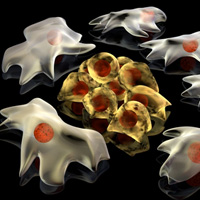
Immunocore, a UK-based biotechnology company, has been exploring this area using T-cells. T-cells are responsible for identifying and destroying pathogens. A protein protruding from the cell called the “T-cell receptor” binds itself to cells recognized as a threat. While T-cells are not naturally expert at identifying cancer cells, it is possible to engineer them to do so.
This is what chief scientific officer Bent Jakobsen and his team at Immunocore have been working on over 20 years of study. They engineered a form of treatment that works at the level of cellular immunity. Using the T-cell receptor as a model, researchers at Immunocore have created a small protein molecule called ImmTAC. These molecules have two binding ends. One attaches to T-cells. The other sticks to cancer cells, without affecting any healthy cells.
Other researchers in the biotechnology field have worked with antibodies in searching for new cancer treatments. But Immunocore is unique in its significant progress with T-cells. The researchers believe the potential in engineering T-cell receptors could be an enormous step in the right direction toward a cure.
A strength of the ImmTACs is that they can be trained to target any specific cell. In theory this means they could be used to treat any type of cancer tumor, no matter the location in the body.
Immunotherapy shows a clear departure from much of the conventional cancer treatment available. In the past, treatment has centered on the destruction of every cancer cell while trying to minimize damage to other healthy cells. This means burning cells through radiation, poisoning them through chemotherapy, or slicing them via surgery.
However, the research does not suggest that cancer immunotherapy should replace these other treatments or that it constitutes a cure in itself. It merely marks a significant component in the discovery of a more effective treatment.
Other Immunotherapy Research
Another study has found a means of triggering the immune system of mice to fight tumors without affecting autoimmune function. The regulatory T cells used are also present in humans. The research was conducted by St. Jude Children’s Research Hospital and appeared in the online edition of Nature.
The developing field of cancer immunotherapy uses the body’s own immune system response to fight tumor cells. The study marks new progress in this area.
Researchers examined regulatory T cells, a specialized white blood cell. Regulatory T cells protect against autoimmune and inflammatory problems in the body. However, the cells can interfere with an immune response to eliminate tumors.
The researchers discovered a protein mechanism in mouse regulatory T cells that causes this problem. It teaches the immune system to tolerate rather than kill tumor cells. By blocking this mechanism, researchers found that cancer cell destruction increases. But it also does not alter the T cells’ healthy autoimmune and anti-inflammatory response, unlike other treatment efforts using immune regulators.
The study used models of a number of human cancers in mice. Altering the regulatory T cell mechanism showed significant delay, reduction, or elimination of tumors. The impact was strongest in mice with melanoma tumors. They showed nearly complete resistance to melanoma cells after treatment.
Mice and humans who have significantly damaged regulatory T cells typically acquire fatal autoimmune disease. Significantly, the mice did not exhibit inflammatory or autoimmune complications even 16 months following the treatment. This indicates that blocking this specific regulatory T cell mechanism does not damage the cells’ function as a whole.
Research indicated that the same mechanism is present in human regulatory T cells. It likely performs the same function. In theory it could be blocked in a similar way without adverse effects.
Source: St. Jude Children’s Research Hospital
Human Protein & Cancer
German researchers report new information about the protein which in instrumental in inter-cellular communication and appears to also prevent tumor growth.
The protein is Interferon-Beta which is already used in some cancer therapies – what is new is an understanding about how it may work. It appears to be able to interfere with tumor growth factors, and has the effect of blocking the blood supply to the tumor.
Published: Journal of Clinical Investigation, April, 2010
