
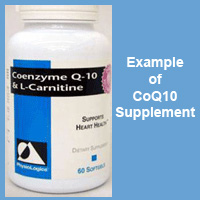
 CoQ10 deficiency and supplementation were explained in an article by Michael S. Pepper and his colleagues at the University of Pretoria in South Africa. The article in the March, 2013 issue of Nutrition Reviews covered both primary and secondary coenzyme Q10 (CoQ10) deficiency.
In primary CoQ10 deficiency, the body cannot properly synthesize CoQ10 because of genetic mutations. The gene sequences needed to produce the enzymes are incorrect.
Secondary deficiency is mostly seen as a side effect to statin drugs, which are prescribed to lower cholesterol levels. Statin drugs can reduce a precursor in the pathway of CoQ10 synthesis. Secondary deficiency could have other causes.The article explained that CoQ10 is an antioxidant and it also plays an important role in energy production and cell function. This enzyme has a good safety profile as a supplement. It has shown few adverse effects, regardless of dose size. Even at 3,000 mg/day, no adverse effects have been shown.
CoQ10 is produced by the body and is available in food. However, the diet only supplies a small amount of this coenzyme. For people deficient in CoQ10, supplementation is crucial. Not all doctors and researchers agree on routine coenzyme Q10 supplementation for statin drug users to prevent muscular side-effects. Decreased CoQ10 levels have also been associated with an increased risk of death in heart failure patients. The article advises monitoring statin drug users for plasma CoQ10 levels, and testing for genetic variation associated with statin intolerance.
The researchers suggest that when CoQ10 depletion is detected, an optimal dose of appropriate supplementation should be prescribed. The supplement should have proven, superior bio availability in order to get the CoQ10 plasma levels to normal.
Learn more about CoQ10’s effect on heart functional, renal function, and age-related macular degeneration.
Source: “Primary and secondary coenzyme Q10 deficiency: the role of therapeutic supplementation.” by M.S. Pepper et. al. Nutr Rev. 2013 Mar;71(3):180-8. DOI: 10.1111/nure.12011
